
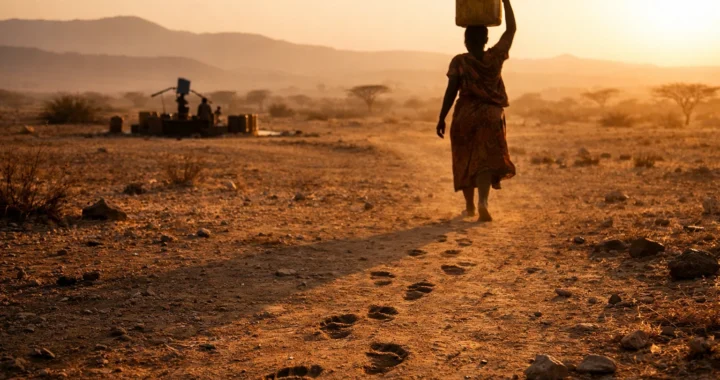
A woman in rural Kenya wakes at 4 am, walks two hours to the nearest well, waits in line, then carries 20 litres back home. Her children are still asleep when she returns. She does the math in her head: do we drink this water, or do we cook with it? There’s never enough for both.
That single morning repeats for 2.1 billion people who lack access to safely managed drinking water. Water scarcity turns into missed school days, preventable illness, and economic collapse that ripples through entire regions. When families spend half their day just accessing water, everything else falls apart.
This problem didn’t appear overnight, and it won’t disappear that way either. But infrastructure, policy pressure, and daily choices do change outcomes over time.
In this guide, we’ll explore how water scarcity reshapes daily life, the health and economic consequences that follow, and what’s being done to address the crisis.
Let’s start with what a typical day without water looks like.
Water Scarcity Impact: A Day in the Life
Water scarcity shows up most clearly in how families spend every waking hour just trying to access enough water to survive. The routine becomes all-consuming, dictating when people wake, what they eat, and whether children can go to school.
Waking Up Without a Tap to Turn On
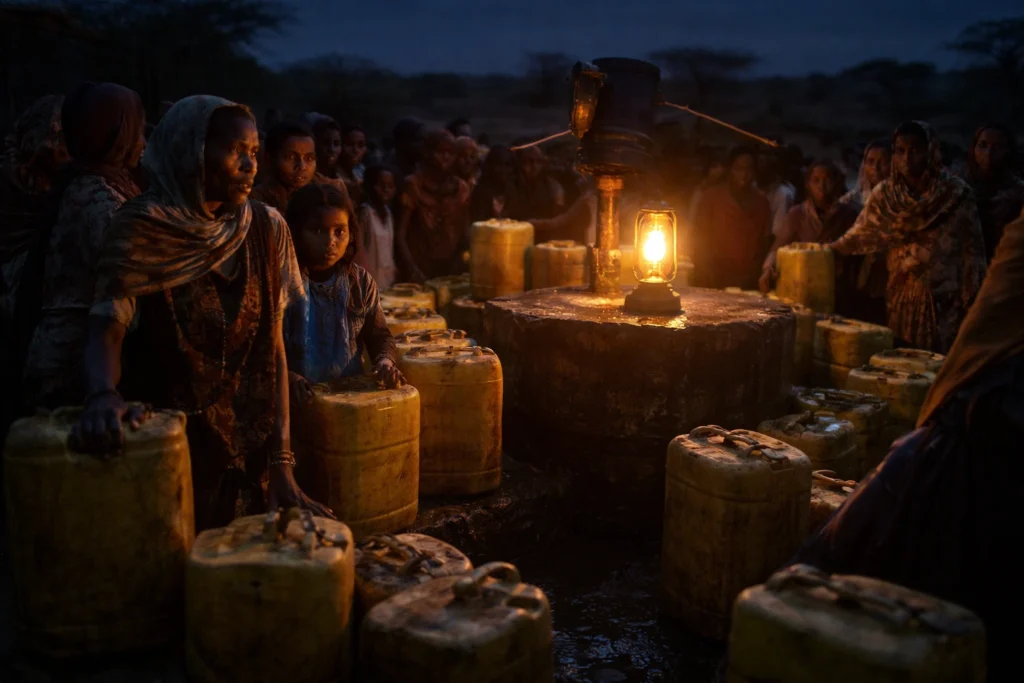
Families wake hours earlier to walk to wells before the crowd arrives. By the time they return home, the morning is half gone, and there’s still no time for basic hygiene when barely enough water exists for drinking.
Meals That Take Hours to Prepare
Cooking a single meal requires multiple trips to carry heavy containers back home. Even after hauling water home, women boil contaminated water for 20 minutes, wasting firewood and precious daylight hours. And that’s just to make the water drinkable. Worse still, families eat less nutritious food because washing vegetables uses too much water.
Children Walking Instead of Learning
Girls especially stay home to help their mothers carry water over long distances. When kids do make it to school after dawn water runs, they’re already exhausted. That means school attendance drops steadily, and homework gets skipped when evenings are spent fetching water for tomorrow’s needs.
The Safety Risks Hidden in the Water Crisis
When the only water source is a two-hour walk along unlit paths before sunrise, women face daily danger. Harassment and assault aren’t occasional risks. They’re woven into the routine for millions who have no other option.
Young girls face even greater threats when travelling to distant wells alone, and the problem is well-documented. Research from rural Ethiopia shows that women and girls undertaking these long journeys experience harassment, assault, and gender-based violence as a regular part of water collection. So, communities face an impossible choice: risk safety to get water, or stay home and go thirsty. For millions, this decision happens every single day.
And even when they reach the water source, the danger doesn’t end. Crowded water points turn into flashpoints where fights break out as desperate families compete for limited resources. When shared water systems fail or run dry, tensions escalate fast (and honestly, you can’t blame people for getting desperate when their children are thirsty).
These aren’t isolated incidents. The water crisis creates systematic safety risks that compound the physical burden of collection itself.
Water and Sanitation: The Public Health Breakdown
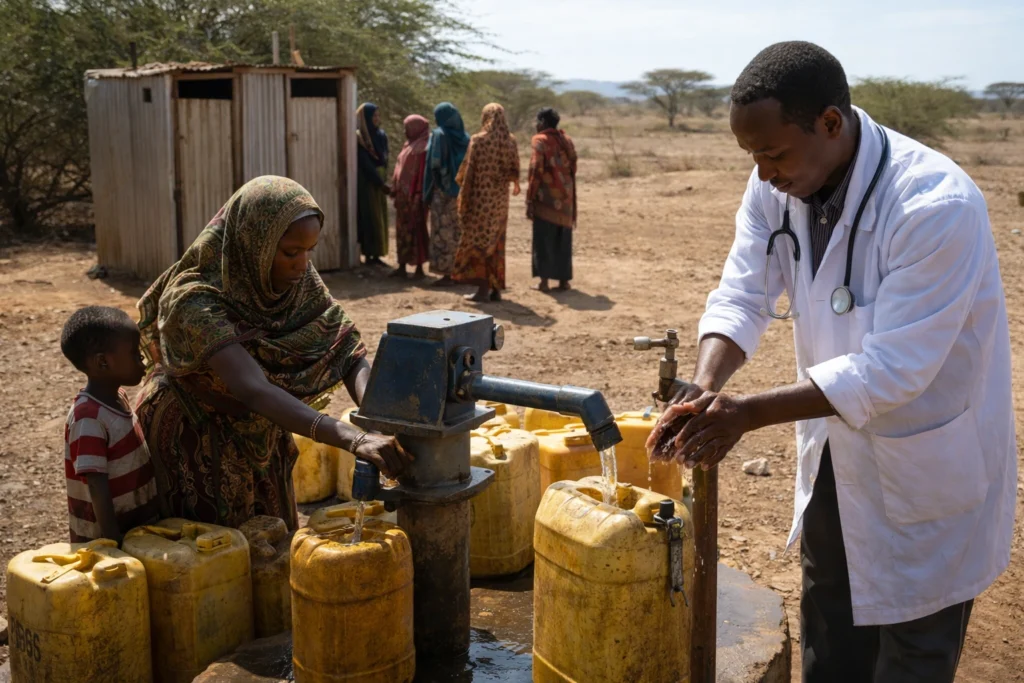
Water scarcity doesn’t just mean people go thirsty. It’s watching a complete breakdown of sanitation systems that turns preventable illnesses into deadly epidemics. The impact hits women and children hardest. Here’s how it unfolds.
Disease Outbreaks from Contaminated Water
Contaminated water is one of the main causes behind diarrhoeal disease, which kills around 525,000 children under five each year, according to the World Health Organization. It also fuels cholera outbreaks, especially when water and sanitation systems fail together. On the flip side, you’ll almost never see these diseases in communities with safely managed drinking water.
The Dignity Crisis for Women and Girls
Many girls leave school for good once they start menstruating without access to private facilities. That’s because there’s no way to manage periods safely or with dignity when you’re sharing open latrines with entire neighbourhoods.
The consequence? Women suffer urinary infections because they hold bodily functions all day until nightfall. What’s more, bathing becomes nearly impossible for most families because of limited privacy and water scarcity. Things get worse in rainy seasons, when floods push waste into the very water sources people rely on, setting communities back to square one.
How Climate Change Keeps Communities in Water Stress
Climate change keeps communities in water stress by making rainfall increasingly unpredictable and drying up sources that worked for generations. This is especially evident in parts of Asia, where droughts are growing more severe and lasting longer, according to a study in Global Food Security.
When the rains do come, they often arrive too late or too heavy, and fields flood instead of receiving the steady water needed to replenish groundwater. Farmers lose entire planting seasons this way, which means failed crops and no income for months.
And it’s not just rain. In mountain regions, glaciers that have fed communities for centuries are shrinking. As these ice reserves melt away, water supplies dry up year after year, leaving millions with fewer options.
Economic Stability Crumbling One Dry Well at a Time
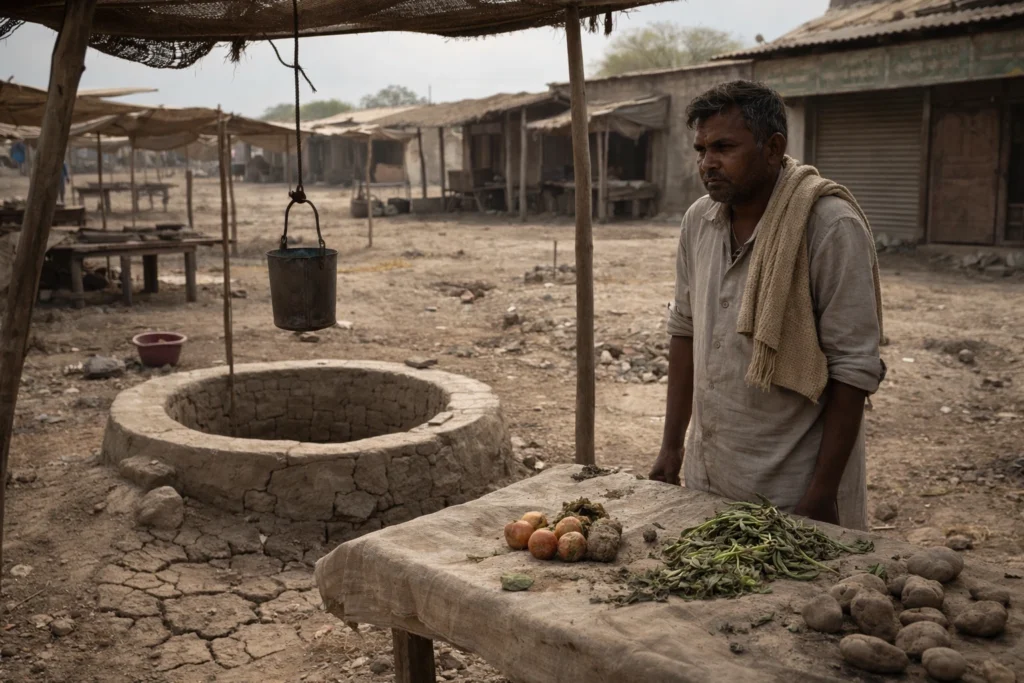
When water costs more than the goods being sold, local economies start to collapse. Small vendors can’t afford to wash vegetables before selling them. Market days get cancelled when sellers have no water for cooking, and hotels lose tourism when they can’t guarantee running water for guests. The economic breakdown starts locally, but it spreads fast.
When Farms Fail and Hunger Follows
Beyond local markets, the damage cuts deepest in agriculture. Crop yields plummet when irrigation systems run dry mid-season. Without water for fields, farmers can’t feed their livestock either. Animals die from dehydration, wiping out families’ only source of income and protein in a matter of weeks.
Most families never recover from losing their animals. There’s no savings account to fall back on, no insurance payout. The animals were the savings.
That’s not all. When local farms can’t produce enough food, prices rise in surrounding communities. More people competing for less food means costs climb while incomes disappear. Emergency aid helps temporarily, but it can’t replace a failed harvest.
When Families Are Forced to Move
When livelihoods collapse, staying put becomes impossible. Families drain their savings paying for water from private tanker trucks until the math stops working. When you’re spending more on water than you earn in a week, something has to give.
Young men migrate to cities in search of work, leaving women and elderly family members behind to manage the land and carry water alone. Entire villages empty out when the only well runs dry permanently. There’s no reason to stay when the water is gone.
For millions living in water-scarce regions, this isn’t a temporary setback. It’s the economic collapse that forces families to start over somewhere else with nothing.
What Climate Resilience and Improved Sanitation Actually Change
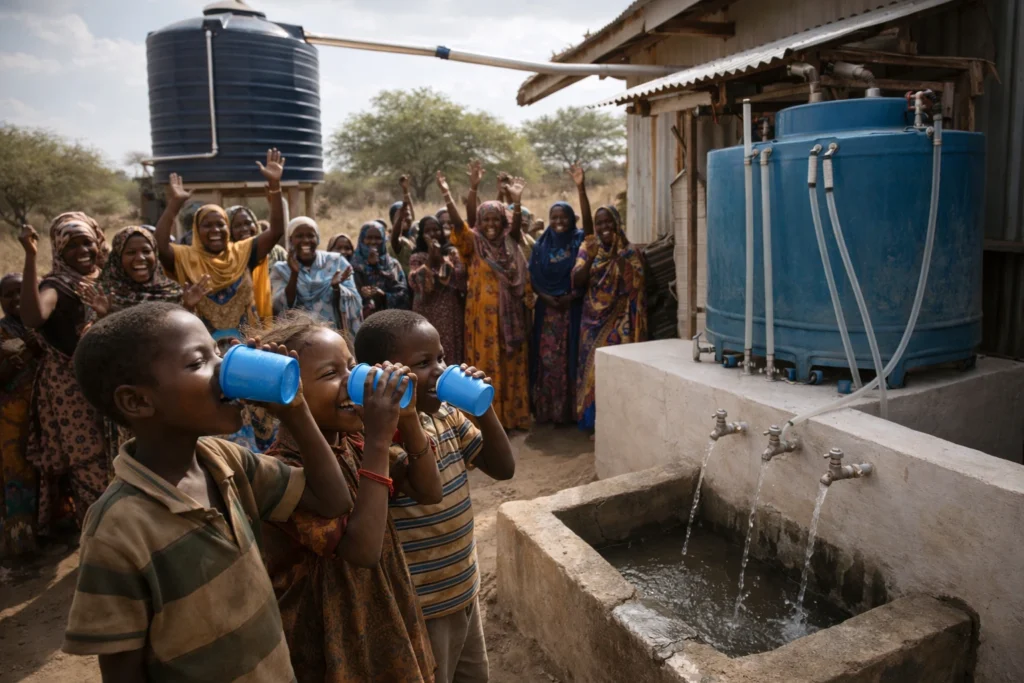
Climate resilience and improved sanitation change survival rates. Communities with rainwater harvesting systems survive droughts that wipe out neighbouring towns without storage infrastructure. It’s not complicated. A basic filtration system can turn contaminated sources into safe drinking water, while proper toilets stop waste from mixing with water supplies.
These solutions work best when communities manage them directly. Locally run water projects distribute water more fairly, even during the driest months, because residents understand their own needs. When families control their water supply, the effects show up quickly: school attendance rises, women report fewer safety incidents, and local economies begin to stabilise.
What’s more, safe water prevents disease, and proper sanitation keeps outbreaks from spreading. Together, they create time for families to work and study instead of just surviving. The changes build across generations as healthier children grow into adults who strengthen their communities further.
Why Every Drop of Progress Counts
The scale of the global water crisis can feel overwhelming. Billions of people still lack access to safely managed drinking water, and climate change continues to worsen water scarcity in vulnerable regions. The problem isn’t going away on its own.
But progress is happening. Communities installing filtration systems, managing their own water resources, and building sustainable sanitation infrastructure are proving that solutions work when they’re designed locally and supported properly.
Easy510 works alongside communities in Asia, Latin America, and Africa to provide access to clean, safe water through under-sink filtration systems and community-led water projects. Learn more about our work and how filtered water access changes lives.