
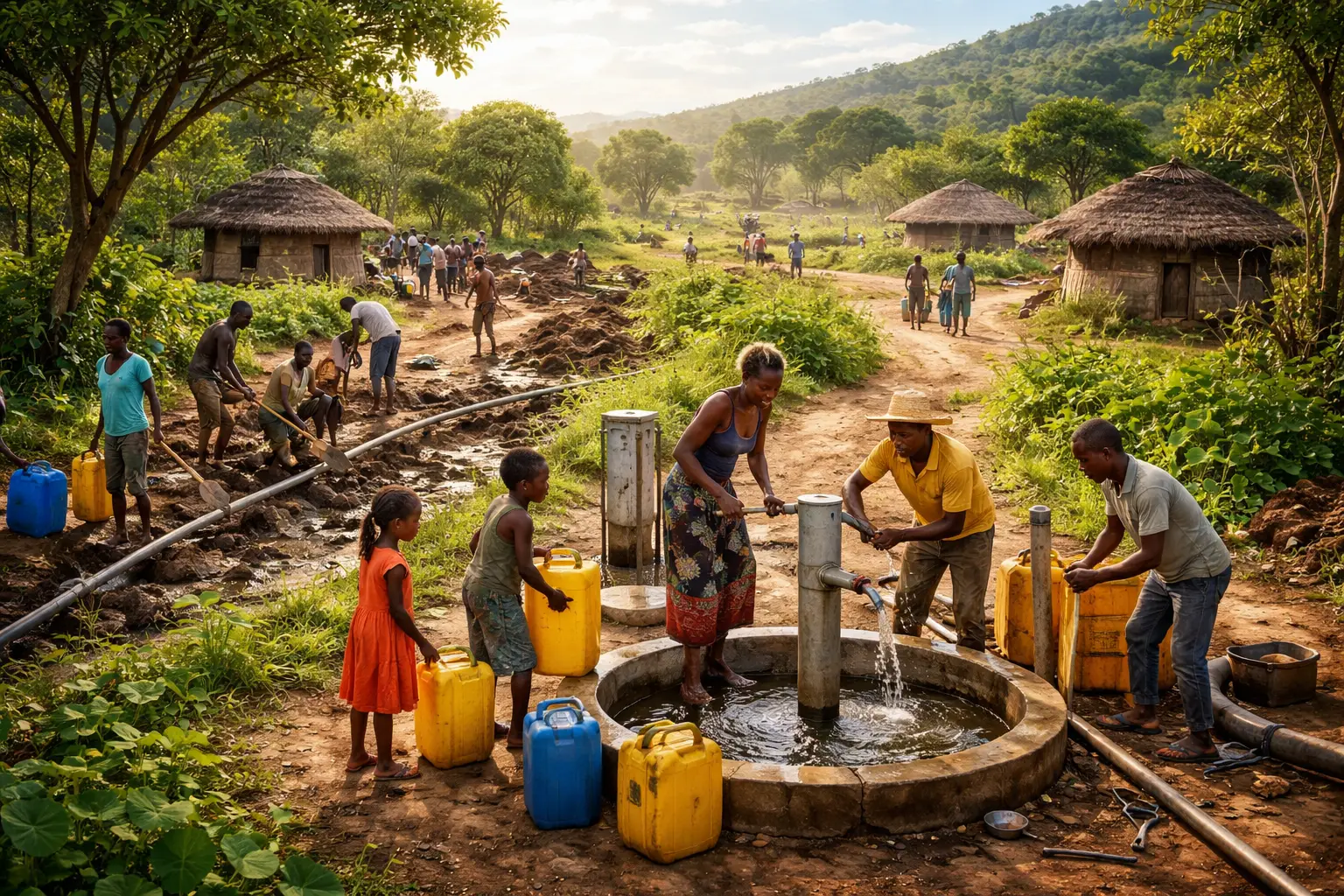
Community water projects succeed because local people control the planning, building, and maintenance instead of waiting for outside help. Simple as that.
Traditional aid gets the installation part right but fails at everything after. Organisations fly in and set up equipment. Then they leave without teaching anyone how to maintain systems or source replacement parts. This action results in billions of aid funding going to waste on infrastructure that breaks down within months.
After 25 years working with communities worldwide, we know what separates successful projects from failed ones. This article breaks down:
- Why locally-led initiatives outlast top-down programs
- How communities identify their real water needs
- The role of training in system maintenance
- Smart ways outside groups can support effectively
Let’s dig into why putting communities in charge changes everything.
Community Water Projects vs Traditional Aid Programs
Traditional aid programs hand communities finished water systems with instruction manuals. On the flipside, community-driven projects put local people in charge of planning, building, and maintaining their own infrastructure. But let’s discuss what exactly sets them apart.
Local Knowledge Shapes Better Solutions
Communities know which wells run dry each summer and understand soil types outsiders miss. For example, a village in rural Ghana steered engineers away from a site that flooded every wet season. Fortunately, their input saved the water supply infrastructure from failure.
Ownership Creates Lasting Commitment
When communities build their own systems, they are able to fix any problems immediately. UNICEF helps communities set service standards because building something yourself creates responsibility. Let’s be honest, outside donors leave after installation, but it’s the community members who stay and protect their investment.
Cultural Practices Guide Water Use
Water collection times and gender roles vary across cultures. Community input ensures water points respect local customs around privacy and gathering spaces for women. Projects that ignore these needs sit unused while people walk kilometres for clean water instead.
But even well-designed infrastructure needs maintenance, and that’s where traditional top-down projects run into trouble.
Why Top-Down Water Projects Struggle to Last
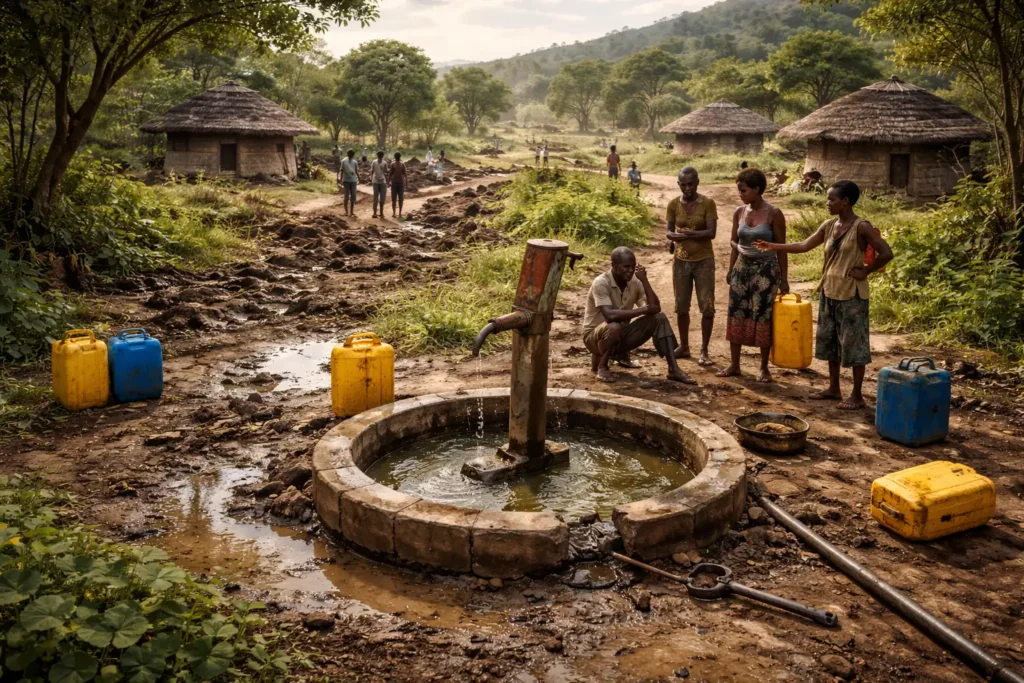
Top-down water projects fail because outside organisations install systems without teaching communities how to maintain them. Let’s be real here. At any given time, 30 to 40 per cent of the rural water supply in low-income countries doesn’t work.
This occurs because these projects often choose expensive technology requiring specialised skills over simple systems that locals can manage. What happens when the circuit board fails, and nobody within 200 kilometres knows how to fix it? Communities return to unsafe drinking water sources.
On top of that, external funding dries up after installation, and we’ve watched this cycle repeat across three continents. Millions of abandoned infrastructure leave people without reliable access to clean water or sanitation services.
So how do communities figure out what they need before building starts?
How Communities Identify Their Real Water Needs
Communities identify their water needs by mapping every source, tracking daily collection patterns, and planning for population growth. You might be wondering how this process plays out on the ground. It breaks down into two main steps.
Mapping Existing Sources and Daily Patterns
Community members document every water source, including seasonal streams and hand-dug wells. For instance, families track how much time women and children spend collecting clean water daily. Local groups then map contamination risks near livestock areas that outside experts often overlook, and that knowledge is worth its weight in gold.
Planning for Future Population Growth
The population increases based on birth rates and settlement patterns. This helps communities plan for schools and health clinics that will need a reliable water supply. Beyond that, residents identify land for future wells before development makes locations unavailable, which means water resource management happens before shortages hit.
Knowing what you need is one thing, but local control keeps water flowing long-term.
The Benefits of Community-Controlled Water Security
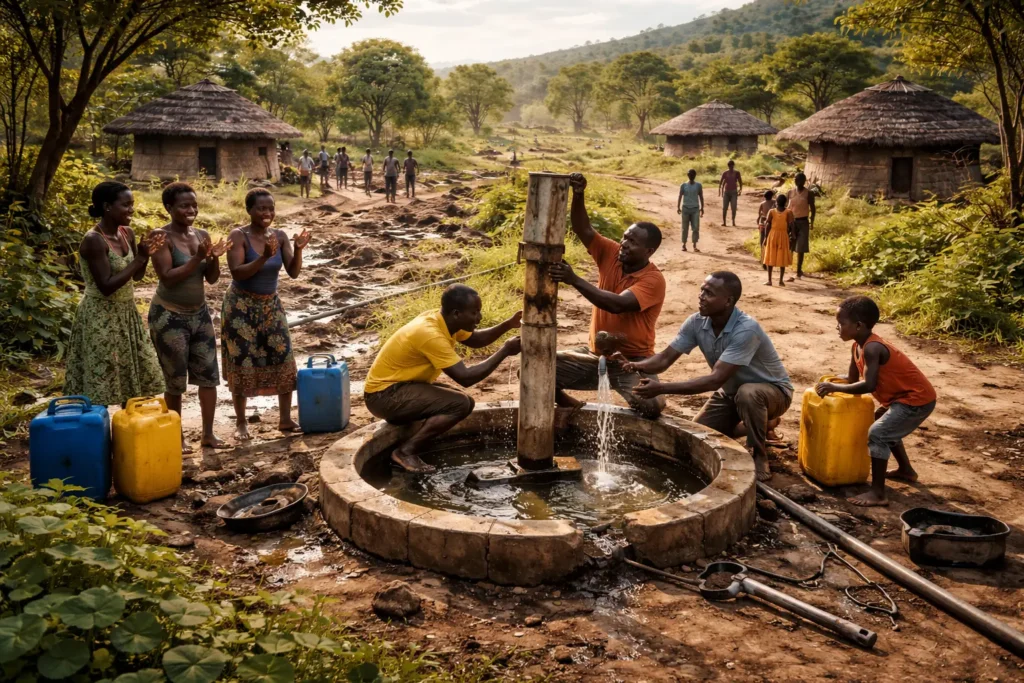
The greatest advantage of local water control is speed. Communities fix problems within hours instead of waiting weeks for outside help. And here’s where it gets interesting: communities with local water management see fewer system failures because residents catch small problems early.
This only works when communities have funds for repairs. Local committees collect small fees for pump repairs and parts. In our 25 years working with communities worldwide, we’ve watched locally-led projects maintain consistent service. Despite 2 billion people still lacking access to safely managed drinking water, community-controlled water security reduces conflict through fair rationing during droughts.
Also, when water points are accessible, this gives women more time for education and work, and children stop missing school to fetch water. The good news is that health improves fast with fewer illnesses when communities manage their own clean water and sanitation services.
But none of this happens without proper training.
Training Local People: The Key to Long-Term Water Supply
Training community members to handle repairs keeps water flowing. Believe it or not, this approach changes how rural communities maintain their drinking water systems. Training locals creates better outcomes
- Immediate pump repairs: Communities with trained technicians fix breakdowns within hours. This way, families won’t ever return to unsafe water sources.
- Early contamination detection: Local water quality testing catches problems before outbreaks spread. In a real-life scenario in Kenya, a trained tester identified E. coli three days early, which prevented a health crisis.
- Hygiene education spreads naturally: Trained members teach neighbours proper sanitation and hygiene practices at water points. This reduces disease transmission more effectively than occasional workshops.
- Building local expertise: Skills training creates employment as technicians serve multiple villages. Over time, knowledge passes down organically, strengthening wash programs without outside support.
Training gets communities started, but they need the right kind of external support to sustain progress.
Supporting Community Water Projects the Right Way
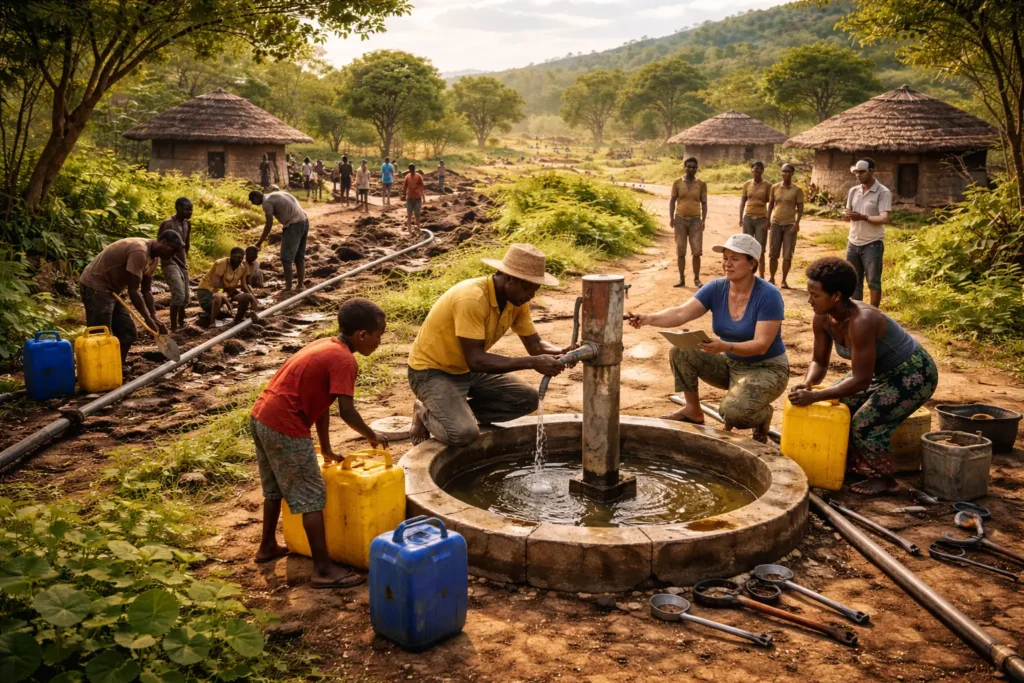
External support can strengthen community water projects or undermine them. The difference lies in how outside groups approach their role. The most effective approaches share five characteristics.
- Ask before building: Outside organisations should ask communities what they need instead of assuming. This prevents expensive mistakes like installing equipment unsuited to local water resource conditions or cultural practices.
- Fund training alongside infrastructure: Funding should cover training programs, tool kits, and spare parts alongside infrastructure. Through our partnerships across Asia, Africa, and Latin America, we’ve learned that comprehensive training keeps water supply running decades longer than equipment alone.
- Teach rather than fix: Technical support works when experts teach community members instead of doing repairs themselves. We say this because outside groups often drop the ball by focusing only on infrastructure rather than building local capacity for sustainable management.
- Build long-term partnerships: Long-term partnerships help communities adapt systems when needs change over time. We all know that climate change brings new challenges to water security that require flexible approaches and continued collaboration between teams.
- Connect to supply chains: Communities need access to regional supply chains for affordable replacement parts and testing equipment. This prevents breakdowns from becoming permanent failures that force people back to unsafe sources.
What’s more, government bodies investing in wash programs see better outcomes when communities lead from planning through implementation. These principles guide our work at Easy510.
Take the First Step Toward Lasting Water Access
Millions still lack reliable access to safe drinking water. This remains an issue because traditional aid programs install systems without building local capacity. Community-led water projects solve this safe drinking water problem by putting residents in control from the start to the end. This approach is the best solution to help projects last for generations.
In these pages, we’ve covered why locally-led initiatives outlast top-down programs and how communities identify their real needs. We also explored the training’s role in maintenance and effective ways outside groups can support without taking control.
Easy510 partners with communities to build water systems that work. Our team will take you through every step you need to create lasting change. Let’s start today.