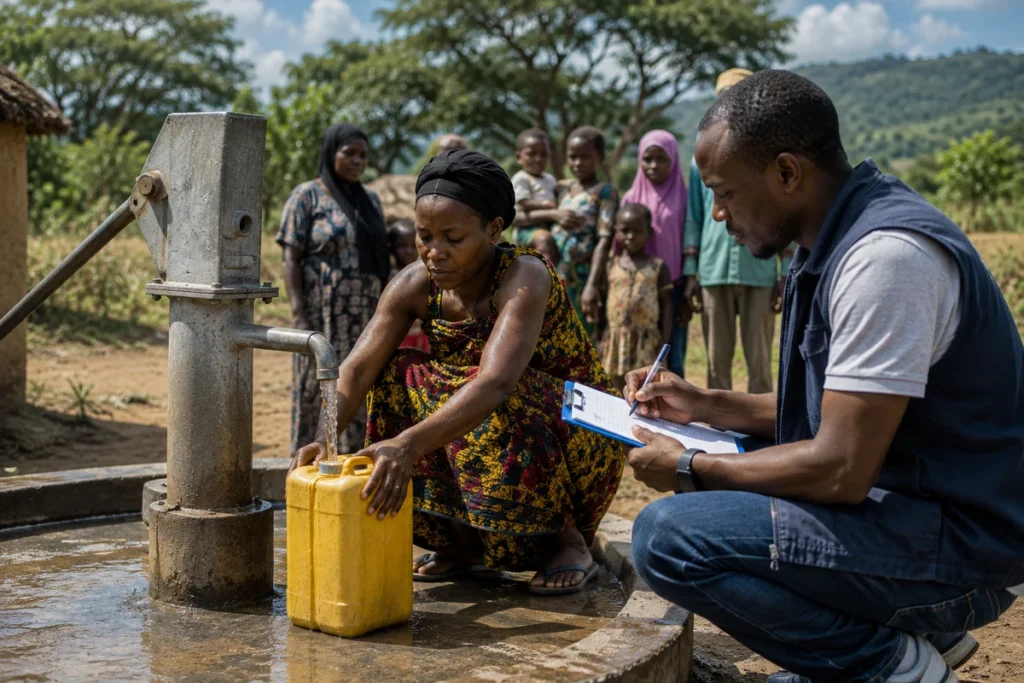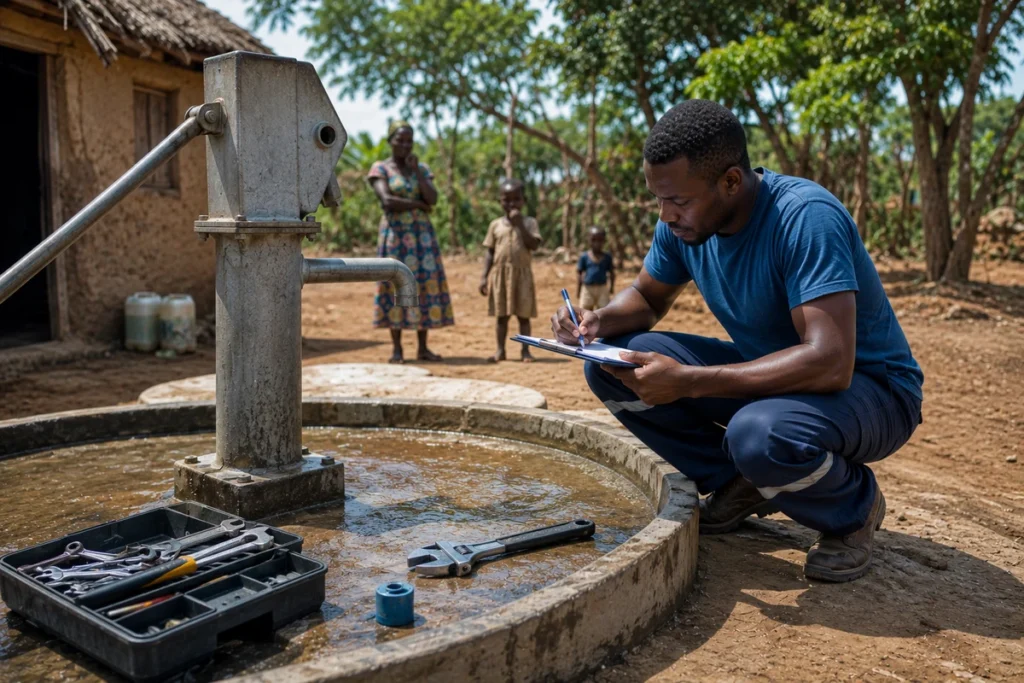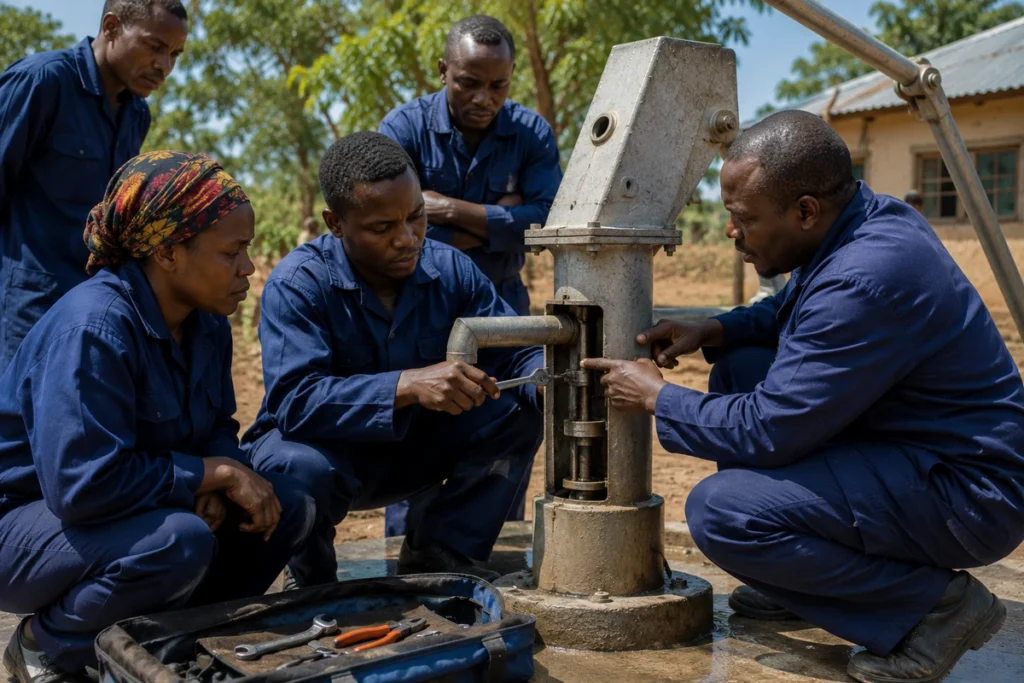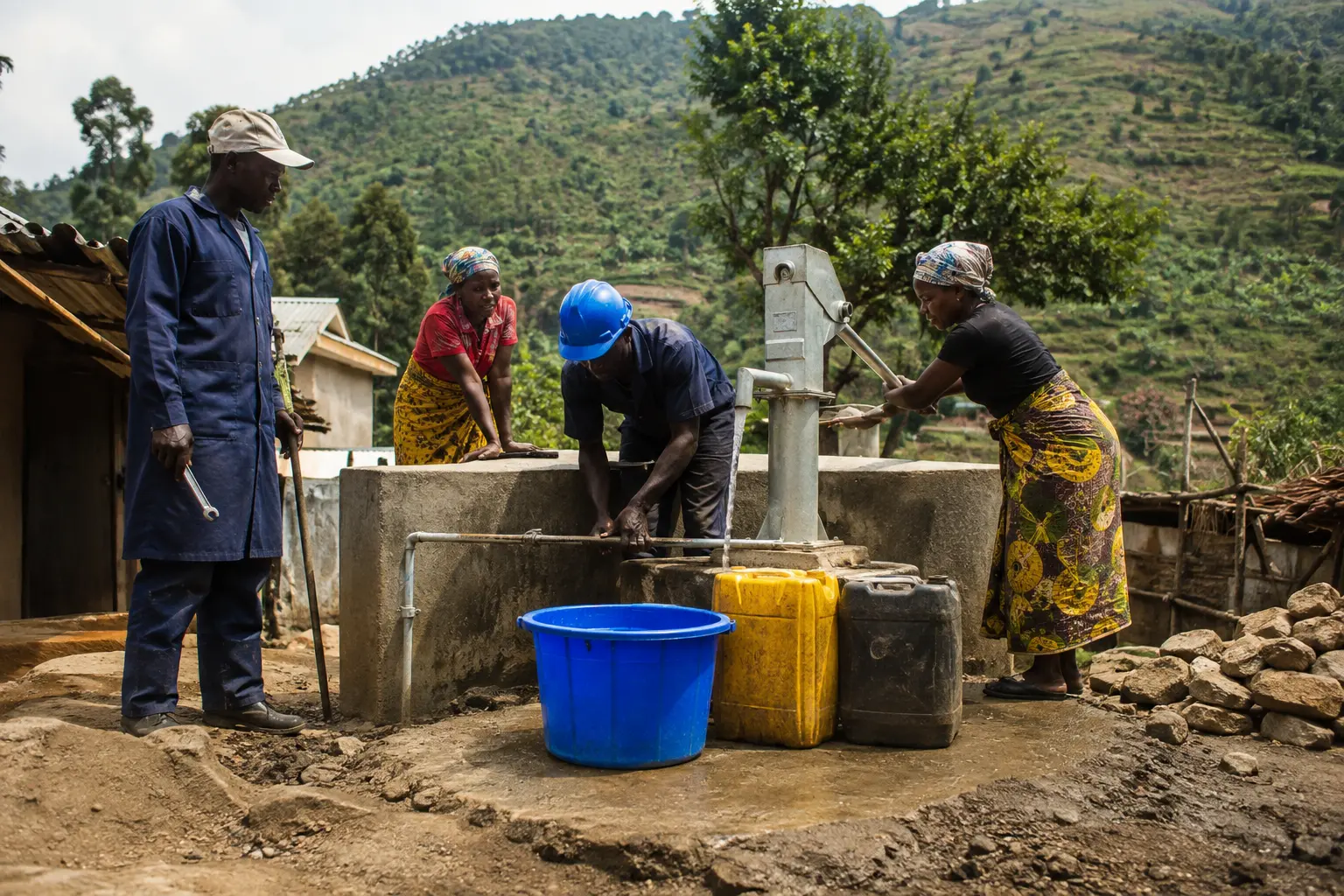
Locals running Community Water Projects

Why Community Ownership Is the Key to Long-Term Water Projects

Community ownership is what makes water projects last. That’s because when local people plan, manage, and maintain their own water infrastructure, systems survive. Without that effort, even well-funded projects collapse once outside organisations pack up and leave.

We’ve spent nearly 25 years watching donor-funded water projects fail in low-income countries across Africa, Asia, and Latin America. Outside teams build and leave without training anyone. When that happens, water services rarely last more than a few years. Every single one of those residents deserved better than that.

So we put this together for you. We’ll cover why top-down projects keep failing, what real community ownership looks like, and how sustainable water access gets built to last.

You won’t want to skip this one.

Top-Down Water Projects: Why They Keep Falling Short

A faulty water system built around assumptions

Top-down water projects fall short because they’re built around assumptions. Put simply, boardrooms design infrastructure projects far from the communities they’re meant to serve. It’s like handing someone a car with no keys. It just sits there and rusts.

The breakdown usually starts in one of three places:

  • No Local Input: Nobody surveys the village before the diggers arrive. The assumption is that one solution fits all, but no two communities have the same water needs.
  • No Handover Plan: Outside organisations leave without training anyone to maintain the system. A minor fault six months later and the whole system goes down with no one to fix it.
  • Communities Pay the Price: When systems fail, people face repair costs they can’t cover. From there, children miss school collecting water from rivers, women lose working hours, and the wider economic cost to these residents is significant.

Every one of these problems has the same root cause: the community was treated as an afterthought. If you’ve ever wondered what the alternative looks like, you’re about to find out.

What Does a Community-Led Water Project Look Like?

Community-led water projects put locals in charge of planning, building, and managing their own water access. Third-party organisations bring resources and technical support, but the locals drive every decision.

People’s involvement in planning and women in leadership roles define how well these projects work:

Local Planning and Decision-Making

Community water projects work best because they’re built around local knowledge. Let’s be real, locals understand their own water collection patterns, seasonal changes, and what suitable systems look like for their environment. No outsider can match up to that experience.

What’s more, involving locals at every stage of the process should be non-negotiable because only when people own a system do they truly take care of it.

Women at the Centre of Water Leadership

In many communities around the world, women are primarily responsible for water collection. That’s why excluding women from planning means losing the members who understand daily water needs better than anyone.

When women do lead, sanitation services improve, children’s health outcomes follow, and projects tend to last. Organisations like UNICEF back this up through their rural basic water access programs.

Community Involvement: The Foundation of Stronger Water Infrastructure

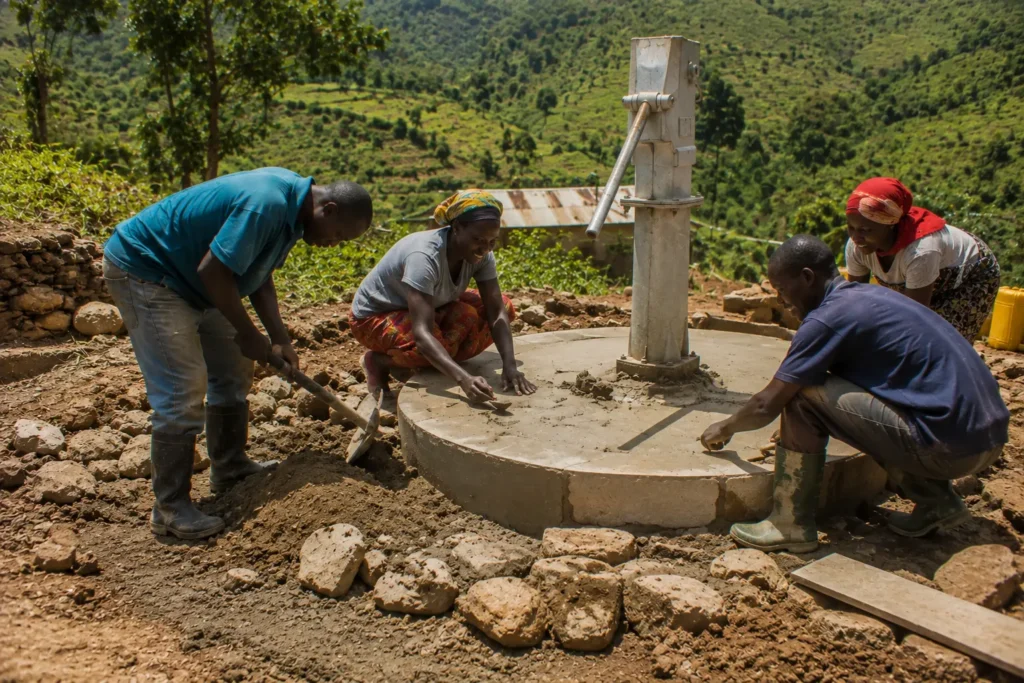
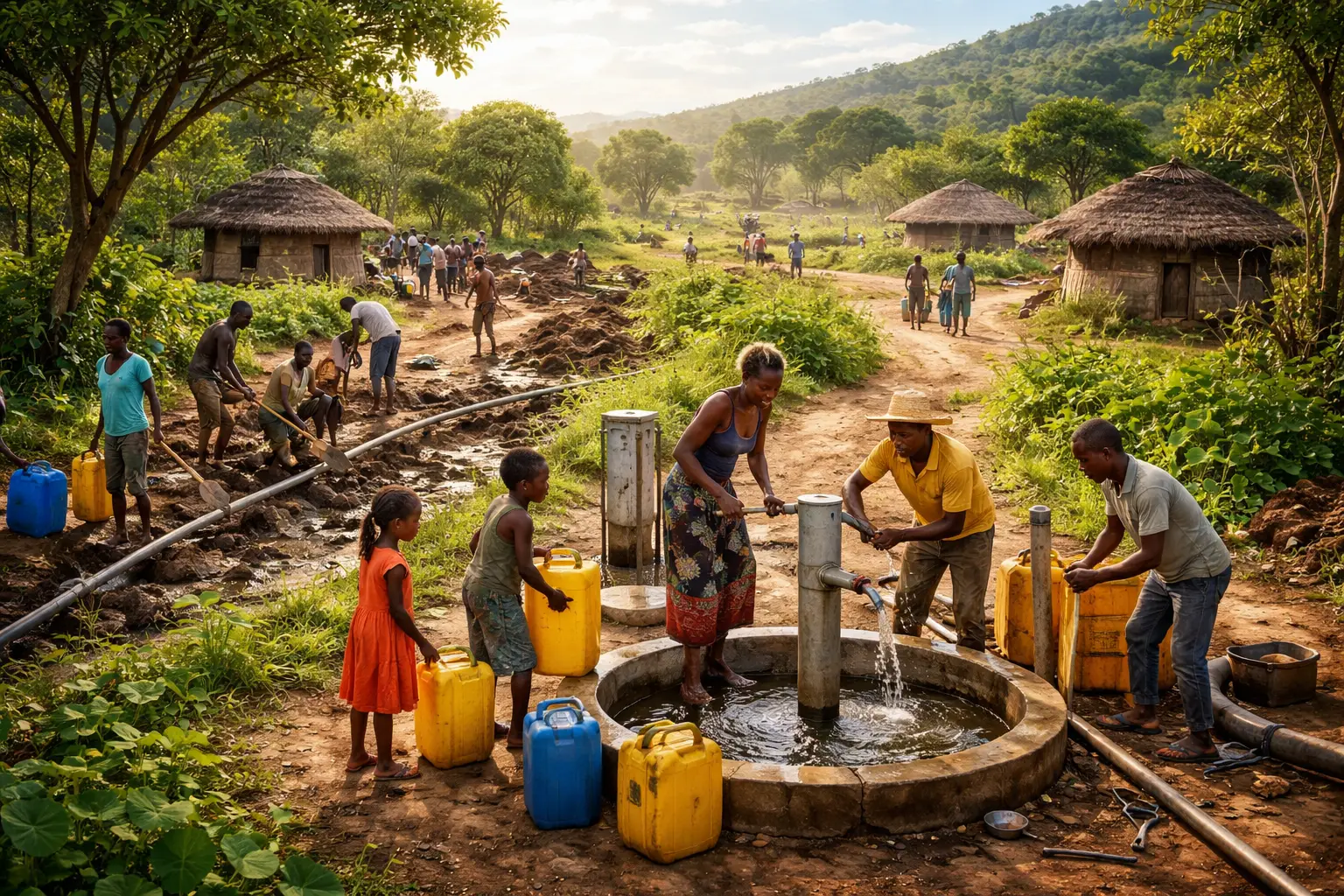
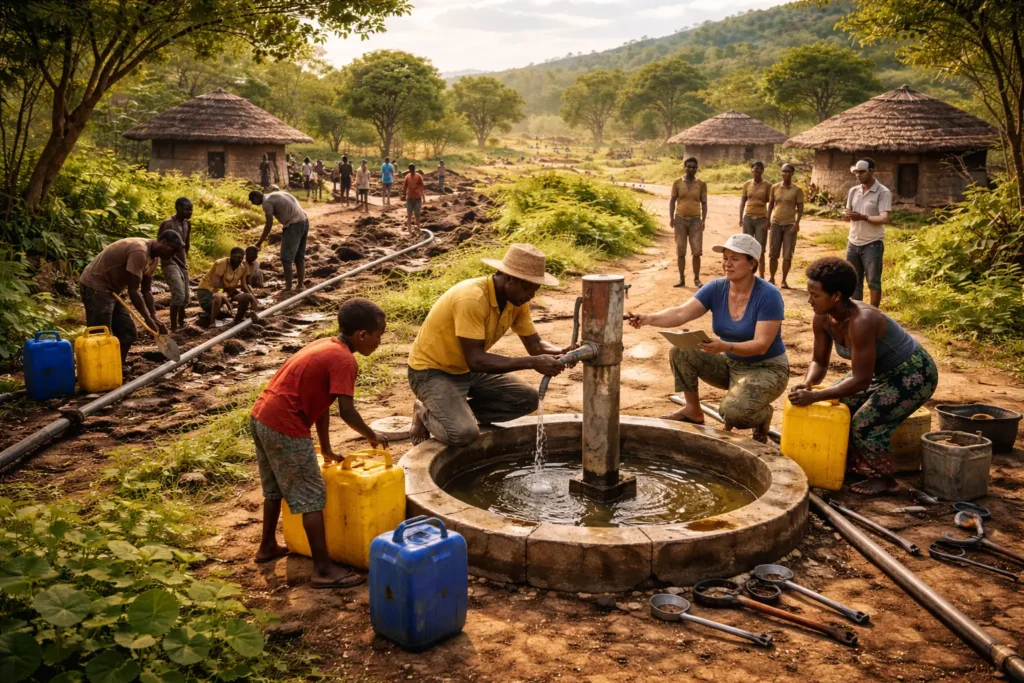
The community looking after their water system.

The same principle of local ownership applies to construction. When members help build water infrastructure, they take responsibility for keeping it running. In Ethiopia and Ghana, we’ve watched locally-run water systems keep running long after external projects closed.

People who helped design and build their own infrastructure stay invested in it. They know where the pipes run, which irrigation channels need seasonal clearing, and when a minor fault needs fixing before it becomes a costly one. Local knowledge like this is what keeps water supplies flowing effectively for years.

Community-built infrastructure also tends to be more practical. Locals pick materials that suit their environment and methods their teams can maintain. From there, they design the whole system around how their community uses water in real life.

A system built around real daily use just works better.

Can Community Ownership Improve Safe Drinking Water Quality?

Yes, it can. Ownership keeps local oversight active, which is what safe drinking water quality depends on. Without that local layer, water quality becomes nobody’s problem until it’s everyone’s problem.

In practice, it comes down to safely managed drinking water standards, WASH program integration, and regular monitoring:

  • Meeting Water Safety Standards: To reach safe drinking water standards, communities need trained locals running routine safety checks. Trained locals are what stand between a village and a contaminated water supply. In Kenya, for example, community-trained water monitors caught bacterial contamination in a local supply before it reached families.
  • WASH Program Integration: WASH programs work best when locals run them. In fact, families adopt safe water handling and hygiene habits more readily when the people teaching them are their own neighbours.
  • Regular Water Source Monitoring: From there, it’s about staying on top of contamination daily. Locals who check water sources regularly spot risks early, long before they become a health problem for the residents.

You can build the most sophisticated water system in the world. However, without a community behind it, it’s just expensive plumbing waiting to break.

Universal Access: Who’s Still Being Left Behind?

What’s even worse, the further a community sits from a city centre, the less likely it is to have safe drinking water. It’s about time we answer these questions once and for all: who are they, and how community-led models reach them.

Who Gets Left Out of Centralised Water Programs

For decades, national water programs have left children, women, and minority ethnic groups in rural areas without basic water access.

To date, in many countries, women walk hours each day just to collect water for their families (sometimes, four hours a day). Every hour spent collecting water is an hour away from their children, health, and their family’s daily needs.

According to UNICEF, hundreds of millions still can’t reach safe water through their basic water access programs.

How Communities Identify and Reach Those Left Behind

Community-led models put local leaders in charge of identifying who’s missing out. Those leaders know their residents personally (years of living there give them that). They know which families struggle with surface water, where basic services fall short, and who keeps getting left out of national plans.

Once these communities gain access, waterborne illness drops, school attendance rises, and women reclaim hours they used to spend walking to collect water.

Water Security That Outlasts the Project

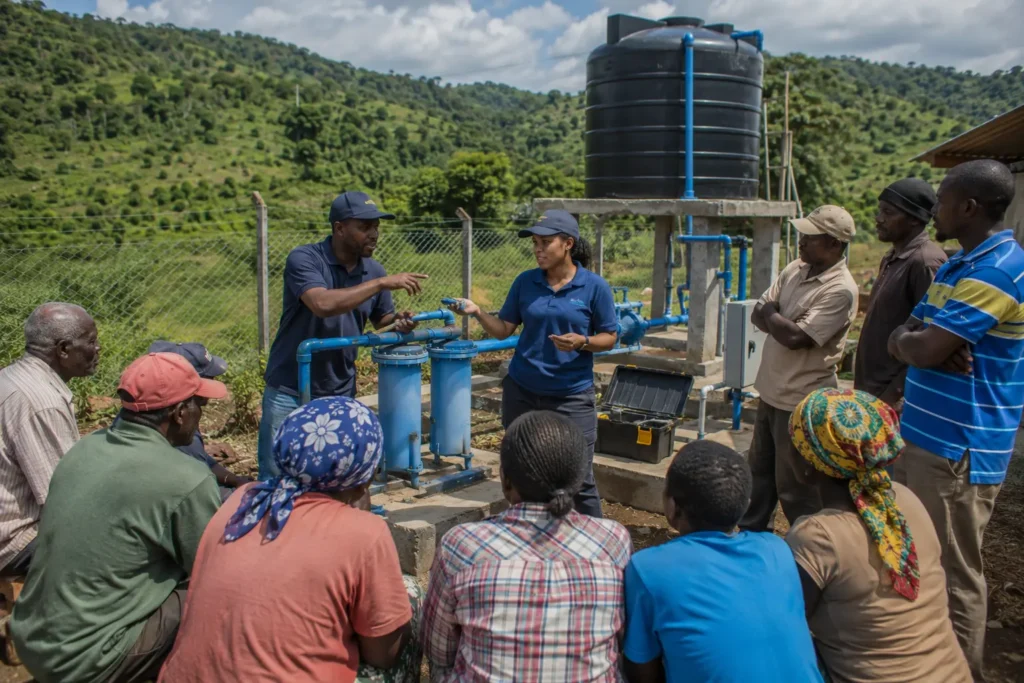
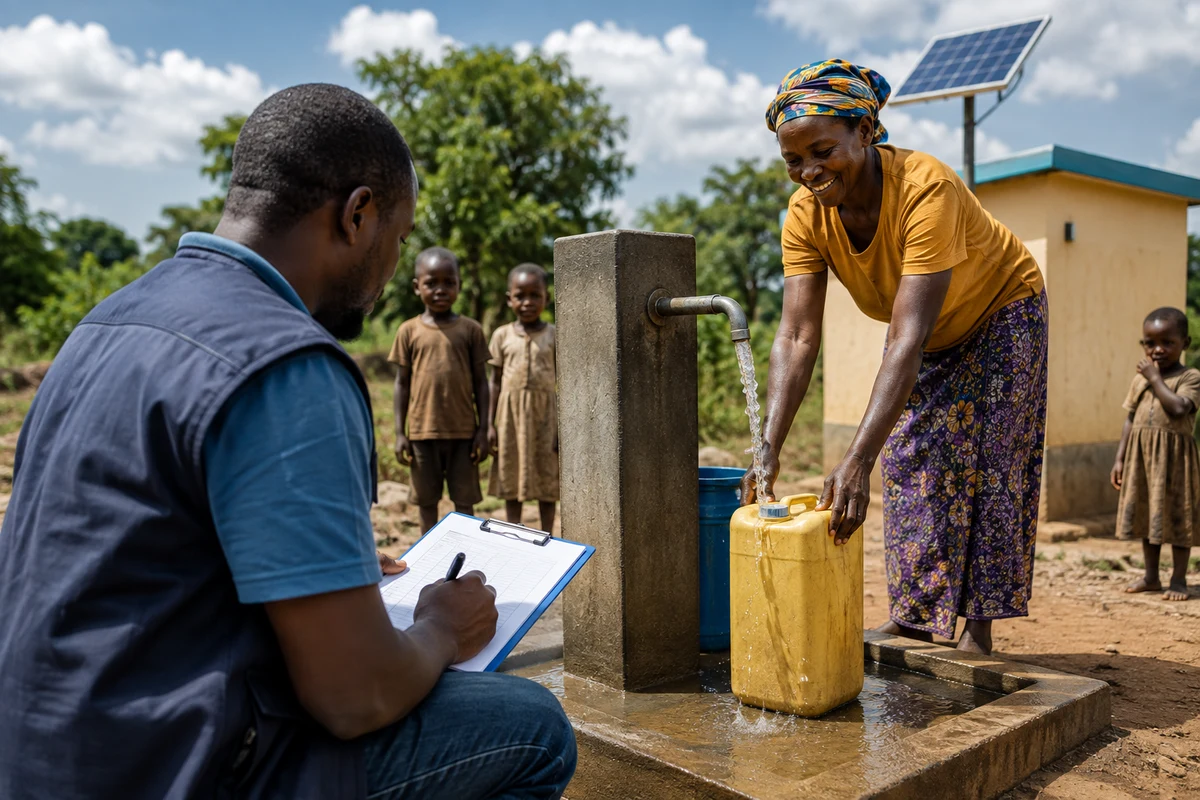
third-party training locals on how to use the water system

A water project that ends when the funding does hasn’t really solved anything. Real water security comes from systems that work even after the third-party team leaves. But for that to happen, communities must own and manage their own water supply, with trained locals and a solid maintenance plan already in place.

Climate change is already hitting water supplies hard. For instance, rivers run lower, rainfall gets unpredictable, and locals feel the strain before anyone else does.

In such scenarios, locally owned systems respond better because the people running them live with those changes daily. Solar-powered, energy-efficient infrastructure also means they don’t need to wait on outside teams to keep things running.

Only community ownership can get you long-term water security. Sustainable water security and progress toward sustainable development goals both need systems that outlast individual projects.

Be Part of the Change in Global Water Access

A pump without people behind it is just metal in the ground. We’ve sat with communities in Ghana and Peru who understood that better than anyone. Every single one of them wanted a say in how it was built, who ran it, and how long it would last.

At Easy510, we’ve spent nearly 25 years supporting community-led water projects across Africa, Asia, and Latin America. The benefits go beyond clean water: families get healthier, children stay in school, and women reclaim hours of their day.

If you want to be part of that progress, contact us today. Together, we can support residents building sustainable water access for the future. Every person who gets involved brings more communities closer to safe, lasting water access.

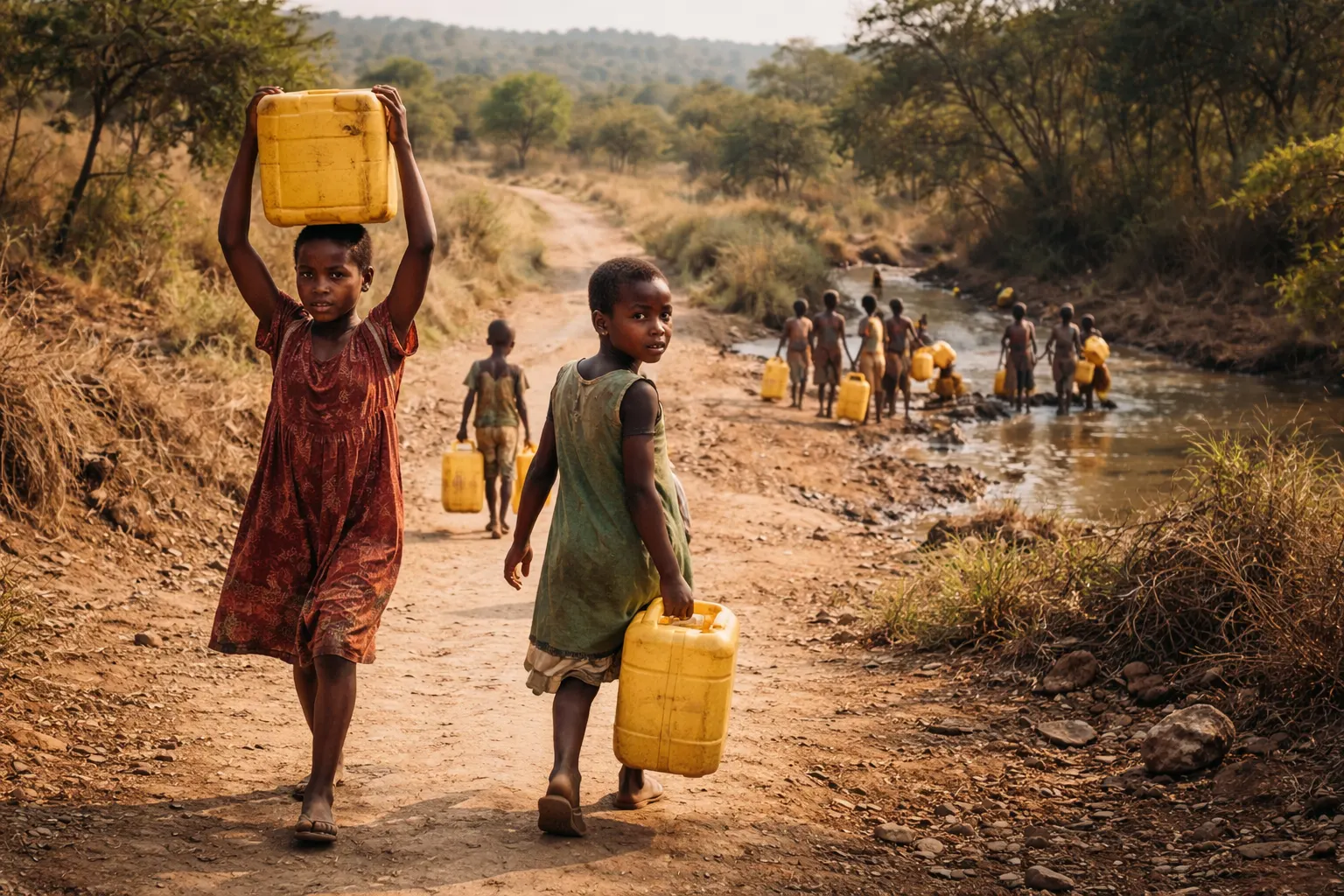
Children struggling for Clean Water Access

How Lack of Clean Water Quietly Disrupts Education and Health

Lack of clean water access results in kids missing school to haul water for their families. They also fall behind when waterborne illnesses keep them home for weeks. These barriers ultimately steal entire futures.

Billions of people face this reality right now, but the pace of change remains frustratingly slow. We’ve spent nearly 25 years working alongside communities caught in this cycle. And to increase awareness, this article will explain:

  • How collecting water disrupts children’s school
  • Girls get hit with extra barriers that lock them out of classrooms
  • Students battle daily health risks most people never think about
  • What changes when communities gain access to safe water and sanitation

Let’s explore how water decides the fate of entire generations, and how you can help.

What Is the Real Cost of Poor Water Access?

Poor water access costs students millions of school hours every year, along with their health and future opportunities.

You might be wondering how something as simple as water could derail a child’s education. The answer comes down to three things: time spent collecting it, illnesses from drinking it, and safety barriers that keep girls home.

Lost School Hours Add Up Fast

Girls around the world spend roughly 200 million hours each day collecting water instead of attending school (and yes, that’s every single day). In most communities, water collection falls on women and girls, while boys attend classes without worry.

These girls walk approximately 2 hours daily to fetch water for their families. All those hours hauling water mean missed lessons and incomplete assignments while classmates move ahead.

Illness Keeps Classrooms Empty

Waterborne diseases like cholera and typhoid cause serious disruptions. Just one severe bout of diarrhea keeps students out of class for 5 to 10 days. Multiply that across entire regions, and you get millions of lost school days every year.

The worst part? Once kids fall behind, closing those learning gaps becomes nearly impossible.

Girls Face Extra Barriers

Did you know that in Sub-Saharan Africa, only 37% of girls complete lower secondary education? This low number stems from improper menstruation facilities, which force adolescent girls to stay home every month (a reality millions face globally).

Girls also risk harassment and assault when forced into open defecation. So, girls tend to avoid schools when basic safety isn’t guaranteed.

Fortunately, positive changes take place when schools and homes finally get access to clean water.

Clean Water Access: The Link to Better Attendance

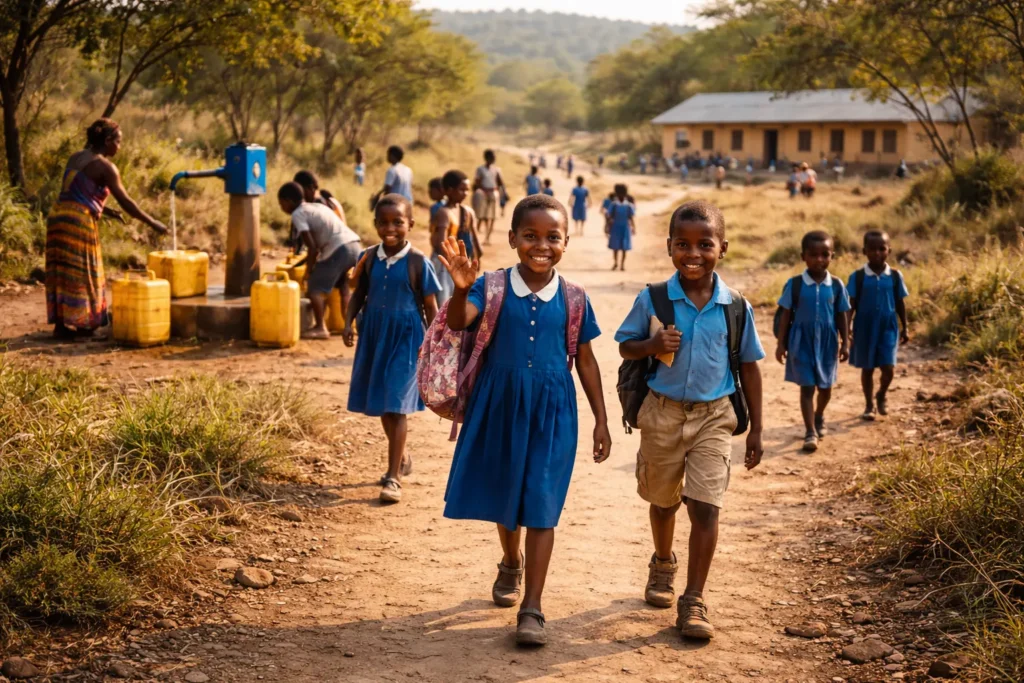
Children going to school instead of hauling water

Clean water near schools gives children both the time and the energy they need to show up for class. When families get clean water at home, children gain back hours every day for schoolwork and rest instead of hauling water.

And here’s where it gets interesting. Parents no longer have to choose which children stay home to collect water. The time saved means kids can hit the ground running each morning. They’re not exhausted from walking 6 hours before class starts.

Access to safely managed drinking water completely changes how a child’s day unfolds. Instead of arriving drained from dawn treks, they show up ready to learn. When daily routines shift like this, entire education paths open up.

But showing up only works when students stay healthy enough to learn.

Water-Related Illnesses and Student Health

Ever wonder why some classrooms stay half-empty during certain seasons? Contaminated drinking water is usually the culprit. When students drink unsafe water, they often get sick, which leads them to miss out on lessons.

Here’s how that cycle plays out.

Waterborne Diseases Cause Frequent Absences

Through our work in northern Luzon, we’ve seen firsthand how contaminated water fuels constant illness cycles in schools. Students recover from one infection only to catch another within weeks. This happens most often in schools without access to safe drinking water, especially during rainy seasons when water sources get even more contaminated.

The pattern breaks once communities get reliable, clean water sources.

Malnutrition Weakens Learning Ability

Chronic diarrhea stops children’s bodies from absorbing nutrients needed for brain development and focus. Malnourished students can’t concentrate like their healthy peers because they struggle to retain information. Ultimately, poor nutrition from unsafe water creates a cycle where sick children simply can’t learn well, even when they show up to school.

Health issues affect all students, but girls face an entirely different set of barriers.

Why Improved Sanitation Keeps Girls in School

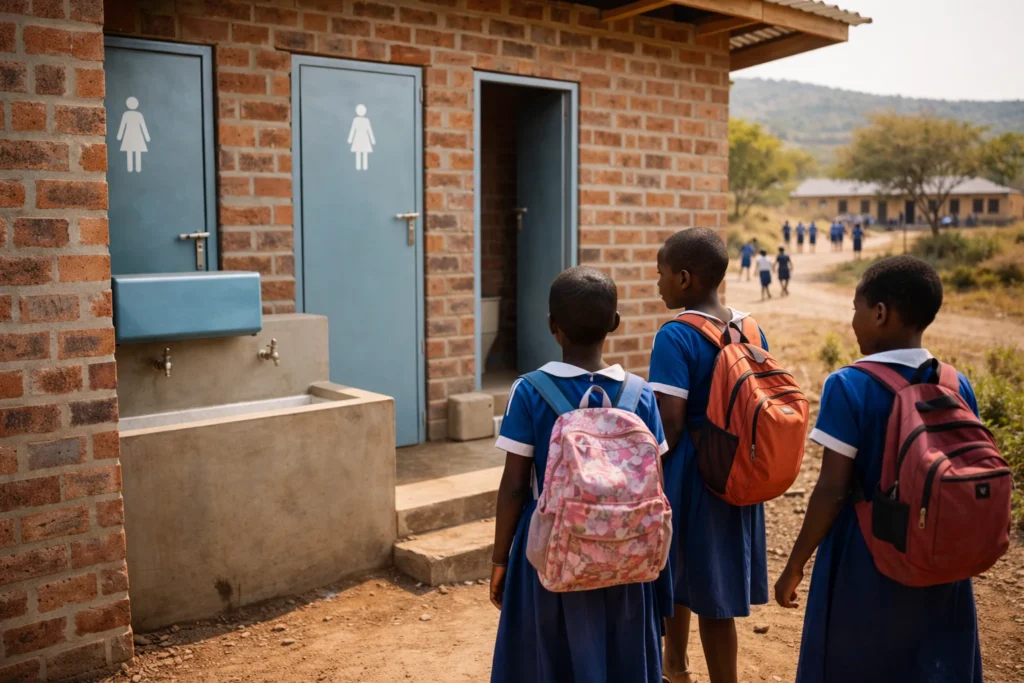
Girls happy about improved sanitation at school

Improved sanitation directly affects girls’ school attendance by providing the privacy and safety they need during menstruation and daily bathroom needs. Without proper facilities, millions of girls simply stop going to school. And the reasons often extend past just hygiene.

Privacy During Menstruation Can’t Be Ignored

In Côte d’Ivoire, 20% adolescent girls miss school regularly because of menstruation challenges (a reality millions of girls face monthly).

Without private toilets and clean water, girls stay home during their periods. But proper sanitation facilities give them the dignity to attend classes year-round. When schools add these facilities, attendance rates jump within the first term.

Safety Concerns With Open Defecation

Girls who defecate in open areas face harassment and assault every day. Without proper toilets at school, students wait until they get home. This causes physical discomfort and mental distraction all day long. Safe, private sanitation facilities, however, allow girls to focus on learning instead of personal safety.

The link between sanitation and education is clear, but access to safe drinking water creates even broader health benefits.

How Safe Drinking Water Protects Community Health

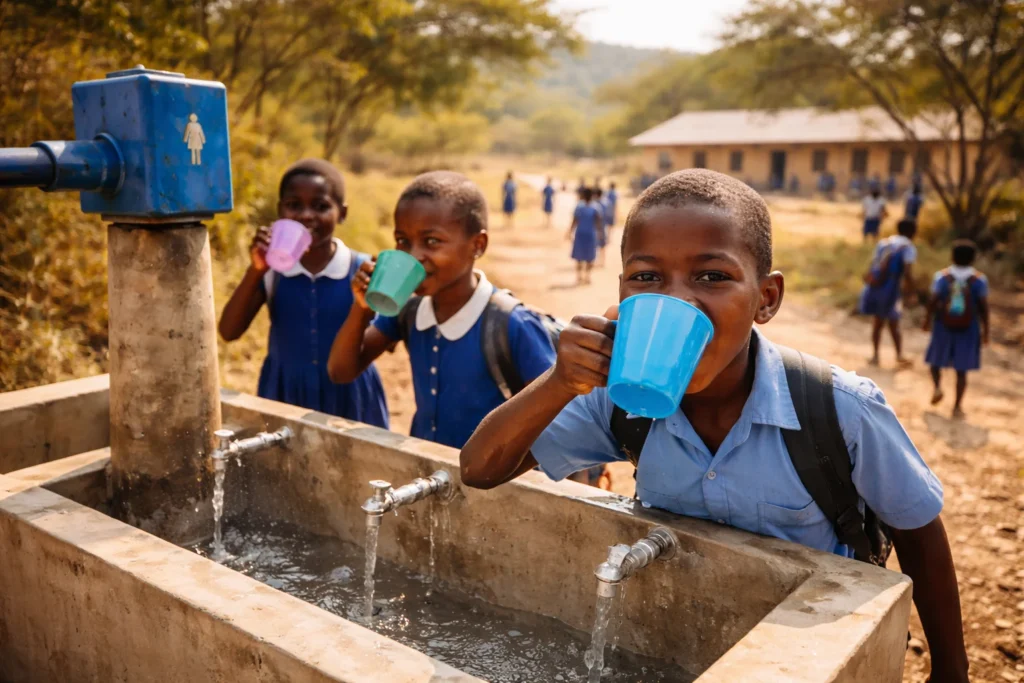
Children drinking clean water from water station installed in schools

Safe drinking water not only quenches thirst but also stops disease outbreaks. After working alongside communities for nearly 25 years, we’ve seen how clean water stops illness before it spreads through classrooms and households.

Clean water access reduces child mortality rates significantly. Because communities with access to safely managed drinking water see fewer clinic visits and lower healthcare costs for families.

The benefits ripple outward from there. Healthier children mean healthier families. And healthier families mean stronger communities that can focus on development instead of just surviving. When safe water and sanitation become standard, entire regions see improvements in life expectancy within just a few years.

So what’s the actual payoff when students stay healthy and attend school regularly?

Education Benefits: What Happens When Communities Get Clean Water

When communities get clean water, children gain more than just better health. They gain education, which then creates economic opportunity and long-term development. The results show up in three major ways, including:

Higher Income Potential for Educated Communities

Girls who stay in school one extra year can earn 20% more as adults. Bear in mind, educated children become adults who can pursue jobs beyond subsistence farming.

Also, communities with higher education rates see improved economic stability across generations. These income gains lift entire villages out of poverty cycles.

Better Career Opportunities Break Poverty Cycles

Students who complete school can become teachers, nurses, engineers, and community leaders. Education opens doors to formal employment with steady income and benefits for entire families.

Plus, breaking the water collection cycle gives children time to dream about careers beyond their villages. Once those dreams become reality, many return home to improve their communities.

Climate Resilience Through Knowledge

Educated communities know how to conserve water and farm sustainably. Students also learn about hygiene, sanitation, and how to stop waterborne illnesses from spreading. This knowledge helps communities respond to droughts, floods, and environmental changes that threaten their water resources.

These long-term gains show why universal access to safe water isn’t solely about health.

Small Changes Create Lasting Futures

Safe water and sanitation are human rights, yet millions still lack them. Children miss out on education, health, and future opportunities simply because they can’t access clean drinking water. Solutions like improved sanitation facilities and better water management already exist. They work when communities get the right support.

We’ve walked through how water collection steals school time, how illness empties classrooms, and why girls face unique barriers. We’ve also seen how clean water access creates healthier students, better attendance, and economic progress that lasts for generations.

Our team at Easy510 will take you through every step you need to bring safe water solutions to communities that need them most. Let’s build those futures together, piece by piece.

Residents maintain community water projects

Why Water Projects Succeed More Often When Communities Lead Them

Community water projects succeed because local people control the planning, building, and maintenance instead of waiting for outside help. Simple as that.

Traditional aid gets the installation part right but fails at everything after. Organisations fly in and set up equipment. Then they leave without teaching anyone how to maintain systems or source replacement parts. This action results in billions of aid funding going to waste on infrastructure that breaks down within months.

After 25 years working with communities worldwide, we know what separates successful projects from failed ones. This article breaks down:

  • Why locally-led initiatives outlast top-down programs
  • How communities identify their real water needs
  • The role of training in system maintenance
  • Smart ways outside groups can support effectively

Let’s dig into why putting communities in charge changes everything.

Community Water Projects vs Traditional Aid Programs

Traditional aid programs hand communities finished water systems with instruction manuals. On the flipside, community-driven projects put local people in charge of planning, building, and maintaining their own infrastructure. But let’s discuss what exactly sets them apart.

Local Knowledge Shapes Better Solutions

Communities know which wells run dry each summer and understand soil types outsiders miss. For example, a village in rural Ghana steered engineers away from a site that flooded every wet season. Fortunately, their input saved the water supply infrastructure from failure.

Ownership Creates Lasting Commitment

When communities build their own systems, they are able to fix any problems immediately. UNICEF helps communities set service standards because building something yourself creates responsibility. Let’s be honest, outside donors leave after installation, but it’s the community members who stay and protect their investment.

Cultural Practices Guide Water Use

Water collection times and gender roles vary across cultures. Community input ensures water points respect local customs around privacy and gathering spaces for women. Projects that ignore these needs sit unused while people walk kilometres for clean water instead.

But even well-designed infrastructure needs maintenance, and that’s where traditional top-down projects run into trouble.

Why Top-Down Water Projects Struggle to Last

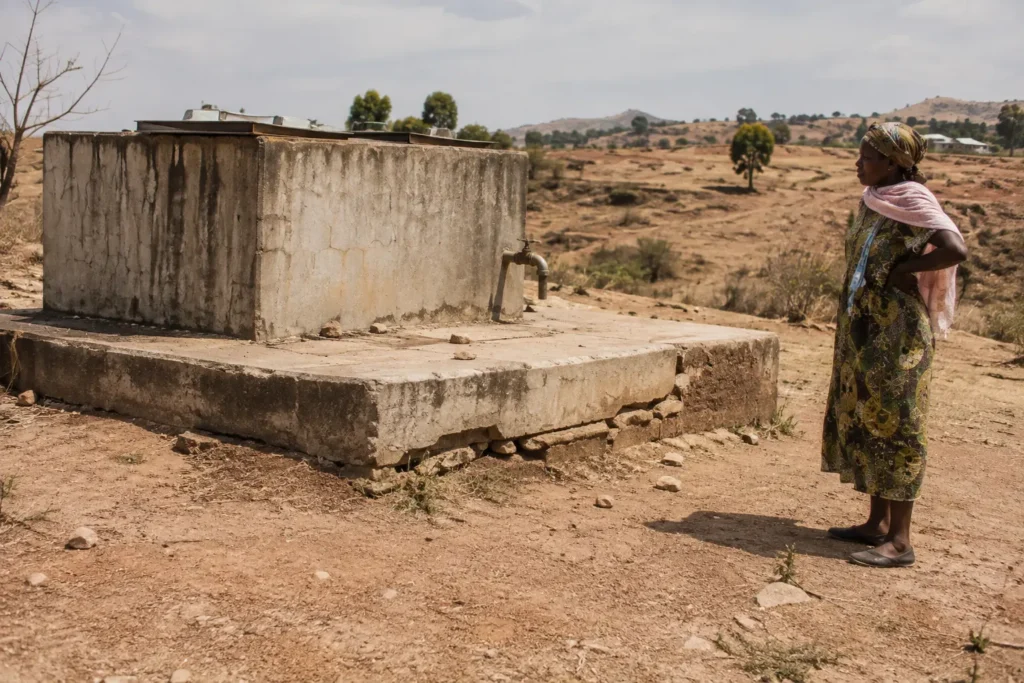
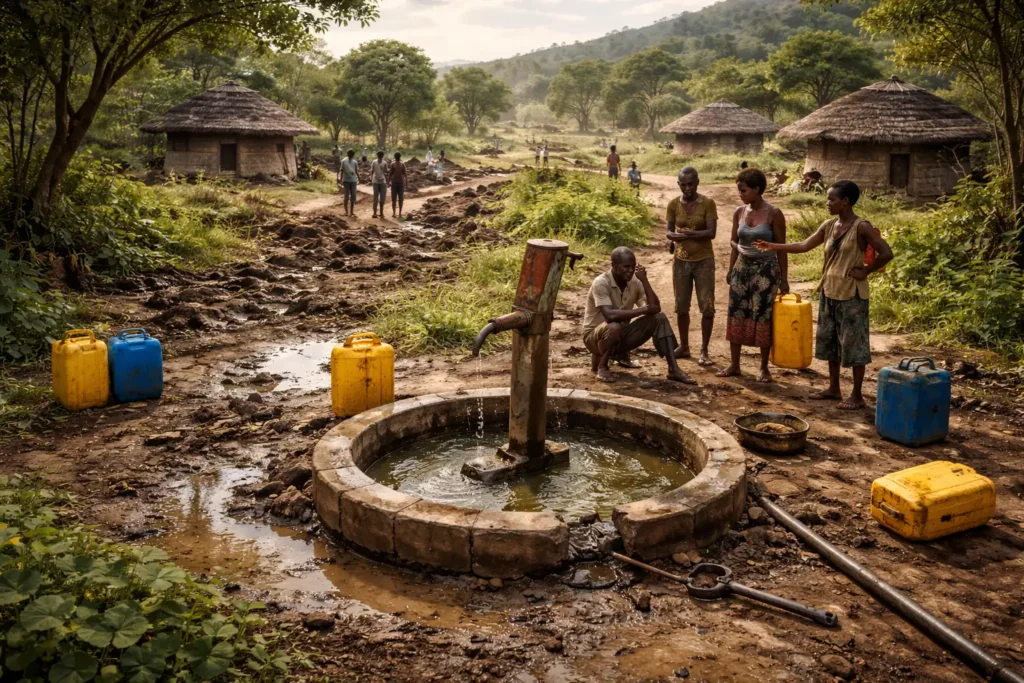
Disappointed residents waiting by a broken water project

Top-down water projects fail because outside organisations install systems without teaching communities how to maintain them. Let’s be real here. At any given time, 30 to 40 per cent of the rural water supply in low-income countries doesn’t work.

This occurs because these projects often choose expensive technology requiring specialised skills over simple systems that locals can manage. What happens when the circuit board fails, and nobody within 200 kilometres knows how to fix it? Communities return to unsafe drinking water sources.

On top of that, external funding dries up after installation, and we’ve watched this cycle repeat across three continents. Millions of abandoned infrastructure leave people without reliable access to clean water or sanitation services.

So how do communities figure out what they need before building starts?

How Communities Identify Their Real Water Needs

Communities identify their water needs by mapping every source, tracking daily collection patterns, and planning for population growth. You might be wondering how this process plays out on the ground. It breaks down into two main steps.

Mapping Existing Sources and Daily Patterns

Community members document every water source, including seasonal streams and hand-dug wells. For instance, families track how much time women and children spend collecting clean water daily. Local groups then map contamination risks near livestock areas that outside experts often overlook, and that knowledge is worth its weight in gold.

Planning for Future Population Growth

The population increases based on birth rates and settlement patterns. This helps communities plan for schools and health clinics that will need a reliable water supply. Beyond that, residents identify land for future wells before development makes locations unavailable, which means water resource management happens before shortages hit.

Knowing what you need is one thing, but local control keeps water flowing long-term.

The Benefits of Community-Controlled Water Security

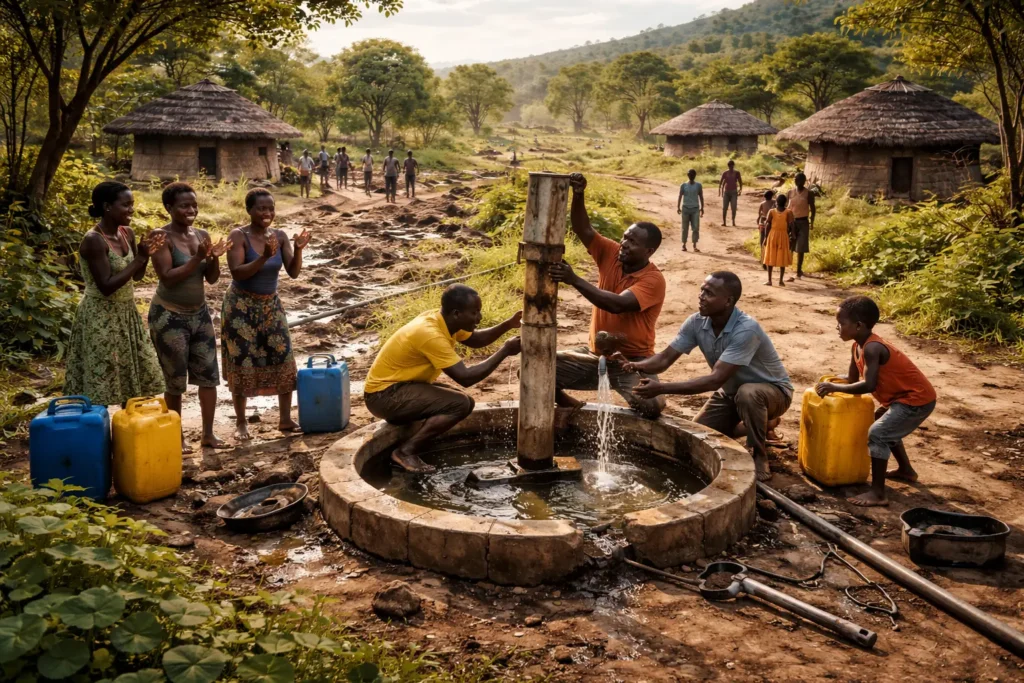
The villagers working together to fix the broken water pump

The greatest advantage of local water control is speed. Communities fix problems within hours instead of waiting weeks for outside help. And here’s where it gets interesting: communities with local water management see fewer system failures because residents catch small problems early.

This only works when communities have funds for repairs. Local committees collect small fees for pump repairs and parts. In our 25 years working with communities worldwide, we’ve watched locally-led projects maintain consistent service. Despite 2 billion people still lacking access to safely managed drinking water, community-controlled water security reduces conflict through fair rationing during droughts.

Also, when water points are accessible, this gives women more time for education and work, and children stop missing school to fetch water. The good news is that health improves fast with fewer illnesses when communities manage their own clean water and sanitation services.

But none of this happens without proper training.

Training Local People: The Key to Long-Term Water Supply

Training community members to handle repairs keeps water flowing. Believe it or not, this approach changes how rural communities maintain their drinking water systems. Training locals creates better outcomes

  • Immediate pump repairs: Communities with trained technicians fix breakdowns within hours. This way, families won’t ever return to unsafe water sources.
  • Early contamination detection: Local water quality testing catches problems before outbreaks spread. In a real-life scenario in Kenya, a trained tester identified E. coli three days early, which prevented a health crisis.
  • Hygiene education spreads naturally: Trained members teach neighbours proper sanitation and hygiene practices at water points. This reduces disease transmission more effectively than occasional workshops.
  • Building local expertise: Skills training creates employment as technicians serve multiple villages. Over time, knowledge passes down organically, strengthening wash programs without outside support.

Training gets communities started, but they need the right kind of external support to sustain progress.

Supporting Community Water Projects the Right Way

Outsiders helping the community fix the water pump

External support can strengthen community water projects or undermine them. The difference lies in how outside groups approach their role. The most effective approaches share five characteristics.

  • Ask before building: Outside organisations should ask communities what they need instead of assuming. This prevents expensive mistakes like installing equipment unsuited to local water resource conditions or cultural practices.
  • Fund training alongside infrastructure: Funding should cover training programs, tool kits, and spare parts alongside infrastructure. Through our partnerships across Asia, Africa, and Latin America, we’ve learned that comprehensive training keeps water supply running decades longer than equipment alone.
  • Teach rather than fix: Technical support works when experts teach community members instead of doing repairs themselves. We say this because outside groups often drop the ball by focusing only on infrastructure rather than building local capacity for sustainable management.
  • Build long-term partnerships: Long-term partnerships help communities adapt systems when needs change over time. We all know that climate change brings new challenges to water security that require flexible approaches and continued collaboration between teams.
  • Connect to supply chains: Communities need access to regional supply chains for affordable replacement parts and testing equipment. This prevents breakdowns from becoming permanent failures that force people back to unsafe sources.

What’s more, government bodies investing in wash programs see better outcomes when communities lead from planning through implementation. These principles guide our work at Easy510.

Take the First Step Toward Lasting Water Access

Millions still lack reliable access to safe drinking water. This remains an issue because traditional aid programs install systems without building local capacity. Community-led water projects solve this safe drinking water problem by putting residents in control from the start to the end. This approach is the best solution to help projects last for generations.

In these pages, we’ve covered why locally-led initiatives outlast top-down programs and how communities identify their real needs. We also explored the training’s role in maintenance and effective ways outside groups can support without taking control.

Easy510 partners with communities to build water systems that work. Our team will take you through every step you need to create lasting change. Let’s start today.