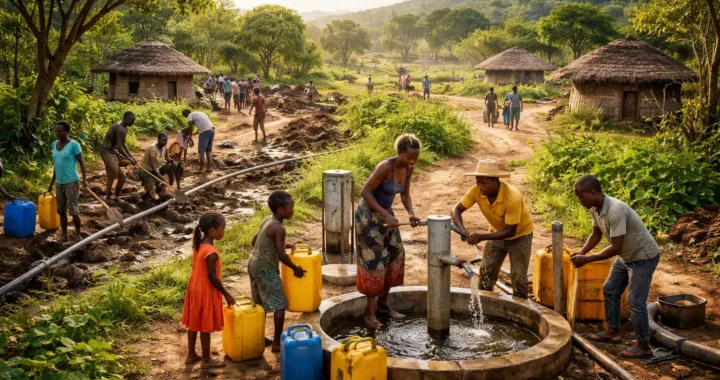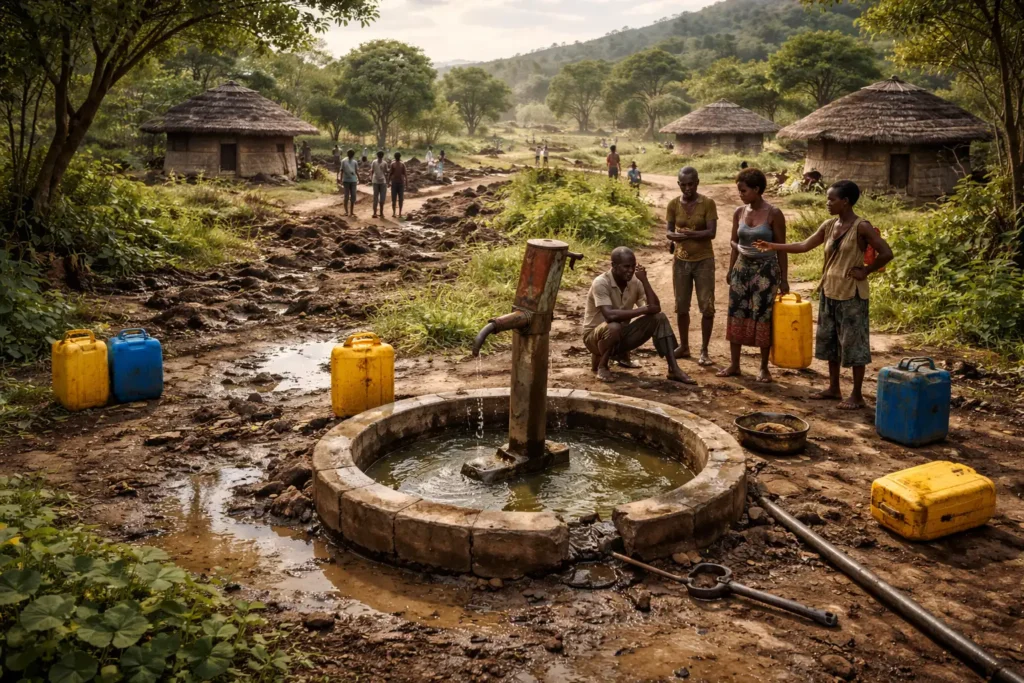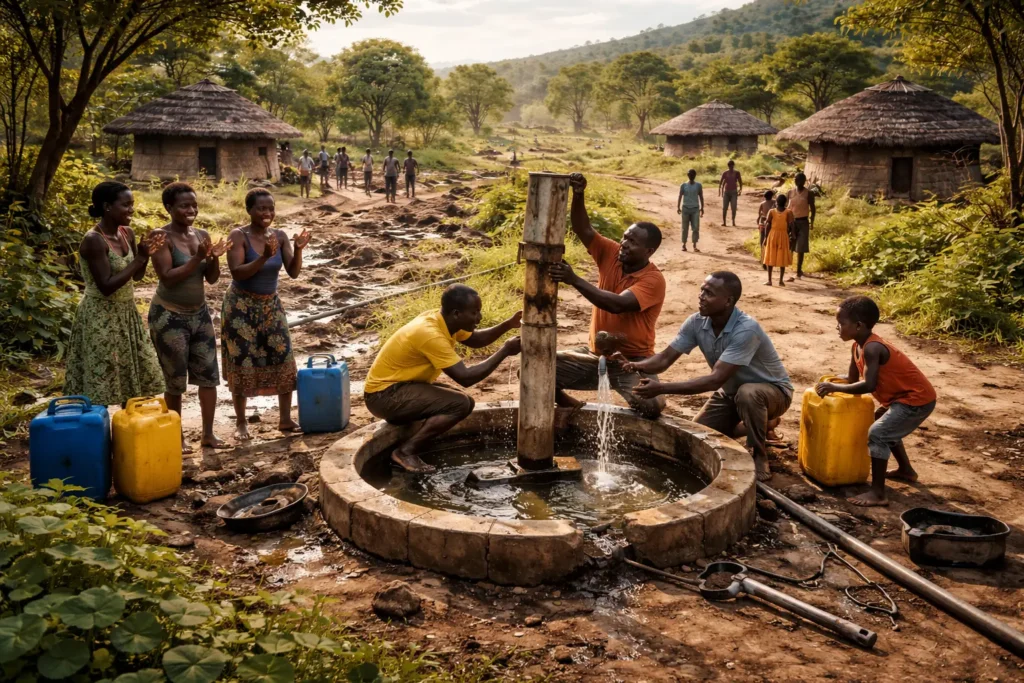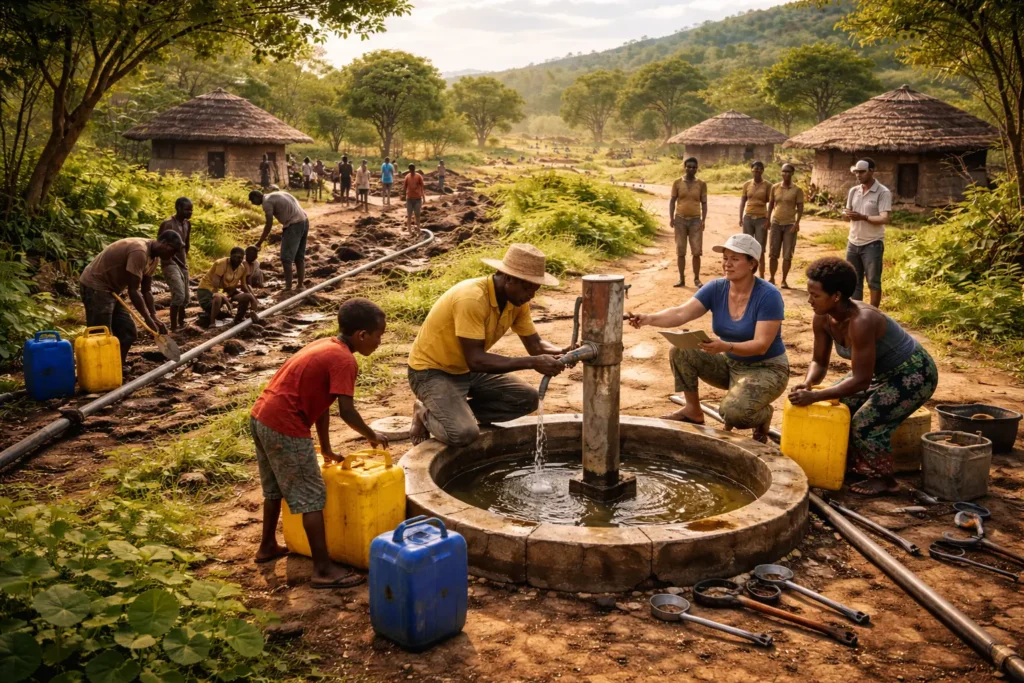
Children struggling for Clean Water Access

How Lack of Clean Water Quietly Disrupts Education and Health

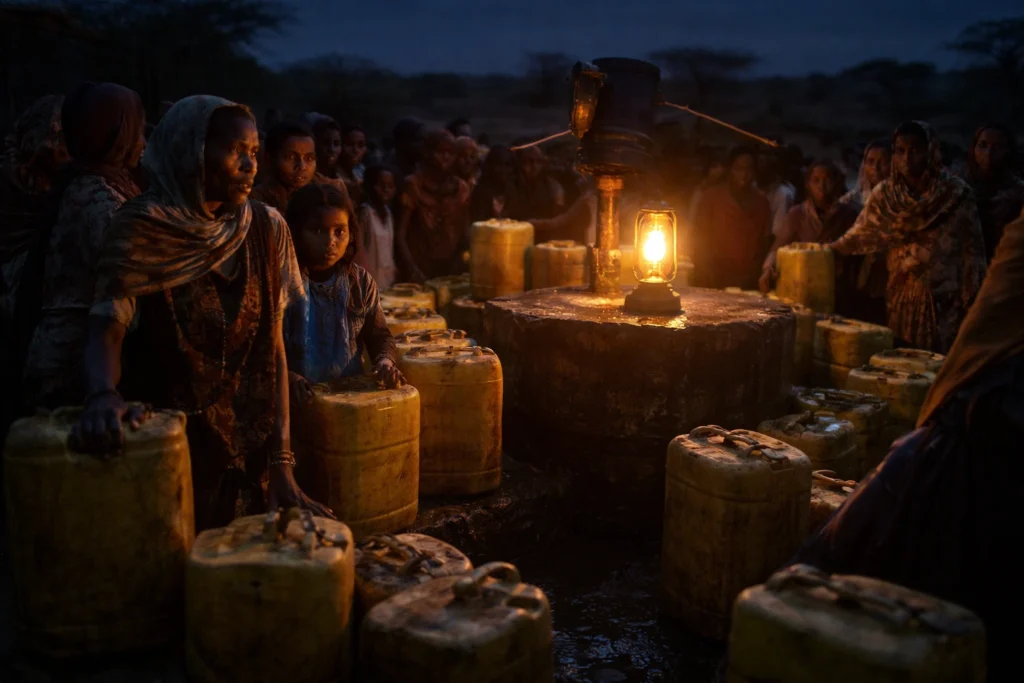
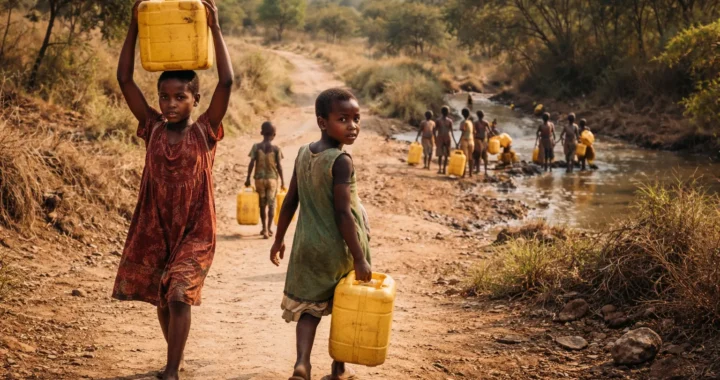
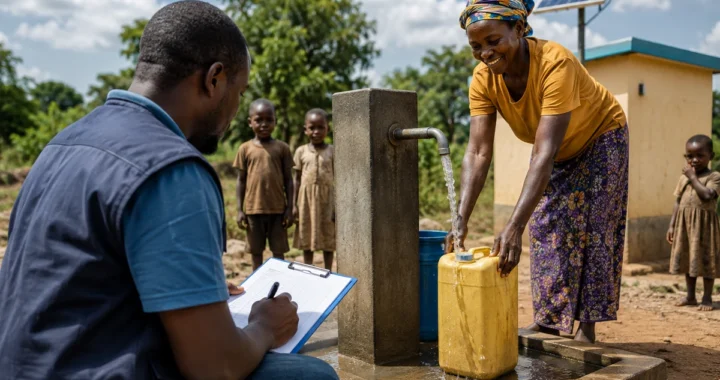
Lack of clean water access results in kids missing school to haul water for their families. They also fall behind when waterborne illnesses keep them home for weeks. These barriers ultimately steal entire futures.

Billions of people face this reality right now, but the pace of change remains frustratingly slow. We’ve spent nearly 25 years working alongside communities caught in this cycle. And to increase awareness, this article will explain:

  • How collecting water disrupts children’s school
  • Girls get hit with extra barriers that lock them out of classrooms
  • Students battle daily health risks most people never think about
  • What changes when communities gain access to safe water and sanitation

Let’s explore how water decides the fate of entire generations, and how you can help.

What Is the Real Cost of Poor Water Access?

Poor water access costs students millions of school hours every year, along with their health and future opportunities.

You might be wondering how something as simple as water could derail a child’s education. The answer comes down to three things: time spent collecting it, illnesses from drinking it, and safety barriers that keep girls home.

Lost School Hours Add Up Fast

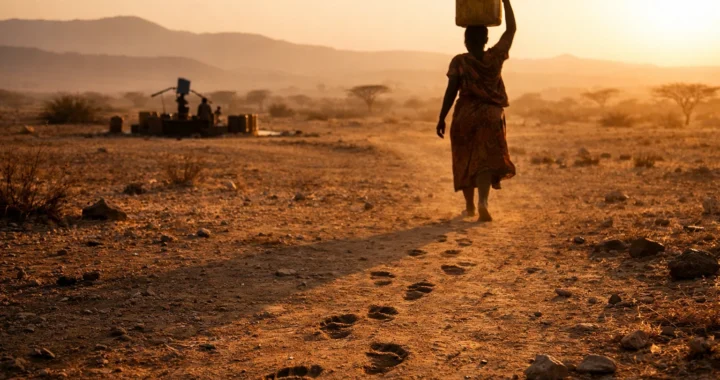
Girls around the world spend roughly 200 million hours each day collecting water instead of attending school (and yes, that’s every single day). In most communities, water collection falls on women and girls, while boys attend classes without worry.

These girls walk approximately 2 hours daily to fetch water for their families. All those hours hauling water mean missed lessons and incomplete assignments while classmates move ahead.

Illness Keeps Classrooms Empty

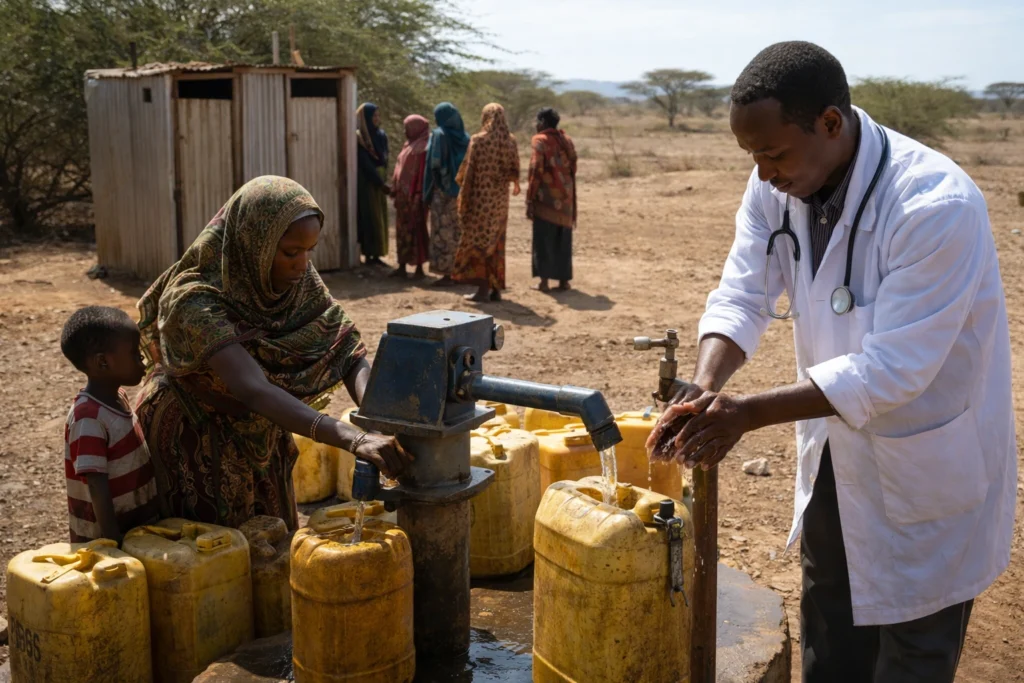
Waterborne diseases like cholera and typhoid cause serious disruptions. Just one severe bout of diarrhea keeps students out of class for 5 to 10 days. Multiply that across entire regions, and you get millions of lost school days every year.

The worst part? Once kids fall behind, closing those learning gaps becomes nearly impossible.

Girls Face Extra Barriers

Did you know that in Sub-Saharan Africa, only 37% of girls complete lower secondary education? This low number stems from improper menstruation facilities, which force adolescent girls to stay home every month (a reality millions face globally).

Girls also risk harassment and assault when forced into open defecation. So, girls tend to avoid schools when basic safety isn’t guaranteed.

Fortunately, positive changes take place when schools and homes finally get access to clean water.

Clean Water Access: The Link to Better Attendance

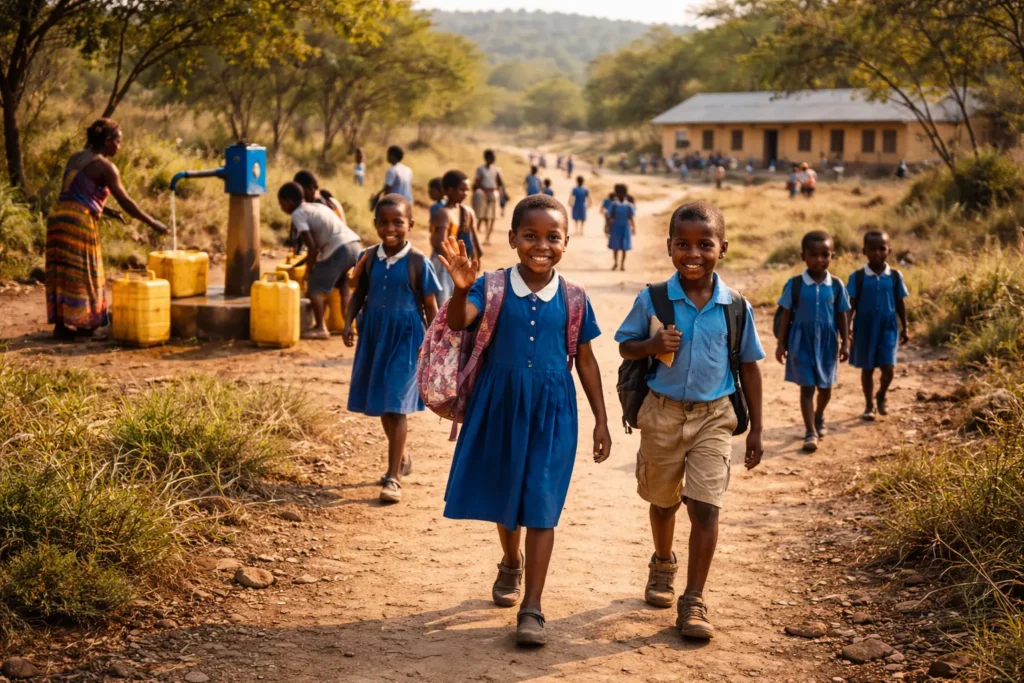
Children going to school instead of hauling water

Clean water near schools gives children both the time and the energy they need to show up for class. When families get clean water at home, children gain back hours every day for schoolwork and rest instead of hauling water.

And here’s where it gets interesting. Parents no longer have to choose which children stay home to collect water. The time saved means kids can hit the ground running each morning. They’re not exhausted from walking 6 hours before class starts.

Access to safely managed drinking water completely changes how a child’s day unfolds. Instead of arriving drained from dawn treks, they show up ready to learn. When daily routines shift like this, entire education paths open up.

But showing up only works when students stay healthy enough to learn.

Water-Related Illnesses and Student Health

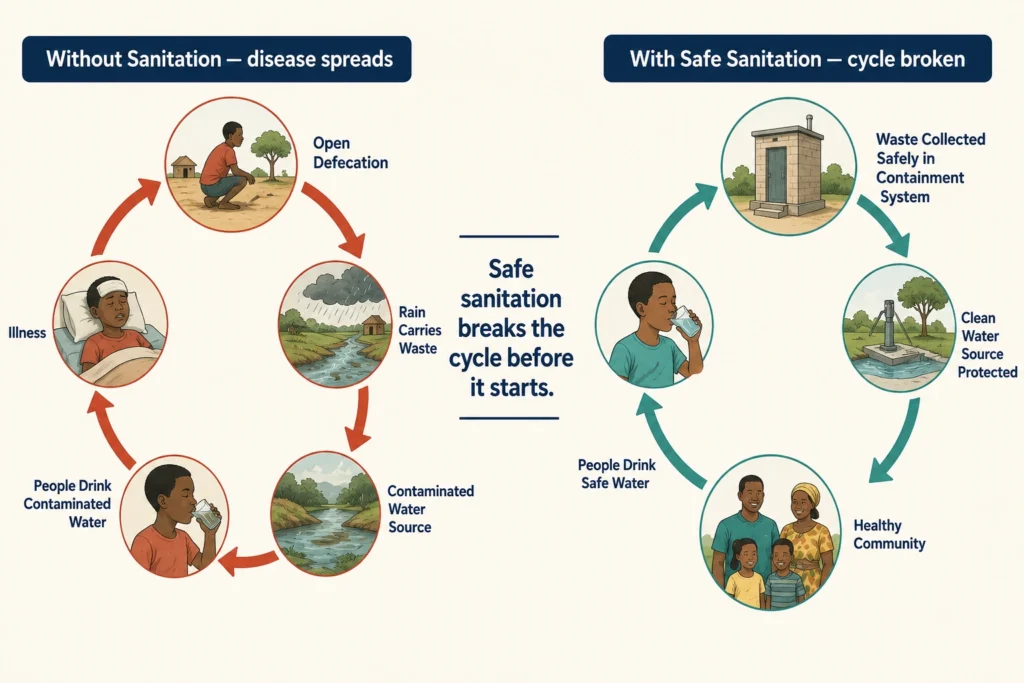
Ever wonder why some classrooms stay half-empty during certain seasons? Contaminated drinking water is usually the culprit. When students drink unsafe water, they often get sick, which leads them to miss out on lessons.

Here’s how that cycle plays out.

Waterborne Diseases Cause Frequent Absences

Through our work in northern Luzon, we’ve seen firsthand how contaminated water fuels constant illness cycles in schools. Students recover from one infection only to catch another within weeks. This happens most often in schools without access to safe drinking water, especially during rainy seasons when water sources get even more contaminated.

The pattern breaks once communities get reliable, clean water sources.

Malnutrition Weakens Learning Ability

Chronic diarrhea stops children’s bodies from absorbing nutrients needed for brain development and focus. Malnourished students can’t concentrate like their healthy peers because they struggle to retain information. Ultimately, poor nutrition from unsafe water creates a cycle where sick children simply can’t learn well, even when they show up to school.

Health issues affect all students, but girls face an entirely different set of barriers.

Why Improved Sanitation Keeps Girls in School

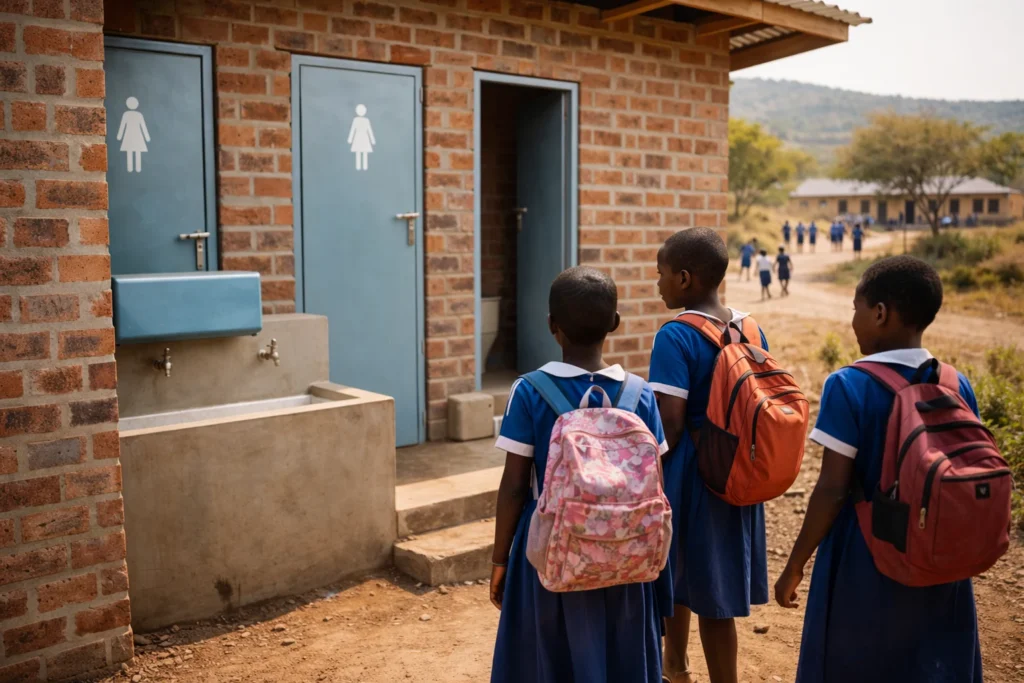
Girls happy about improved sanitation at school

Improved sanitation directly affects girls’ school attendance by providing the privacy and safety they need during menstruation and daily bathroom needs. Without proper facilities, millions of girls simply stop going to school. And the reasons often extend past just hygiene.

Privacy During Menstruation Can’t Be Ignored

In Côte d’Ivoire, 20% adolescent girls miss school regularly because of menstruation challenges (a reality millions of girls face monthly).

Without private toilets and clean water, girls stay home during their periods. But proper sanitation facilities give them the dignity to attend classes year-round. When schools add these facilities, attendance rates jump within the first term.

Safety Concerns With Open Defecation

Girls who defecate in open areas face harassment and assault every day. Without proper toilets at school, students wait until they get home. This causes physical discomfort and mental distraction all day long. Safe, private sanitation facilities, however, allow girls to focus on learning instead of personal safety.

The link between sanitation and education is clear, but access to safe drinking water creates even broader health benefits.

How Safe Drinking Water Protects Community Health

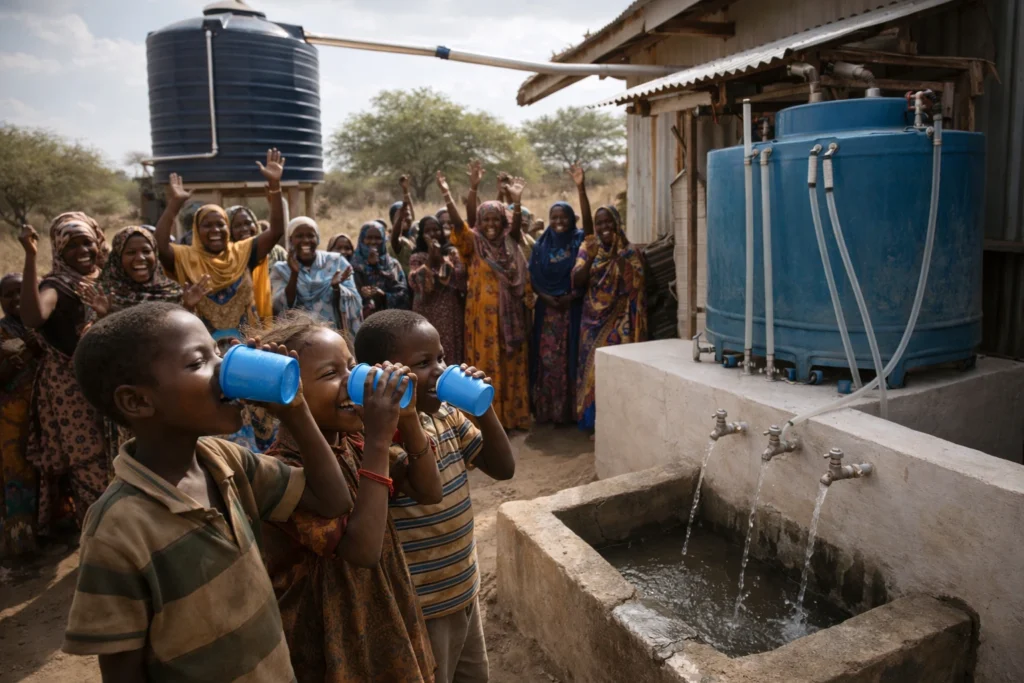
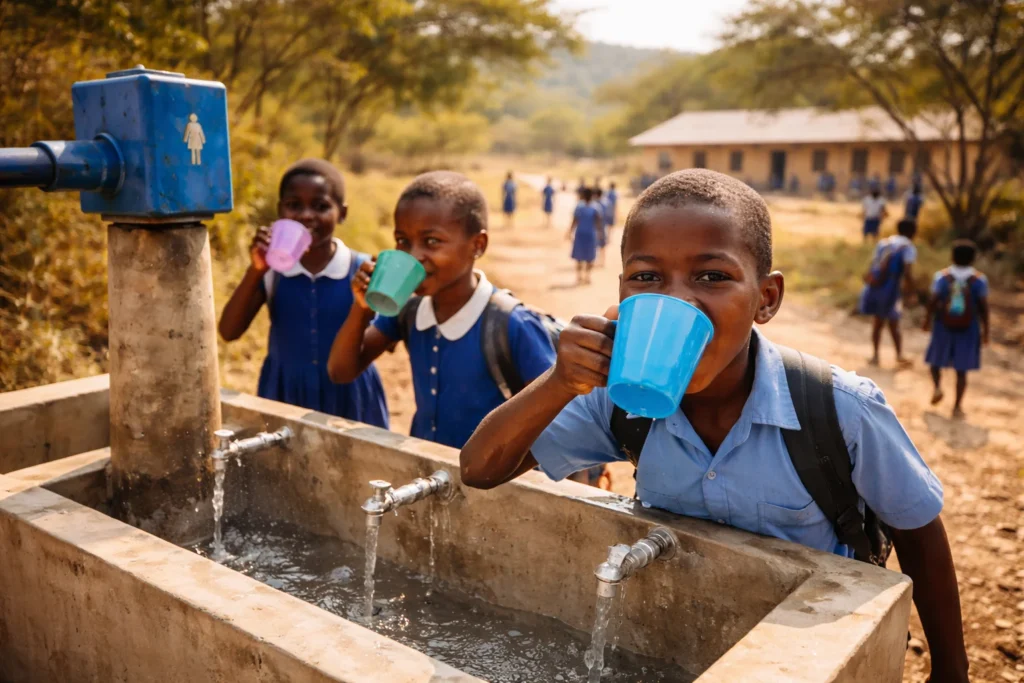
Children drinking clean water from water station installed in schools

Safe drinking water not only quenches thirst but also stops disease outbreaks. After working alongside communities for nearly 25 years, we’ve seen how clean water stops illness before it spreads through classrooms and households.

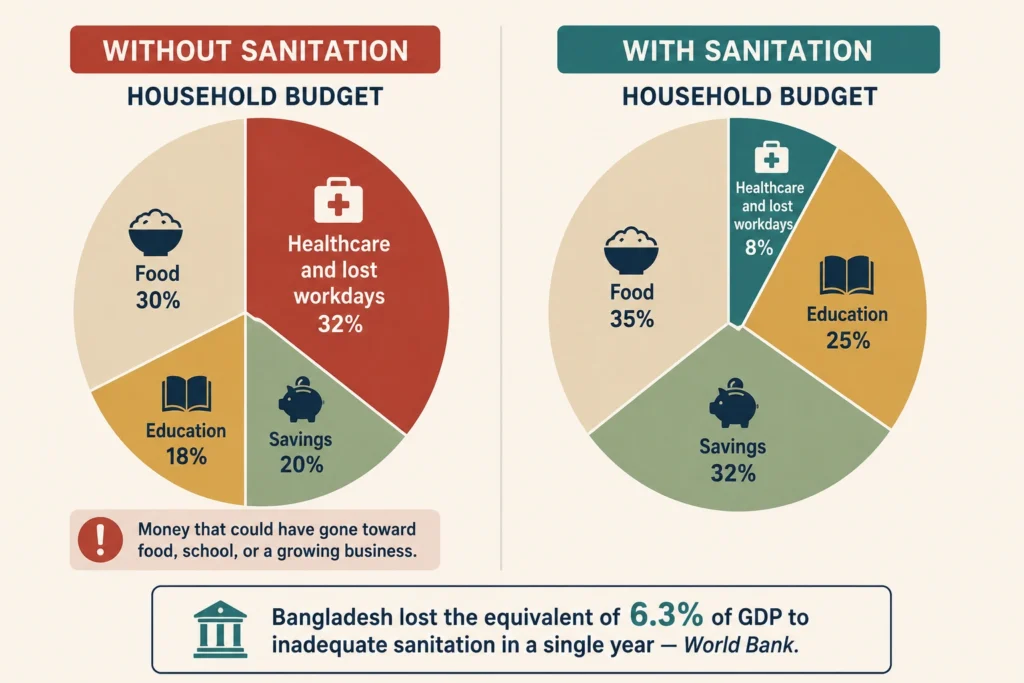
Clean water access reduces child mortality rates significantly. Because communities with access to safely managed drinking water see fewer clinic visits and lower healthcare costs for families.

The benefits ripple outward from there. Healthier children mean healthier families. And healthier families mean stronger communities that can focus on development instead of just surviving. When safe water and sanitation become standard, entire regions see improvements in life expectancy within just a few years.

So what’s the actual payoff when students stay healthy and attend school regularly?

Education Benefits: What Happens When Communities Get Clean Water

When communities get clean water, children gain more than just better health. They gain education, which then creates economic opportunity and long-term development. The results show up in three major ways, including:

Higher Income Potential for Educated Communities

Girls who stay in school one extra year can earn 20% more as adults. Bear in mind, educated children become adults who can pursue jobs beyond subsistence farming.

Also, communities with higher education rates see improved economic stability across generations. These income gains lift entire villages out of poverty cycles.

Better Career Opportunities Break Poverty Cycles

Students who complete school can become teachers, nurses, engineers, and community leaders. Education opens doors to formal employment with steady income and benefits for entire families.

Plus, breaking the water collection cycle gives children time to dream about careers beyond their villages. Once those dreams become reality, many return home to improve their communities.

Climate Resilience Through Knowledge

Educated communities know how to conserve water and farm sustainably. Students also learn about hygiene, sanitation, and how to stop waterborne illnesses from spreading. This knowledge helps communities respond to droughts, floods, and environmental changes that threaten their water resources.

These long-term gains show why universal access to safe water isn’t solely about health.

Small Changes Create Lasting Futures

Safe water and sanitation are human rights, yet millions still lack them. Children miss out on education, health, and future opportunities simply because they can’t access clean drinking water. Solutions like improved sanitation facilities and better water management already exist. They work when communities get the right support.

We’ve walked through how water collection steals school time, how illness empties classrooms, and why girls face unique barriers. We’ve also seen how clean water access creates healthier students, better attendance, and economic progress that lasts for generations.

Our team at Easy510 will take you through every step you need to bring safe water solutions to communities that need them most. Let’s build those futures together, piece by piece.

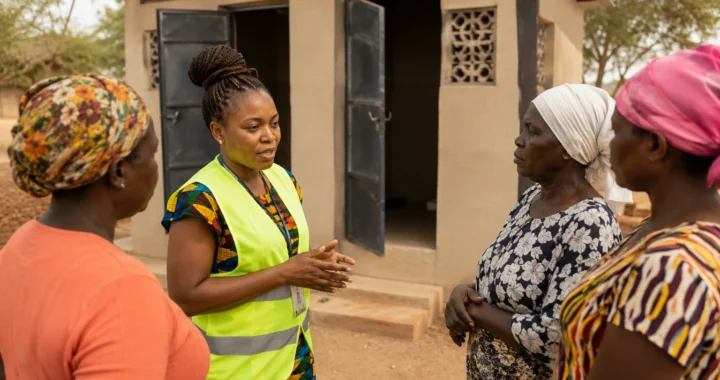
Residents maintain community water projects

Why Water Projects Succeed More Often When Communities Lead Them

Community water projects succeed because local people control the planning, building, and maintenance instead of waiting for outside help. Simple as that.

Traditional aid gets the installation part right but fails at everything after. Organisations fly in and set up equipment. Then they leave without teaching anyone how to maintain systems or source replacement parts. This action results in billions of aid funding going to waste on infrastructure that breaks down within months.

After 25 years working with communities worldwide, we know what separates successful projects from failed ones. This article breaks down:

  • Why locally-led initiatives outlast top-down programs
  • How communities identify their real water needs
  • The role of training in system maintenance
  • Smart ways outside groups can support effectively

Let’s dig into why putting communities in charge changes everything.

Community Water Projects vs Traditional Aid Programs

Traditional aid programs hand communities finished water systems with instruction manuals. On the flipside, community-driven projects put local people in charge of planning, building, and maintaining their own infrastructure. But let’s discuss what exactly sets them apart.

Local Knowledge Shapes Better Solutions

Communities know which wells run dry each summer and understand soil types outsiders miss. For example, a village in rural Ghana steered engineers away from a site that flooded every wet season. Fortunately, their input saved the water supply infrastructure from failure.

Ownership Creates Lasting Commitment

When communities build their own systems, they are able to fix any problems immediately. UNICEF helps communities set service standards because building something yourself creates responsibility. Let’s be honest, outside donors leave after installation, but it’s the community members who stay and protect their investment.

Cultural Practices Guide Water Use

Water collection times and gender roles vary across cultures. Community input ensures water points respect local customs around privacy and gathering spaces for women. Projects that ignore these needs sit unused while people walk kilometres for clean water instead.

But even well-designed infrastructure needs maintenance, and that’s where traditional top-down projects run into trouble.

Why Top-Down Water Projects Struggle to Last

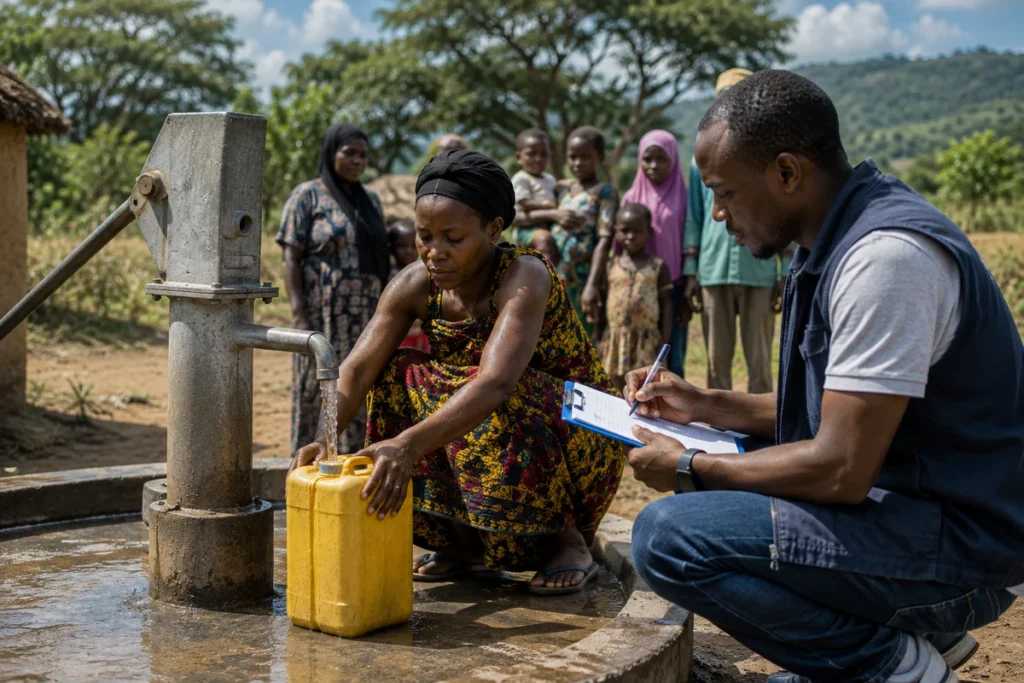
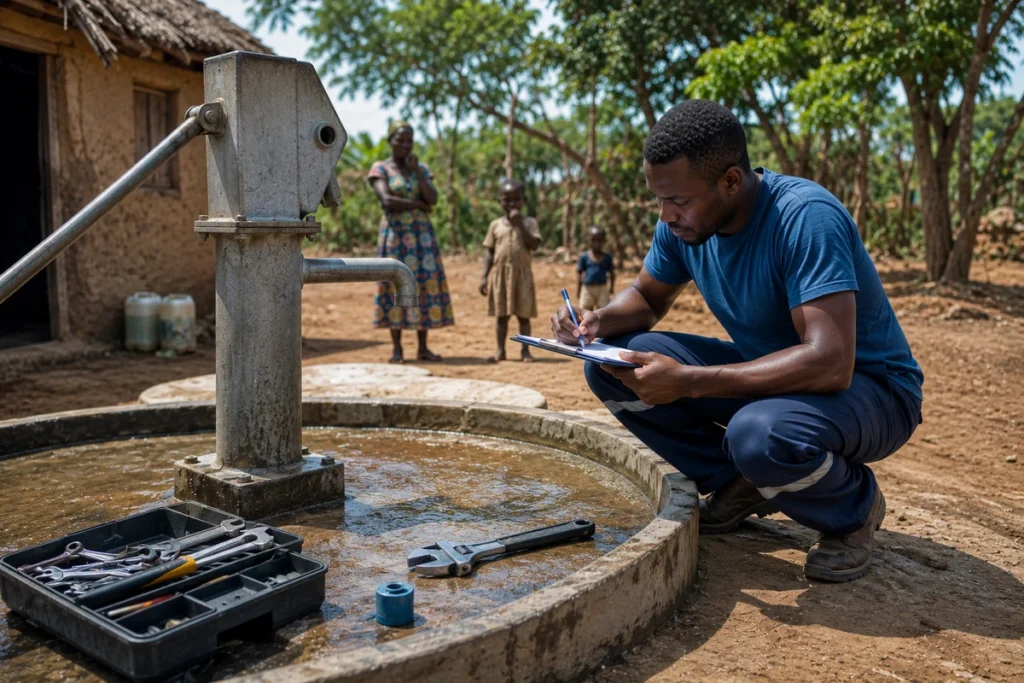
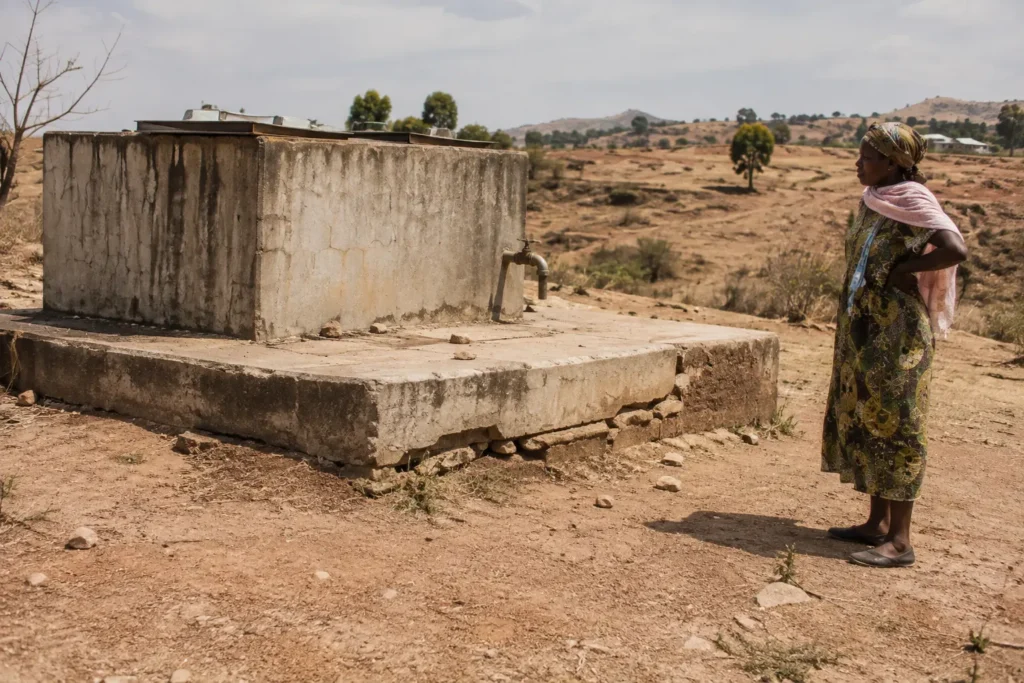
Disappointed residents waiting by a broken water project

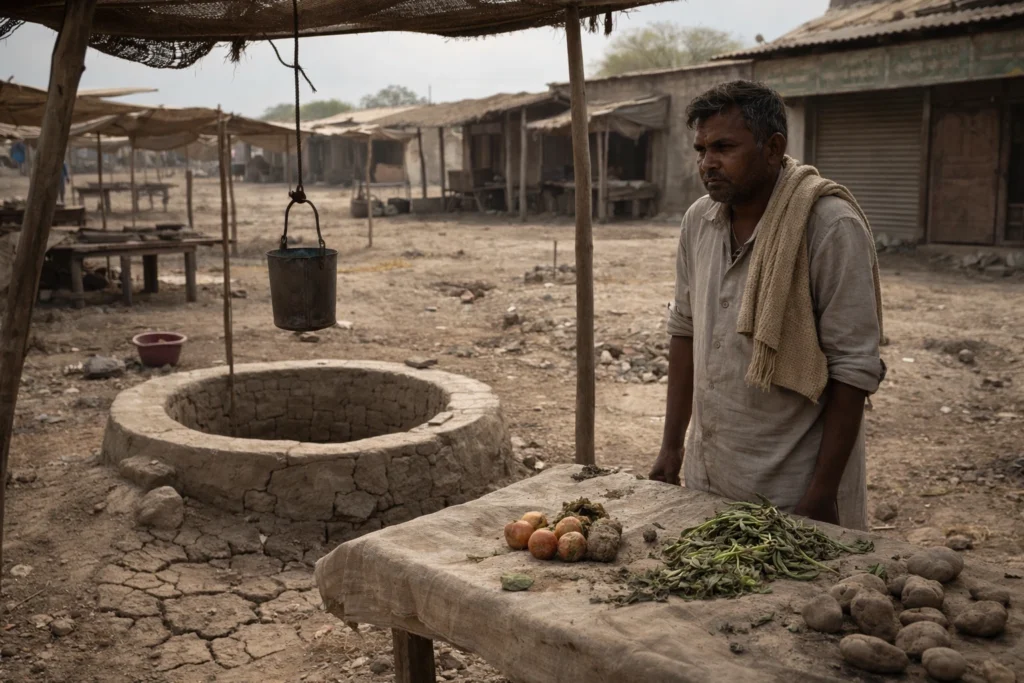
Top-down water projects fail because outside organisations install systems without teaching communities how to maintain them. Let’s be real here. At any given time, 30 to 40 per cent of the rural water supply in low-income countries doesn’t work.

This occurs because these projects often choose expensive technology requiring specialised skills over simple systems that locals can manage. What happens when the circuit board fails, and nobody within 200 kilometres knows how to fix it? Communities return to unsafe drinking water sources.

On top of that, external funding dries up after installation, and we’ve watched this cycle repeat across three continents. Millions of abandoned infrastructure leave people without reliable access to clean water or sanitation services.

So how do communities figure out what they need before building starts?

How Communities Identify Their Real Water Needs

Communities identify their water needs by mapping every source, tracking daily collection patterns, and planning for population growth. You might be wondering how this process plays out on the ground. It breaks down into two main steps.

Mapping Existing Sources and Daily Patterns

Community members document every water source, including seasonal streams and hand-dug wells. For instance, families track how much time women and children spend collecting clean water daily. Local groups then map contamination risks near livestock areas that outside experts often overlook, and that knowledge is worth its weight in gold.

Planning for Future Population Growth

The population increases based on birth rates and settlement patterns. This helps communities plan for schools and health clinics that will need a reliable water supply. Beyond that, residents identify land for future wells before development makes locations unavailable, which means water resource management happens before shortages hit.

Knowing what you need is one thing, but local control keeps water flowing long-term.

The Benefits of Community-Controlled Water Security

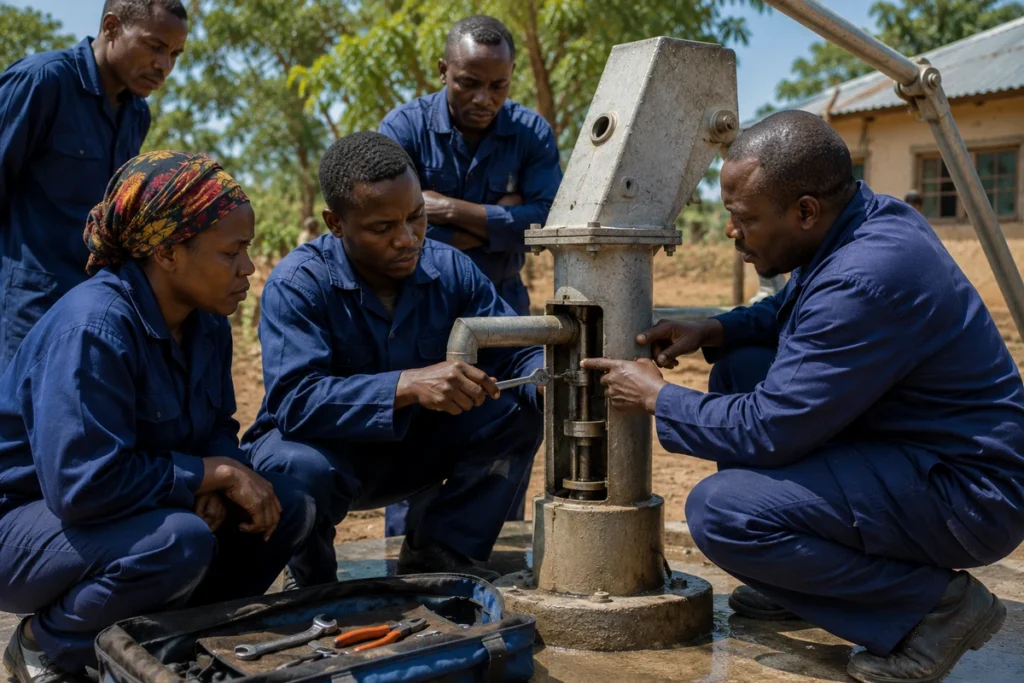
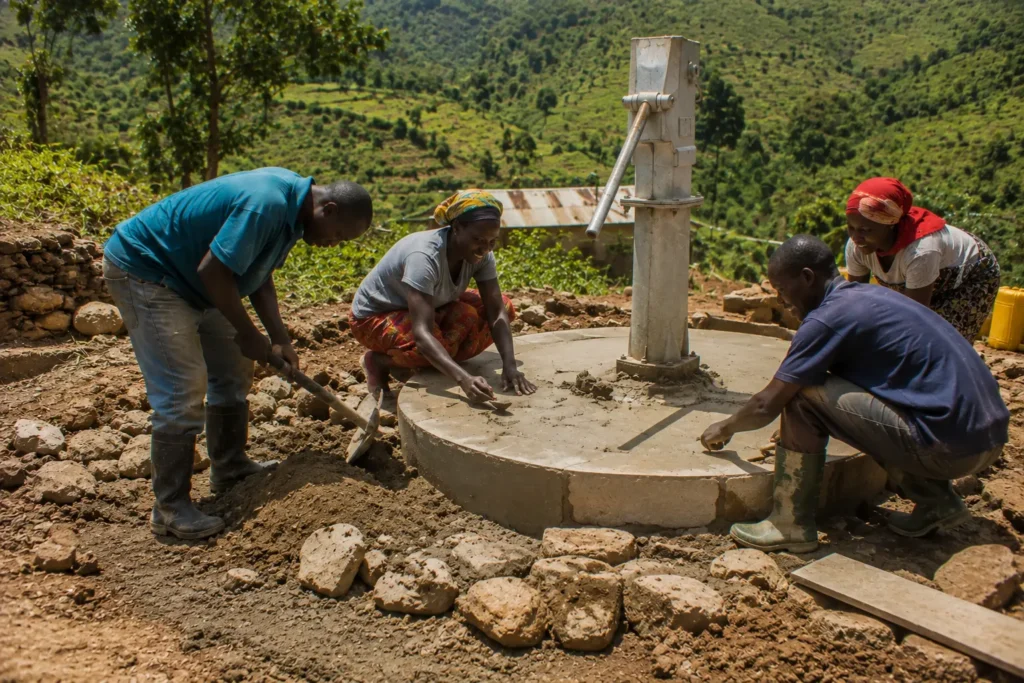
The villagers working together to fix the broken water pump

The greatest advantage of local water control is speed. Communities fix problems within hours instead of waiting weeks for outside help. And here’s where it gets interesting: communities with local water management see fewer system failures because residents catch small problems early.

This only works when communities have funds for repairs. Local committees collect small fees for pump repairs and parts. In our 25 years working with communities worldwide, we’ve watched locally-led projects maintain consistent service. Despite 2 billion people still lacking access to safely managed drinking water, community-controlled water security reduces conflict through fair rationing during droughts.

Also, when water points are accessible, this gives women more time for education and work, and children stop missing school to fetch water. The good news is that health improves fast with fewer illnesses when communities manage their own clean water and sanitation services.

But none of this happens without proper training.

Training Local People: The Key to Long-Term Water Supply

Training community members to handle repairs keeps water flowing. Believe it or not, this approach changes how rural communities maintain their drinking water systems. Training locals creates better outcomes

  • Immediate pump repairs: Communities with trained technicians fix breakdowns within hours. This way, families won’t ever return to unsafe water sources.
  • Early contamination detection: Local water quality testing catches problems before outbreaks spread. In a real-life scenario in Kenya, a trained tester identified E. coli three days early, which prevented a health crisis.
  • Hygiene education spreads naturally: Trained members teach neighbours proper sanitation and hygiene practices at water points. This reduces disease transmission more effectively than occasional workshops.
  • Building local expertise: Skills training creates employment as technicians serve multiple villages. Over time, knowledge passes down organically, strengthening wash programs without outside support.

Training gets communities started, but they need the right kind of external support to sustain progress.

Supporting Community Water Projects the Right Way

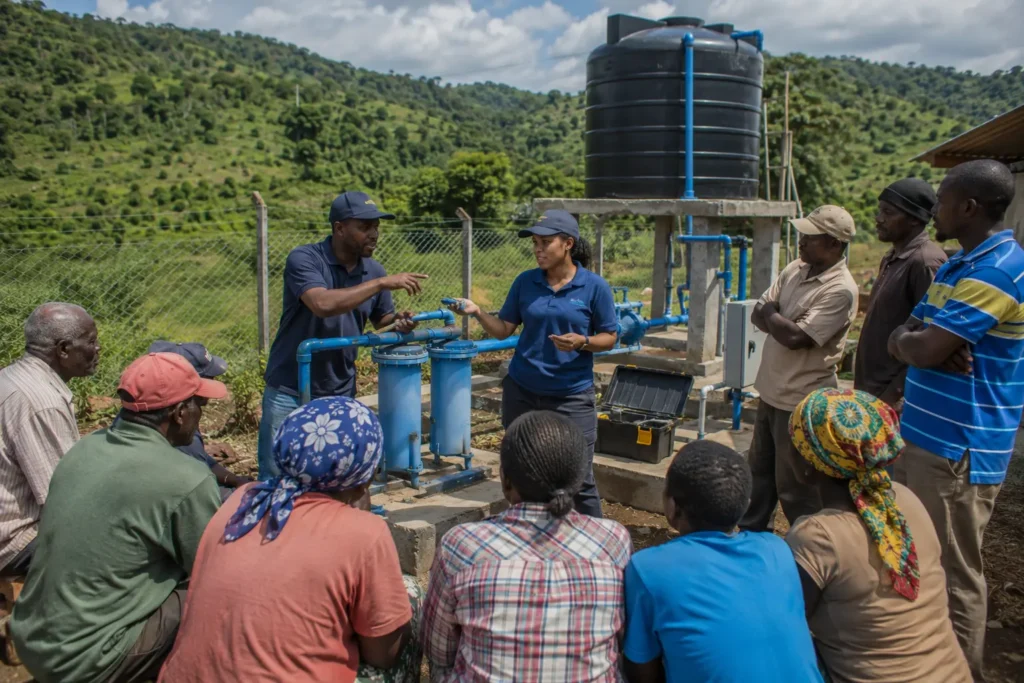
Outsiders helping the community fix the water pump

External support can strengthen community water projects or undermine them. The difference lies in how outside groups approach their role. The most effective approaches share five characteristics.

  • Ask before building: Outside organisations should ask communities what they need instead of assuming. This prevents expensive mistakes like installing equipment unsuited to local water resource conditions or cultural practices.
  • Fund training alongside infrastructure: Funding should cover training programs, tool kits, and spare parts alongside infrastructure. Through our partnerships across Asia, Africa, and Latin America, we’ve learned that comprehensive training keeps water supply running decades longer than equipment alone.
  • Teach rather than fix: Technical support works when experts teach community members instead of doing repairs themselves. We say this because outside groups often drop the ball by focusing only on infrastructure rather than building local capacity for sustainable management.
  • Build long-term partnerships: Long-term partnerships help communities adapt systems when needs change over time. We all know that climate change brings new challenges to water security that require flexible approaches and continued collaboration between teams.
  • Connect to supply chains: Communities need access to regional supply chains for affordable replacement parts and testing equipment. This prevents breakdowns from becoming permanent failures that force people back to unsafe sources.

What’s more, government bodies investing in wash programs see better outcomes when communities lead from planning through implementation. These principles guide our work at Easy510.

Take the First Step Toward Lasting Water Access

Millions still lack reliable access to safe drinking water. This remains an issue because traditional aid programs install systems without building local capacity. Community-led water projects solve this safe drinking water problem by putting residents in control from the start to the end. This approach is the best solution to help projects last for generations.

In these pages, we’ve covered why locally-led initiatives outlast top-down programs and how communities identify their real needs. We also explored the training’s role in maintenance and effective ways outside groups can support without taking control.

Easy510 partners with communities to build water systems that work. Our team will take you through every step you need to create lasting change. Let’s start today.

shared water systems

A Basic Guide to Shared Water Use

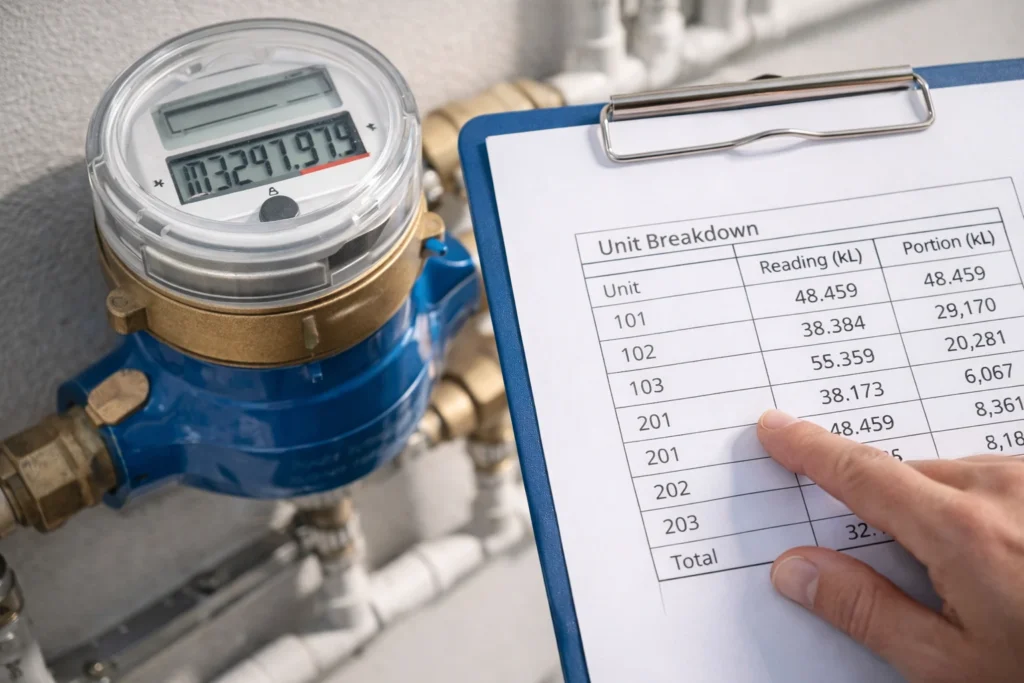
Shared water is a system where multiple homes or units in a property connect to one main meter instead of having separate meters for each residence. Think of it like apartments, townhouses, and complexes across Australia where one water meter tracks everyone’s usage. You’ve probably seen this setup in most rental properties or body corporate buildings.

Here’s the thing: without understanding how shared water works, you’d need to figure out billing splits, meter readings, and cost divisions on your own. That sounds like a recipe for disputes, right?

In this guide, we’ll explain how shared water billing actually works and why your property needs a fair system. You’ll also learn how to split costs based on usage, agreements, and property management options.

Let’s start with the basics.

What Is Shared Water and How Does It Work?

Shared water is a communal setup where one meter handles water tracking for multiple units in an apartment or property. It works by measuring total consumption, then dividing that bill among residents based on an agreed method.

Now follow the foundational setup to get a clearer picture of the system.

The Basics of Shared Water Supply

The Basics of Shared Water Supply

You might be wondering how the shared water meter concept plays out in real life. Well, in apartment buildings, duplexes, and townhouse complexes, one meter tracks total water use for all residents.

From there, the property owner or body corporate manages the system and decides how to split costs among tenants. In practice, some divide bills equally, while others base it on residence size or number of people.

Who Manages Your Water Use?

Property managers, body corporates, or landlords oversee shared water systems and handle billing with water suppliers. When it comes to tracking usage, some properties go a step further. They install sub-meters for individual units to measure water use more accurately. These individually metered systems give owners better data about who’s using what.

However, other properties divide costs equally, which works when usage is similar. So, you should check your tenancy agreement to understand your property’s management structure. Also, regulations vary across Australian states. For specific rules, contact your local council, state water authority, or consumer protection agency.

Understanding Service Charges and Water Bills

Water bills for shared systems can feel confusing at first, especially when you can’t see your individual usage. They include usage charges based on how much water is consumed, and a fixed service charge for infrastructure maintenance.

Those service charges also cover meter reading, pipe maintenance, and connection fees. These costs stay the same no matter how much water you use. So when you check your bill, look for both line items to make sure everything adds up.

Splitting the Water Bill: What You Need to Know

When splitting water bills, you need to know how suppliers calculate charges, which cost division method your building uses, and what protects you from unfair billing. And the best part is, once you understand those splits, you can spot unfair charges before they drain your wallet. With this knowledge, you can also see what you pay each month and how fair the system feels to all residents.

Here’s how billing works in shared systems.

How Water Charges Are Calculated?

How Water Charges Are Calculated?

Water charges follow a basic formula: Total Kilolitres × Rate Per Kilolitre = Property’s Water Bill. For example, 50 kilolitres at $2.50 per kilolitre equals $125, then split among residents. Yet the rate per kilolitre can vary widely, depending on your local supplier.

To explain it further, your council or water authority usually sets these prices, and they can increase based on how much the property uses overall. Beyond that, some regions also add sewerage charges that match water consumption. So even if your building’s usage stays steady, rate changes can affect what you pay each billing period.

Fair Ways to Divide Costs Among Users

Sub-metering gives the most accurate division by tracking each unit’s actual consumption. That’s because Individual meters show exactly who used what, which eliminates disputes about fair shares. Based on our observations across multiple community water management systems, sub-metering reduces billing disputes by nearly 70%.

Of course, not every property wants to invest in sub-meters. In these cases, equal splits work when usage is similar across all units, but can feel unfair if some residents use way more than others.

That’s where middle-ground options come in. The most common middle-ground options are square footage or occupancy-based divisions, which divide the bill according to property size and resident numbers. In this way, they provide fairer costs than equal splits without expensive meters.

Common Disputes and How to Avoid Them

Disagreements arise when billing seems unfair or when meters malfunction. And yes, we’ve all seen that blame game unfold at building meetings.

Fortunately, clearly written agreements before you move in prevent most of the conflicts. These agreements need to spell out the billing method, payment schedules, and consequences for non-payment. When everyone knows the rules up front, there’s less room for disputes.

After that, regular meter checks and open communication help catch problems early. Without this, small issues become bigger disputes when left unaddressed.

Making Shared Water Systems Run Smoothly for Everyone

Making Shared Water Systems Run Smoothly for Everyone

Shared water systems run smoothly when residents understand water efficiency, protect the supply, and follow clear agreements. These three elements keep costs fair and prevent most conflicts in multi-unit properties.

We’ll walk through each part step by step for clarity.

Simple Tips to Improve Water Efficiency

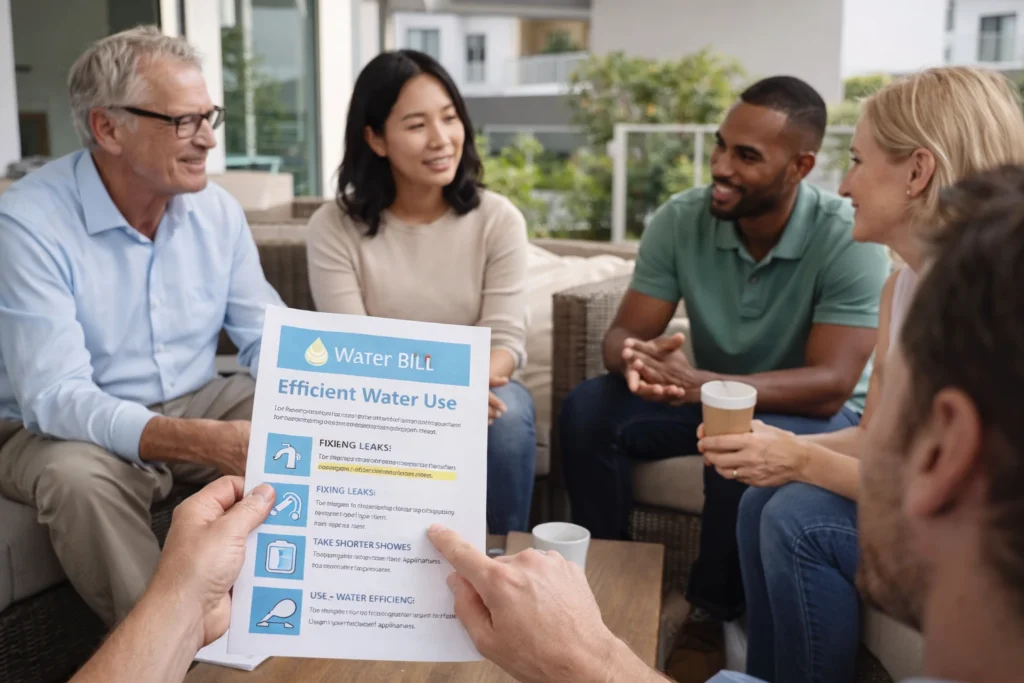
Fix leaky taps immediately since even small drips waste litres daily and increase bills for everyone. Those small leaks add up faster than you’d think.

And that’s where things get interesting. Simple habits like shorter showers, full washing loads, and turning taps off while brushing also reduce overall consumption. For even bigger savings, WaterSense-labeled fixtures like low-flow showerheads can save the average family 700 gallons of water per year without major lifestyle changes. That’s quite impressive, isn’t it?

Protecting Shared Water for Your Community

When everyone uses water responsibly in a shared water system, it protects the supply for the whole community. This conservation also reduces strain on local water resources and helps the environment. Remember, small actions create lasting change.

What does that look like? As you fix leaks and use efficient fixtures, these actions save money and protect clean water access for current and future residents. After all, in shared systems, every person’s habits affect everyone else’s bills and the building’s water supply.

Setting Ground Rules That Actually Stick

Written agreements that spell out usage guidelines, billing methods, and dispute processes solve most conflicts in shared systems. Honestly, nobody enjoys discussing billing rules upfront, but these conversations prevent headaches later.

Through our practical knowledge working with shared water systems, written agreements resolve 8 out of 10 conflicts. Also, regular check-ins help address concerns early.

Ready to Make Shared Water Easier?

Shared water systems often create confusion around billing and cost division. That’s why residents face disputes over unfair charges and unclear usage tracking. Thankfully, there are proven strategies to make these systems fair, transparent, and conflict-free for everyone in your building.

This article explained how water charges are calculated, fair cost-division methods, and common billing disputes. You also learned practical water efficiency tips, ways to protect community water resources, and how to establish agreements that prevent conflicts.

Building on these strategies, Easy510 supports communities worldwide with better water access and sustainable management solutions. Visit Easy510 to learn how we help create cleaner, fairer systems.

water awareness

How to Build Water Awareness in Schools

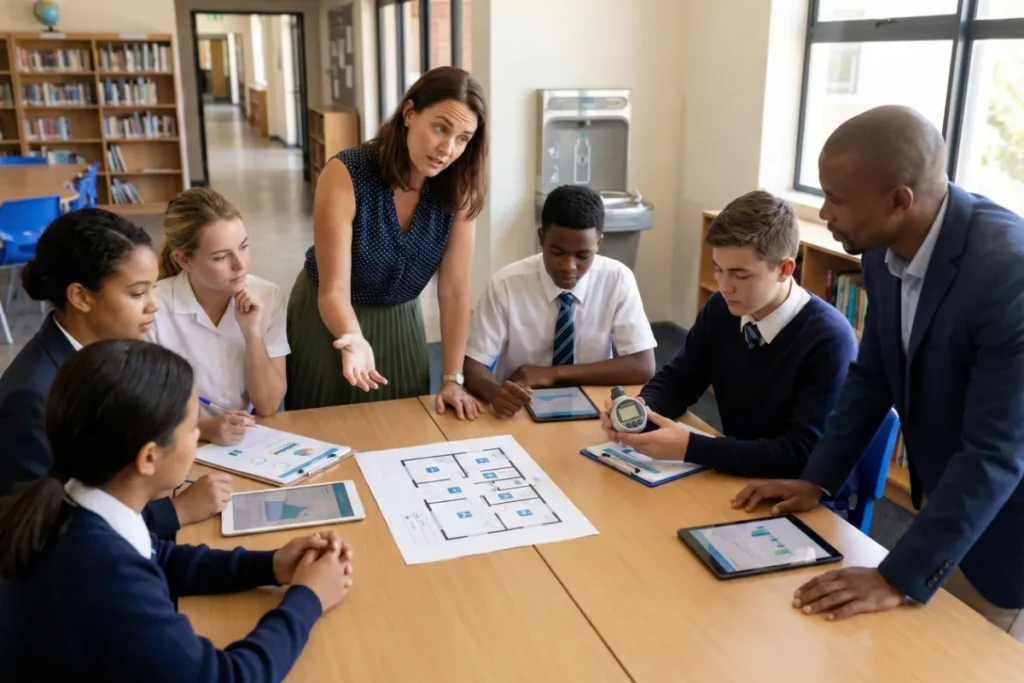
You can build water awareness in schools by conducting a water audit, forming a task force, and choosing an age-appropriate curriculum. You can also embed it into permanent school operations to raise awareness about water.

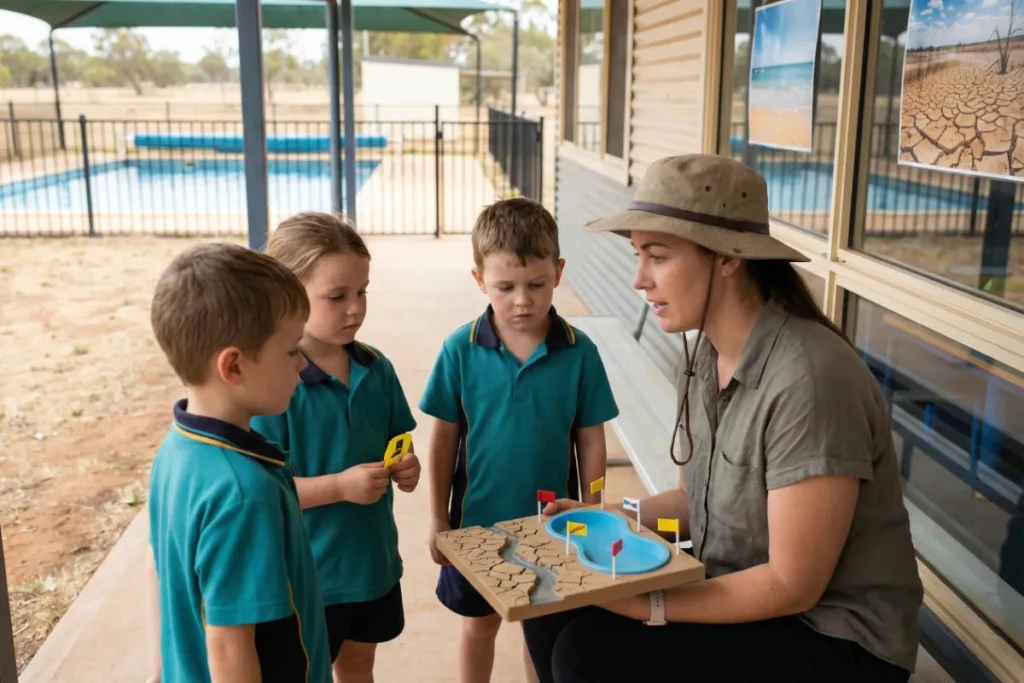
According to WorldAtlas, Australia is the driest inhabited continent despite being surrounded by beaches and backyard pools. So students must understand both water scarcity and water safety issues. And we, Easy510, have spent 25 years supporting water education and initiatives.

In this guide, we’ll cover:

  • The meaning of water awareness in schools
  • Why Australian schools desperately need these programmes
  • How to build a programme from scratch
  • Tips on keeping a programme running year after year

Ready? Let’s get started.

What Is Water Awareness in Schools?

What Is Water Awareness in Schools?

Water awareness in schools is an educational approach that teaches students about conservation, safety, and the value of water through sessions on water conservation and the water cycle. Kids take these lessons home with them, where they influence their entire family’s water habits.

A complete water awareness programme includes the following parts:

  • Water Conservation: Students learn about water scarcity, drought impacts, and why sustainable practices are important in this stage. Specifically, schools teach practical techniques kids can use at home, like shorter showers and fixing dripping taps.
  • Water Safety and Drowning Prevention: This supervision-focused part teaches children how to stay safe around water. They also get to know about the ways to recognise water hazards at beaches and pools, and why they should never swim alone.
  • Clean Drinking Water Access: Schools make sure students have access to clean drinking water all day so they can stay healthy. They set up water stations that help children choose water instead of sugary drinks. 
  • The Water Cycle: In this part of the programme, students learn how rain becomes drinking water, which also builds awareness of how watersheds link together. Plus, it helps them see the ways pollution spreads and understand the importance of rainfall, groundwater, and local supply working as one system.
  • Cross-Curriculum Integration: Water fits naturally into many subjects, so teachers can teach measurement, data, and research while students apply these skills. For example, Year 5 classes could run an anti-water waste campaign by making posters, writing short persuasive pieces, and creating simple social posts.
  • Building Lifelong Habits: As we mentioned previously, children bring water awareness home and influence their parents’ daily habits. So when you teach a 7-year-old about water waste, you’re teaching their whole family.

These lessons help whole communities grow more responsible in how they use and protect water.

Why Do Schools Need Water Awareness Programmes?

Why Do Schools Need Water Awareness Programmes?

Schools need water awareness programmes because Australia’s water scarcity keeps getting worse. They’re also important because young children still face serious drowning risks. A good programme helps kids notice water hazards early and understand how to stay safe.

We’ll now dig deeper into these needs.

Australia Faces Increasing Water Scarcity

We discussed earlier that Australia is the driest inhabited continent with frequent droughts and shortages. In particular, the Brisbane and Queensland regions face water restrictions during extended dry periods (which unsettles even well-prepared households).

But wait, there’s more. Climate change also worsens the water scarcity situation in Australia. That’s why it’s important to teach students about water conservation. When these students become adults, they use water responsibly because they truly understand its value.

And the earlier you teach the students about it, the better. A study published on ScienceDirect, “Long-term impact evaluation of early childhood conditions When only short-term outcomes are available,” found that early behaviours often become long-term habits because repeating the same actions over time “trains” the brain to do them automatically.

Drowning Remains a Leading Child Death Cause

Did you know that drowning is the leading cause of accidental death for children aged one to four? Yes, it’s true.

According to the Queensland Family and Child Commission in their QFCC Report on Child Deaths 2022-23, Chapter 4, drowning was the leading cause of death for Australian children aged 1-4 years over the most recent five-year reporting period.

Unfortunately, we’ve all seen how backyard pools, beaches, and bath time can be serious dangers for naturally curious toddlers. And it can happen so quickly because a two-year-old can drown in less than 60 seconds, often without making a sound.

Water safety skills and awareness can prevent these tragic deaths in Australian communities.

How Do You Build a Water Awareness Programme?

How Do You Build a Water Awareness Programme?

You build a water awareness programme by starting with a school water audit and forming a task force. After that, you choose a curriculum suited to each age group so the plan feels practical and easy to build on.

Here’s how to build a long-lasting programme:

  1. School Water Audit: You need to walk through the school to identify where water is used and potentially wasted. Check taps, toilets, and fountains for leaks that waste litres daily. You should also survey students about their current water knowledge and practices.
  2. Task Force Formation: It’s important to recruit teachers, parents, students, and community members for your planning committee. Include diverse perspectives to design programmes that work for every age group. Plus, you must assign clear roles like curriculum lead and activities coordinator.
  3. Age-Appropriate Curriculum: Different age groups engage with water in different ways. More precisely, younger students need clear rules, while middle years enjoy hands-on cycle concepts. However, older students respond well to analysing data and leading campaigns.
  4. Funding and Partnerships: Don’t forget to contact local water utilities, which often provide free educational resources and speakers. For example, Brisbane councils offer grants for school water conservation initiatives. And as a first step, you can partner with organisations like Royal Life Saving for drowning prevention support.
  5. Teacher Training: Professional development is important for teachers to feel capable of delivering water safety lessons. Like, you can share ready-made lesson plans and connect teachers with trained instructors who can co-teach initial sessions.
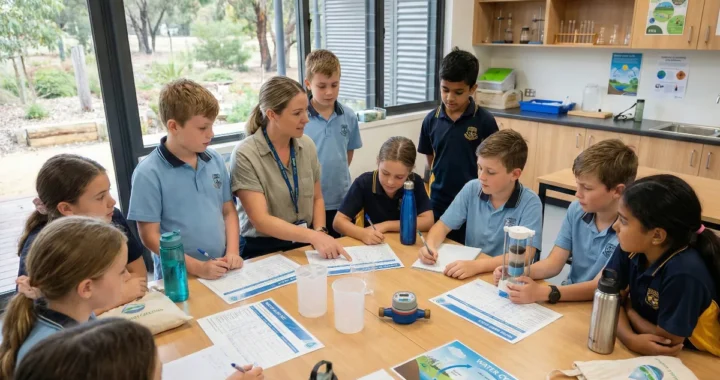
  6. Pilot Activities: Start with simple water experiments that make complicated ideas easy to see. Try activities like taste tests or small leak checks. These tasks connect well because they help students measure school water use and calculate potential savings.
  7. School-Wide Initiatives: The best thing about simple tools like tap timers and toilet labels is the way these tools engage students in detecting leaks and water waste. An approach like this builds clear daily routines and helps the whole school clearly see and understand its water-use progress.
  8. Parent Engagement: Family-based challenges extend water education outside the classroom. And it’s helpful because through this shared effort, water-saving habits spread more easily from school into the wider community.
  9. Managing Time Constraints: Integrate water topics into the existing curriculum rather than adding separate lessons. For instance, you may encourage using 10-minute water activities as warm-ups for science or maths.
  10. Measuring Behaviour Change: Remember to track clear actions like students bringing reusable bottles, and check if family habits change through short surveys. You can also compare school water bills before and after the programme to see real progress.

In the end, the programme will guide children to think about water in daily life.
How Do You Keep Water Programmes Running Long-Term?

How Do You Keep Water Programmes Running Long-Term?

You keep water programmes running through the permanent integration of fundamental lessons into your curriculum. You also refresh activities each year to keep students engaged.

Too many schools launch water programmes with enthusiasm, only to watch them fade after a year. But the ways we suggested here to maintain a steady focus will make the programme feel like a normal part of a student’s school life.

Let’s get into more details about these approaches.

Permanent Curriculum Integration

What makes water safety education so easy to use is that it blends into normal classwork without much effort. New teachers usually get the hang of it within their first few weeks (honestly, it makes the start feel less heavy, too).

But if you want to make things easier, we recommend building a small resource library. This way, everyone will know where to find what they need. Better yet, many schools observe a yearly water awareness week, which often becomes a fun tradition that students look forward to.

And when the lessons are updated each year with fresh Australian water data, the programme stays relevant and keeps going strong even as staff or priorities change.

Annual Activity Refresh and Celebration

How do you keep students interested year after year? One easy way is to switch up the hands-on activities so they’re always trying something new. You can also make World Water Day in March feel special with assemblies or community events.

To keep that momentum going, you can arrange small rewards for classes that meet their water-saving goals. Besides, if you have newsletters or social media, share information about these positive achievements. It’ll allow families to see the progress and celebrate it, too.

Last but not least, invite older students for a talk on how these lessons shaped their habits at home. Listening to their story will make younger kids feel inspired to do the same.

Pro tip: Encourage teachers to use local water issues as real examples during class discussions.

Create Lasting Water Habits in Your Students

We’ve reached the end of our guide to building water awareness in Australian schools. You now see how these programmes support conservation, prevent drowning, and help students build habits that keep them safe.

At Easy510, we’ve supported water education and conservation efforts for more than 25 years. Contact us today to learn how we can help your school make water awareness a lasting priority.

How Local Groups Can Start Water Saving Projects

How Local Groups Can Start Water Saving Projects

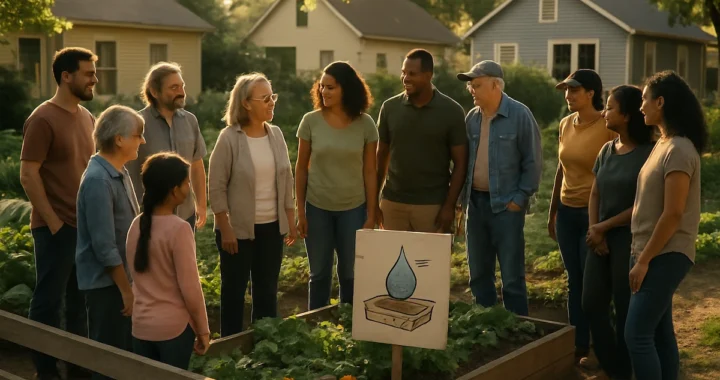
Local groups can start water-saving projects by picking one or two simple habits, spreading the word, and building from there. It really is that easy.

But the thing is, most groups don’t know where to begin. They want to help, but the options feel overwhelming. Should you focus on taps? Gardens? And how do you get others on board without sounding preachy?

As a Brisbane-based water filtration company, we’ve seen community groups give up before they even start because of this confusion. But we’re about to change that for you.

In this article, you’ll learn simple indoor habits your group can promote, water-efficient fixtures worth installing, outdoor tips for gardens and rainwater, and ways to protect local freshwater sources.

Keep reading to learn water-saving ideas for your community.

What Are Water-Saving Ideas and Why Should Local Groups Care?

Water-saving projects are basically everyday actions that cut down how much water you use at home, work, or shared spaces. For example, taking shorter showers, fixing leaky taps, or only running the washing machine when it’s full. Small changes like these add up fast.

And you know what? Local groups have more power than they realise. One person turning off the tap while brushing their teeth saves a bit. But when fifty households are doing the same, that actually helps protect your local water supply.

Starting this type of community project also shows local councils and businesses that your community genuinely cares about reducing waste. And once that momentum builds, other projects like rain tanks, native gardens and water-efficient upgrades for community halls become much easier to pull off.

Save Water With Simple Indoor Habits

Indoor habits cost nothing to adopt and deliver instant results. That’s why they’re the perfect starting point for any community group looking for water-saving tips. The best part is, you don’t need any tools or money to get started. Just a few tweaks to how you use the tap, shower, and washing machine are enough.

Let’s look at two easy wins your group can promote straight away.

1. Turn Off the Tap While Brushing Your Teeth

Save Water With Simple Indoor Habits

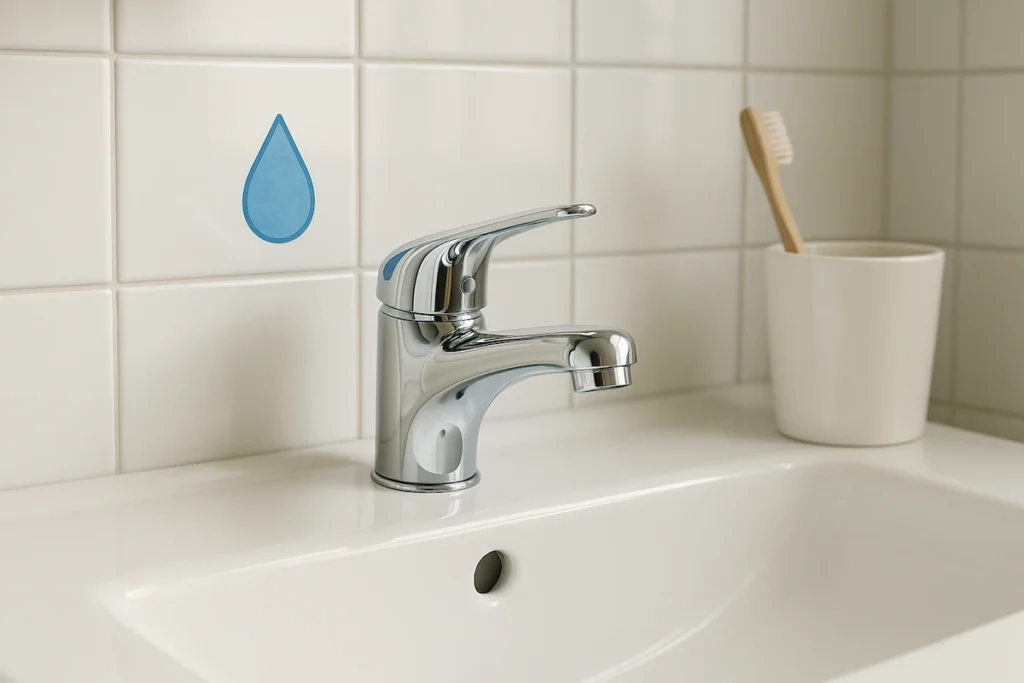
Believe it or not, a running tap wastes about 12 litres of water every single minute. That’s a lot going down the sink for no reason. So make it a habit to turn off the tap every time, even while you’re brushing your teeth.

Project Idea: Print some reminder stickers and hand them out to members. They can pop them near the bathroom sink at home. It’s a small nudge, but it works.

You could even pair this with a shower timer challenge to save even more. Each member tracks their shower time for a week and tries to shave off a minute or two.

2. Run Full Loads Before Starting the Machine

Half-empty washing machines and dishwashers use almost the same amount of water as full loads. So every time you run a half load, you’re wasting water for no good reason.

Based on our research, waiting for a full load saves anywhere from 10 to 30 litres, depending on your appliance. And if you’ve got a water-efficient washing machine with more stars on the rating label, you’ll save even more.

This tip works for washing dishes, too. Instead of rinsing plates under a running tap, fill a washing-up bowl and do them all at once. It’s the same idea, but with less waste.

Helpful Tip: Share this in your group’s newsletter or chat group. Once families start thinking twice before hitting that start button, the savings add up fast across the whole community.

Which Fixtures Help Reduce Water Usage?

In our experience, adding fixtures like dual flush toilets makes a noticeable difference in how much water your group uses each month. Also, fixing your dripping taps can stop thousands of litres from sneaking down the drain each year.

So get these two sorted first.

1. Install a Dual Flush Toilet

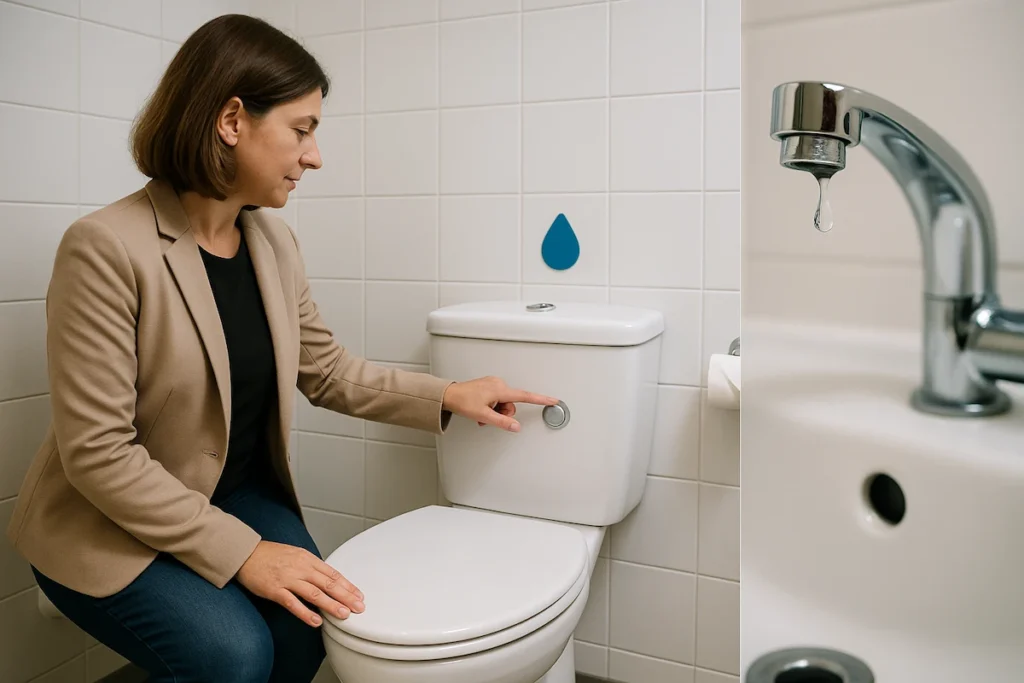
A dual flush toilet gives users two buttons. One for a half flush, one for a full flush. Simple, right? But that small choice at the toilet bowl saves litres every single visit.

Here’s how it works: A standard toilet uses around 18 litres per flush. Meanwhile, dual flush models use roughly 4.5 litres for a full flush. Over a year, that difference adds up to thousands of litres per household.

Fortunately, many Australian councils offer rebates for installing water-efficient toilets in community buildings. Water Corporation even offers customers up to $400 off when replacing old single flush systems with dual flush models.

So before your group spends a dollar, check what’s available in your area. You might get the upgrade at half price or less.

2. Fix Dripping Taps to Lower the Drop Count

Ever noticed that annoying drip-drip sound from an old tap? That one dripping tap is also wasting thousands of litres of water every year. We’ve seen it more times than we can count.

Try this old trick to check for a hidden leak: Add a few drops of food colouring to your toilet cistern and wait a few minutes. If colour shows up in the bowl without flushing, you’ve got a leak.

Thankfully, fixing drips won’t cost you a huge amount. You’ll only just a new washer from the hardware store and ten minutes of your time. If water pressure is low, that could also signal leaks hiding in your pipes.

Here’s a fun idea: Organise a “fix-it day” where handy members repair taps across several households in one afternoon. This way, what starts as a boring chore becomes a proper community event. Plus, you’ll stop thousands of litres from going down the drain.

After getting your indoor fixtures in order, let’s step outside and look at how gardens and rainwater tanks can save even more.

Can Native Plants and Mulch Lower Outdoor Water Use?

Yes, native plants need far less water than exotic varieties. And mulch helps soil hold moisture for longer between waterings.

Native species have spent thousands of years adapting to Australia’s dry conditions. So they don’t need constant watering to survive. On the flip side, exotic plants from wetter climates get thirsty fast and push your water use through the roof.

And mulch does the heavy lifting while you sit back with a cuppa. A thick layer of around 5 to 10 centimetres reduces evaporation loss and keeps the soil cool. Your plants stay happy, and you water your garden less often.

Now here’s a project idea for your group.

Host a planting day at a local park, school, or community hall. Everyone brings a few native plants, and you spend the morning getting them in the ground. It’s social, it’s low-cost, and it spreads native gardens across your neighbourhood.

If you’re not sure which plants suit your area, we recommend checking with your local council or nursery. In Western Australia and other dry regions, grevilleas, kangaroo paws, and bottlebrushes are popular picks. They look great, attract native birds, and barely need any extra water once established.

How Can Rainwater Tanks Support Group Water-Saving Goals?

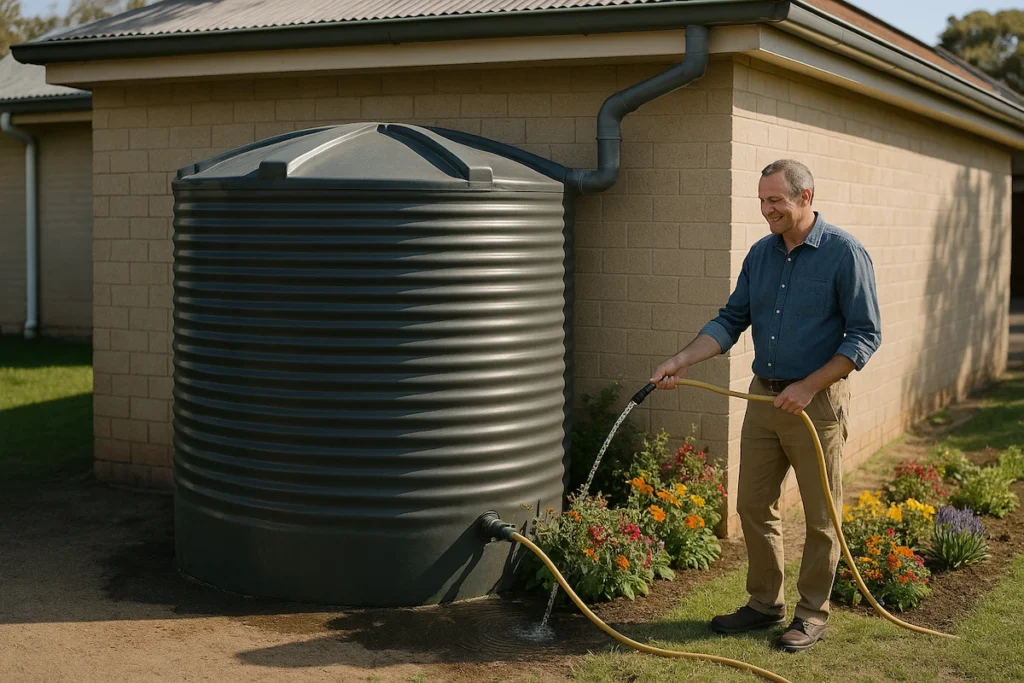
Rainwater tanks give your group a free water source for gardens, cleaning, and even toilet flushing. They capture water from rooftops that would otherwise rush straight into storm drains. That’s free water going to waste if you don’t catch it.

The collected rainwater is perfect for:

  • Watering your garden
  • Washing cars
  • Topping up the toilet cistern
  • Supplying community buildings (like scout halls or sports clubs)
  • Rinsing outdoor gear after events
Rainwater Tanks Support Group Water-Saving Goals

Basically, rainwater handles anything that doesn’t need drinking-quality water. This gives your community a reliable backup supply, especially during dry spells when water becomes scarce and bills start creeping up.

Useful Tip: Check your local council’s rules before installing a rainwater tank or water butt. Some areas have size limits or placement guidelines, so it’s worth a quick call to avoid any surprises later.

What Steps Protect Freshwater Sources by Reducing Water Waste?

Now that you have practical water-saving ideas, it’s worth understanding why all this effort is actually necessary.

Every litre you save at home means less pressure on local rivers, dams, and underground aquifers. These freshwater sources supply drinking water to entire communities. And they don’t refill overnight. Some take years or even decades to recover after heavy use.

Let’s be real here. Climate change is making things harder. Droughts are lasting longer, and rainfall patterns keep shifting. The less water we waste now, the more we protect for future generations.

Also, reducing water waste shrinks your carbon footprint. Pumping, treating, and heating water all use energy. So when your group cuts back on water usage, you’re also cutting back on energy use. That’s two wins from one habit.

Your community doesn’t need to solve the whole water crisis alone. But every drop you save helps keep freshwater sources healthy for everyone who comes next.

Your Community’s Water-Saving Journey Starts Today

Starting a water-saving project might not be everyone’s cup of tea. But as you’ve seen, it’s easier than you think. When you build up a few simple habits, some low-cost fixture upgrades, and a group willing to spread the word, it becomes a natural habit before you know it.

The tips we’ve covered can help your group save water, cut down on energy bills, and lower those water bills, too. Plus, you’ll be doing your bit to protect local freshwater sources for years to come.

So gather your group, pick one or two ideas from this list, and get started. Every tap turned off, every full load waited for, every garden planted with natives adds up.

Your community has the power to save thousands of litres. And it all starts with that first small step. For more tips and guidance, get in touch with our team at Easy510.

clean water projects

Every Drop Counts: Local Projects Changing the Future of Water Access

A mother in rural Kenya wakes at 4 AM. She walks two hours in the darkness to reach a muddy waterhole. That water makes her children sick, but it’s all she’s got to feed them.

Now imagine her village six months later. A borehole pump sits 200 metres away from her door. Her kids attend school instead of searching for water. Disease rates dropped by half. (Ain’t it amazing?)

What changed there? It’s her community that stopped waiting for help and built the solution themselves.

In this article, you will learn about the different water project types that are changing villages worldwide. You’ll also discover the real economic impact, see real success stories from three continents, and learn how to launch a water initiative in your own community.

The global water crisis has solutions. If you are willing to know, keep reading us.

Why Clean Water Projects Save Lives In Vulnerable Communities

Picture an eight-year-old walking four hours to fetch water from a river where cattle also drink. Back home, her little brother’s got diarrhoea again. (Irony of fate!)

That contaminated water kills hundreds of thousands of children under five, yearly. Over 300,000 kids die every year in Sub-Saharan Africa from diseases caused by unsafe water and poor sanitation. (Bad water quality kills more children than war does.)

Sometimes, families spend hours daily collecting unsafe water from distant sources. They walk more than 8 hours each day to collect unsuitable water in Sub-Saharan Africa. These water supply issues burden entire communities, and their potential.

That’s not the end of their sufferings. Kids in those communities miss school when sick from waterborne diseases like cholera. Meanwhile, girls stay home without proper sanitation facilities.

Only clean water projects can save them and their suffering. It brings safe drinking water to local communities and gives kids their futures back.

Community-Led Initiatives Changing Water And Sanitation Access

Community-Led Initiatives Changing Water And Sanitation Access

Communities create the best water resource management solutions themselves. When locals design and maintain water systems. These projects last for decades.

Here are three approaches that prove most effective across developing countries:

Deep Wells Delivering Safe Water

Boreholes bring underground water resources where water stays filtered naturally. The Water Project teams with local partners to construct these borehole wells and small dams, and continuously audits them to ensure they are functioning properly.

These initiatives need sustainable water management where local community members stick with it long-term.

Rainwater Capture For Sustainable Water Management

Schools and colleges of that community can build gutters leading to a large litre tank. Rain flows through filtered pipes during wet months in those tanks and collects the water for later.

Now, students can drink clean water year-round. This system costs half than a borehole, and gutters only need cleaning twice a year.

Small Dams Storing Surface Water

Unlike regular dams that trap water, sand dams collect sand and silt that naturally filter and store water. We can think of it like a giant natural sponge.

Rivers carry sand downstream during rain, and the dam traps it. Then, water soaks into this sand reserve and stays clean for months, even though the riverbed dries completely.

Each of these methods works for water security, but success entirely depends on community ownership and proper maintenance.

Real Success Stories Showing Sustainable Progress

UNICEF has helped over 1.6 billion people access safe drinking water since 2000. Behind every number, there’s a family that doesn’t fear the scarcity of water anymore.

They work in 100 countries providing water and sanitation services. Their sustainable development approach creates change that lasts, not quick fixes that crumble.

Besides UNICEF, water fund transparency projects serve nearly 17 million people. They funded 120,784 water projects across 29 countries. Every donor sees exactly where their money goes, through GPS coordinates, photos of smiling kids, and the whole story.

Transparency like this builds trust and brings more people into the fight for clean water.

Instead of these donors, there are community owners who ensure water projects continue working for decades ahead.

How do they work? Each household of those communities provides a few dollars monthly for maintenance and repairs. So, when pumps break, they’ve already saved the money to fix them. Nobody needs to beg donors for emergency funds years later.

Climate Change Threatens Sustainable Water Sources

Climate Change Threatens Sustainable Water Sources

What happens when you have only a water source that vanishes overnight? This happens due to climate change. It affects the freshwater supply severely, with water storage dropping 1 cm yearly for 20 years.

By 2050, people at risk from floods will jump from 1.2 billion to 1.6 billion. Because, in the summer, droughts wipe out water resources completely, then floods wash out whatever remains in the rainy season.

Due to these extreme weather events, communities face brutal choices. They migrate or watch their children go thirsty.

Only climate-resilient designs can help these people. It helps the water systems withstand extreme weather patterns. You may think ground-level systems seem safer, right? That’s a totally wrong idea! Elevated water tanks survive floods better every time.

Another climate-friendly design is Solar pumps. They keep running when storms knock power grids offline. Overall, the cost of these adaptations is more advanced, but it saves lives when disaster strikes.

The main thing is that nature-based solutions protect watersheds and improve sustainable water management practices.

Hygiene Education Builds Long-Term Sustainability

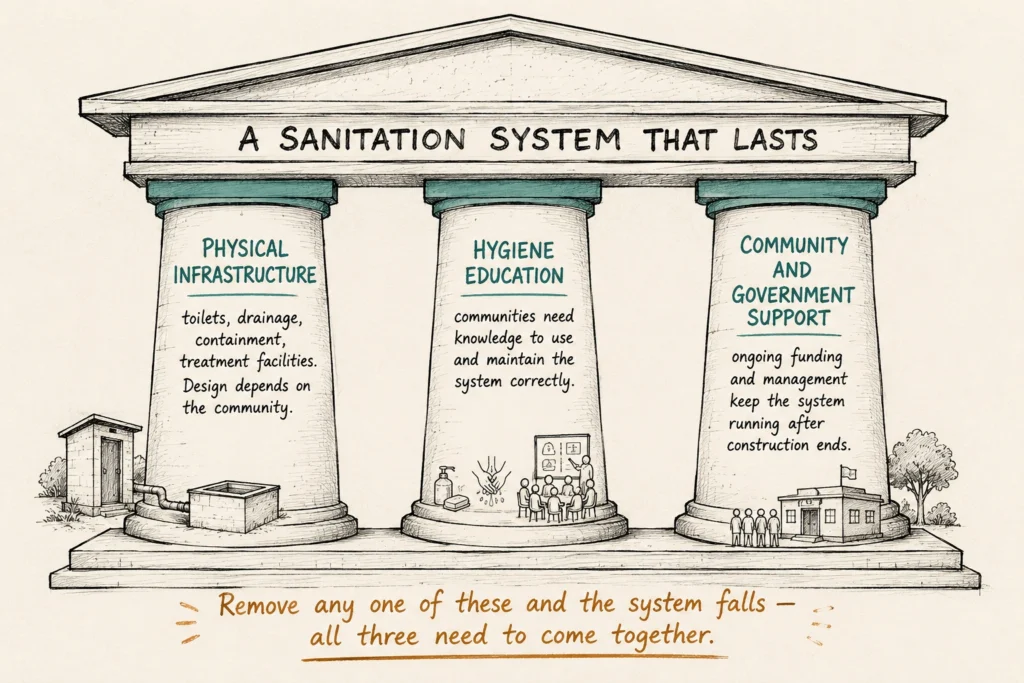
Installing wells, then leaving them without proper maintenance, is a common thing. That’s how projects fail every time. So, the communities need both infrastructure and solid knowledge about hygiene services.

They need to know the importance of handwashing with soap. Washing hands with soap reduces diarrhea cases by 40%. Maintaining these simple practices can save more lives than fancy medical interventions do. (Soap costs pennies. Medicine costs fortunes. Do the maths.)

Here’s a common mistake they make: they collect clean water and then dump it in unwashed containers. Others dip dirty hands straight into storage buckets.

In this situation, behaviour change programs can be arranged. These programs teach families proper water storage and sanitation. It also teaches water and sanitation practices that stop recontamination. Small changes prevent disease from spreading through entire households.

Kids are the better learners here. They can learn it in school. Then teach their own children without anyone advising them. (Knowledge spreads across generations naturally.)

Hygiene Education Builds Long-Term Sustainability

Women And Girls Carry The Heaviest Water Burden

Water scarcity punishes women and girls the most. They spend 200M hours daily collecting water. Those hours are stolen from their learning, earning, and living, while men pursue education and jobs.

Girls as young as five start filling water containers. Then, years of heavy loads damage their spines and necks permanently. It’s a human rights crisis affecting half the population in many countries.

Also, girls miss school during menstruation without proper sanitation facilities available. Imagine being 13 and missing a week of school monthly because your school has no private toilets.

When communities built proper sanitation facilities, girls could attend safely. These deprived girls finally get equal shots at education and careers. (Access to water and sanitation opens doors that poverty had locked.)

Sometimes, long walks to distant water sources expose women to danger. Dawn hasn’t broken but she’s already walking alone two kilometres to the river. Wild animals roam these paths.

They may even face violence that spikes on isolated water collection routes. That’s why clean water projects near homes protect women’s safety while restoring their dignity.

Starting A Community-Led Water Initiative Locally

Ready to bring clean water to your community? Local groups worldwide proved you can do this with the right approach. Approaches like:

  1. Identify your community’s specific water access gaps: Start by mapping where water sources sit in your area, then talk to neighbours about their daily struggles and prioritise what needs fixing first.
  2. Partner with local organisations: Groups like WaterAid have done this hundreds of times and know which water systems work in your soil type. Work with them since they are already experienced in water availability and sanitation facilities.
  3. Secure grants and community contributions: Everyone must contribute something like money, labour, or materials because skin in the game creates ownership that makes projects last. This fund encourages building a sustainable infrastructure together.

Pro tip: Projects that are entirely funded by outsiders can collapse when they leave. That’s why building community investment creates ownership and accountability that lasts.

Overcoming Challenges In Sub-Saharan Africa’s Water Projects

Sub-Saharan Africa stands as the only region where people grow up without access to clean water. According to the World Bank, 387M people lacked basic drinking water in 2020. The challenges cut deeper here than anywhere else.

There are three barriers standing in the way of getting clean water:

  • Broken pumps and wells fail without proper maintenance: When equipment breaks down, nobody knows how to fix it. Even new parts take weeks to reach remote areas. Besides, they don’t have water resource management knowledge, technical skills, or steady investment.
  • Communities struggle to afford water system operation costs: Critics say free water projects create dependency. And, they’re partly right about that. Communities need business models that generate revenue for essential water services. This way, balancing affordability with financial sustainability drives economic growth.
  • Remote locations and political instability: War destroys water infrastructure faster than anyone builds it. Besides, corruption diverts funds meant for wells.

But here’s the amazing part: According to UNICEF, 500M people in Africa gained water access between 2000 and 2020 despite rapid population growth. That’s how progress happens when local communities grab the throne themselves.

Your Turn To Make An Impact

Clean water projects succeed when communities run them. Local ownership beats foreign aid every single time across every continent.

Climate change makes this harder, absolutely. But every water project built today shields families from tomorrow’s droughts and floods.

Want to dive deeper or get involved? Visit Easy510 for practical resources, detailed case studies, and guidance on sustainable development projects that actually work. The tools you need sit right there waiting.

The global water crisis won’t vanish overnight. But every well we drill, every person we train in water management, that helps one more family with reliable water and a real shot at breaking poverty’s grip. Your community could be next.

Home Water Safety

Enjoy Fresher-Tasting Tap Water at Home with Under-Sink Filtration

Have you ever filled a glass from the tap and hesitated before taking a sip? That chlorine smell or odd aftertaste can make anyone question their water quality and home water safety.

You don’t need to panic because we’ve got you. More like under-sink water filters have got you. Under-sink filtration is a practical way to improve what flows from your taps.

In this guide, we’ll walk you through:

  • What’s in Brisbane tap water
  • How sink water filtration systems remove contaminants
  • Picking the right filter
  • Benefits you’ll notice daily

Setting up to drink cleaner water at home is easier than most people expect, and the difference in taste and safety is immediate.

Keep reading to learn everything you need to know about improving your tap water quality.

What’s Really Flowing Through Your Tap?

Your tap water travels a long way before it reaches your glass. Treatment plants work hard to clean the water supply and meet safety standards across Australia. Here’s the thing, though: “safe” doesn’t always mean it tastes great.

Common Contaminants in Treated Water

We all know that chlorine is the main additive used to kill bacteria during the treatment process. It does a great job killing harmful bacteria. But let’s be honest, most people can’t stand the taste or smell. That sharp odour you catch when you turn on the tap? Yep, that’s chlorine.

Alongside that, sediment and rust also find their way into your water. For instance, if you live in older neighbourhoods, those aging pipes shed tiny particles as they break down. Try to recall if you have ever noticed cloudy water or a metallic taste.

Unfortunately, even after passing through treatment plants, some pollutants and trace contaminants stick around. Though the filtration systems at these facilities catch most of the bad stuff, not everything makes it out.

Why Water Quality Varies Across Brisbane

The truth is that where you live affects what comes out of your tap. From our reports, we see that homes in established suburbs usually have older infrastructure, so you’ll find more sediment and rust.

Summer months don’t help either. Sadly, heat makes the chlorine smell stronger, and you’ll taste it more in your drinking water.

Now that you know what’s in your water, let’s look at how you can filter it out.

Under-Sink Filters: How They Work

Under-sink filtration system

We have explained what truly runs down your tap. Let’s talk about the solution: under-sink filters. You might wonder how a small filter can tackle all those contaminants.

It’s because these water filters sit beneath your sink and connect directly to your cold water line. So, every time you turn on the tap, the water passes through multiple filter stages before reaching your glass. Basically, each stage targets different types of contaminants and works together to clean what comes through.

Most sink water filter systems use activated carbon to remove chlorine (you must have heard of this technique in your school days in science class). This process improves the taste and smell right away.

Some purification systems add extra layers to catch sediment, bacteria, and other pollutants. Think of it like a security checkpoint for your water. Each filter layer stops specific unwanted particles from getting through.

What you get is cleaner, healthier water straight from your tap. No more lugging heavy bottles from the store, and no more questioning what you’re drinking.

Of course, not every filter suits every home. Here’s how to pick yours.

Choosing Your Ideal Sink Water Filter

Modern kitchen sink with water filter faucet

Not all water filters deal with the same problems. Some focus on taste, while others remove a broader range of contaminants. That’s why picking the right one depends on your specific needs.

Focus on these factors when shopping around:

  • Water concerns: Simple carbon filters handle chlorine taste and odour well. If you have older plumbing, look for ‘multi-stage sink water filters’. These systems catch sediment and rust particles that basic models miss.
  • Installation setup: ‘Stand-alone faucets’ give you a separate tap just for filtered water. Then there are mixer taps that let you switch between filtered and regular water using your existing faucet, so your counter stays clean.
  • Budget reality: Under-sink systems in Australia usually range from $250 for entry-level models to over $1,000 for advanced purification systems. You’ll also need to replace cartridge filters regularly. From our experience, most systems need new cartridges every 6 to 12 months, which adds to your budget.
  • Maintenance needs: Some filters require a plumber to install and service them. Others are simple enough to handle yourself. It’s best that you check how often you need to swap cartridges before you buy to avoid surprise costs later.

Now you are about to install your filter. Come and explore with us what changes you can expect.

The Real Benefits You’ll Notice Daily

Hand filling glass with fresh filtered water

The difference in your water starts showing up fast. You’ll quickly notice improvements in taste, smell, and how you feel about drinking tap water at home.

Let’s look at what you can expect after installation:

Taste and Smell Improvements

The chlorine taste will disappear almost instantly. Just imagine that sharp chemical smell you used to catch when filling a glass, suddenly gone. Oh, and the best part is that your morning coffee and tea taste better, too.

You are going to love how the water filters remove the chlorine and odour that interfere with flavour.

Peace of Mind for Your Family

Water filters catch contaminants that slip through treatment plants. The truth is, families with young children benefit even more from this protection. After all, kids drink more water compared to their body size, so removing chlorine and bacteria helps their developing bodies stay healthier.

Plus, cleaner drinking water at home gives you confidence about what your family consumes every day.

Environmental and Financial Wins

Bottled water becomes unnecessary once you install a filter. For example, families who regularly buy bottled water can save hundreds of dollars annually by switching to filtered tap water. But the benefits don’t stop there.

Every filtered glass means one less plastic container heading to a landfill. In fact, households that switch to filters reduce their plastic waste significantly, which in turn helps the environment one glass at a time.

These small changes add up to a healthier home and a cleaner planet.

Your Next Step Toward Better Water Quality

Home water safety doesn’t have to be complicated. A simple under-sink filter improves your tap water quality and gives your family cleaner drinking water every day.

You’ve learned what’s in Brisbane tap water, how sink water filtration systems remove contaminants, and what to look for in filters. The health benefits are real, and the savings add up over time.

Clean water starts at home, but Easy510‘s mission reaches much further. We work to bring water awareness to communities worldwide. After all, everyone deserves access to safe, clean water.

Visit our blog to learn more about water quality and support global water initiatives. Small actions create big changes.

dignity through clean water

Beyond the Tap: How Clean Water Restores Dignity and Hope

Access to clean water restores dignity and hope by giving families the chance to focus on building better futures instead of searching for safe drinking water.

When you can’t access clean water, daily life becomes a constant struggle. You spend precious hours collecting water from distant sources and worry constantly about your family’s health.

Also, your children miss school because they’re helping fetch water or recovering from waterborne illnesses. That’s why clean water represents the difference between mere survival and living.

In this article, we’ll cover:

  • How safe water connects to human dignity and basic rights
  • The economic opportunities that emerge when communities gain water access
  • The psychological benefits of water security on mental health and confidence
  • How water systems are built through community leadership and partnerships

Read on to discover how clean water creates ripple effects of positive change worldwide.

The Link Between Safe Water and Human Dignity

What does human dignity look like in a world without clean water? If you think about it, without access to clean water, your dignity slowly disappears.

The Link Between Safe Water and Human Dignity

Rather than planning for the future, you spend your days worried about basic survival. Your children get sick from dirty water, and you can’t do anything to stop it. But if families can drink safely without walking hours each day, parents can work and children can stay healthy for school.

Let’s look at why this is so important from a human rights perspective and who bears the heaviest burden.

Safe Water as a Basic Human Right

According to the UN (United Nations), clean water is a basic human right that everyone needs to live well. Back in 2010, world leaders agreed that every person should have access to enough water for drinking, cooking, and washing. This water must be safe, clean, and affordable for everyone.

Yet millions of people from the global population still lack this basic right. If your communities can’t access clean water, families lose hope for better days ahead.

The Hidden Toll on Women and Girls

The daily collection of water places an unequal burden on women and girls. When there’s no water at home, women and girls fetch water for 7 out of 10 households and spend 200 million hours daily. This time could be better spent at school, earning income, or caring for family.

Also, a lack of private toilets and sanitation access at school puts girls’ education and dignity at risk. They often miss classes during menstruation or drop out entirely when facilities aren’t safe or private.

So this creates a cycle where girls can’t get the education they need to improve their lives.

Now that you understand how water connects to basic human rights, let’s look at how access changes entire communities economically.

Water Access: The Foundation for Economic Progress

In a society where people spend their entire day searching for water, economic growth just isn’t possible. The thing is, communities can’t build businesses or improve their lives when survival takes up all their time.

However, when clean water becomes available nearby, everyone suddenly has hours to invest in education, work, and planning for the future.

Water Access: The Foundation for Economic Progress

Here’s how water access creates the foundation that allows communities to grow and prosper.

Unlocking Time for Education and Livelihoods

Time becomes a valuable resource when families gain water access near their homes. Once families no longer need to walk for hours, clean water spares time that can be redirected towards education and income-generating activities.

Here’s how communities benefit from having safe water nearby:

  • With clean water, families have more time to work and earn a living.
  • Kids can attend school regularly instead of walking long distances for water.
  • Farmers can focus on growing crops without worrying about water scarcity.

When a reliable water system provides access to clean water, entire communities get a chance to plan ahead. It’s like removing a heavy weight that’s been holding everyone back.

Building Healthy Communities Through Sanitation

After families secure clean water, the next priority is proper sanitation for the community. It’s a common issue that dirty water spreads diseases like cholera and dysentery through entire neighbourhoods.

But proper sanitation systems prevent contaminated water from making people living in close quarters sick, and save families money on medical bills.

We’ve seen communities with proper sanitation see their health improve dramatically within just a few months of using new systems. That’s what happens when you stop the cycle of waterborne illness.

WASH Programmes and Their Benefits

WASH programmes combine water, sanitation, and hygiene education for better health. Usually, these programmes are arranged by non-profit organisations working with local governments to create lasting change in communities.

What’s more, these programmes teach children at school about hygiene and set them up for a healthier future. The reason WASH works so well is that it addresses all three areas together, so communities get complete protection.

Once you understand how water changes communities economically, the next thing we need to look at is how clean water affects people’s mental well-being.

The Psychological Impact of Clean Water

The physical benefits are obvious, but clean water impacts a person’s inner well-being in ways that are just as important. One great example of this is how parents in water-secure communities report feeling more optimistic about their children’s futures.

And in this section, we’ll look at how access to safe water changes the way people feel about themselves and their future.

A Sense of Security and Confidence

When you have a reliable water supply, stress about your family’s health, your children’s future, and daily survival starts to disappear.

What makes dignity through clean water so powerful is that families can wake up each morning knowing their children will have safe drinking water throughout the day. The constant worry that comes with water scarcity gets replaced with hope for what tomorrow might bring.

We once helped a village in South Sudan install its first clean water system. After just two weeks, they shared how disputes between families had reduced dramatically because people were no longer picking fights over water.

Finally, water security had brought the village the peace it deserved.

Reducing Mental Health Burdens from Water Scarcity

If there’s one thing that creates ongoing stress, it’s not knowing where your next clean drink will come from. Even a study shows that water insecurity significantly increases rates of depression and anxiety among affected populations.

After all, it’s hard to stay positive when you’re constantly worried about your family’s basic survival needs.

But communities that gain reliable water access often see mental health improvements, as there’s no longer constant anxiety about tomorrow’s water supply. The best part is that people start making long-term plans and feel more connected to their neighbours again.

Since we’ve seen how water affects both communities and individuals, the next thing we need to look at is how investing in water systems can restore humanity on a larger scale.

Investing in Water Systems and Restoring Humanity

Water systems restore dignity by giving families control over their basic needs, create economic opportunities, and strengthen communities by reducing conflict over scarce resources.

That’s why, when we invest in water infrastructure, we’re investing in human potential and community wellbeing at the deepest level.

Investing in Water Systems and Restoring Humanity

Here’s how different organisations work together to create lasting change in communities worldwide.

Community-Led Drinking Water Solutions

Community-led water solutions are the most sustainable approach to addressing water scarcity. When community members take ownership of their water systems, maintenance becomes everyone’s responsibility rather than an outside organisation’s burden.

Also, any small community that manages its own water source can adapt quickly to changing needs and ensure the system works for generations.

The result is that more families get reliable access because local ownership means local commitment to keeping systems running properly.

The Role of Non-Profit Organisations and Government Initiatives

Who can tackle water challenges on the scale needed to help millions of people? Well, the answer involves partnerships between governments, international bodies, and non-profit organisations working together.

Often, non-profit organisations provide the on-ground expertise and community connections, while governments create policies and infrastructure funding. At the same time, the UN coordinates global monitoring to make sure help goes to places that need it most.

One of the UN’s Sustainable Development Goals (SDG 6) aims for better management of water and sanitation access for everyone by 2030.

If that goal is achieved, it would mean an end to the water crisis that currently affects billions of people worldwide.

Clean Water Changes Everything

Many people don’t realise how much impact water access has on human dignity and community wellbeing. The reality is, when you don’t have clean water nearby, you see families trapped in cycles of poverty, illness, and lost opportunities.

In this article, we’ve explored how clean water restores human dignity, creates economic opportunities, improves mental health, and strengthens entire communities. These changes happen when people gain reliable access to safe drinking water and proper sanitation facilities.

Now you can be part of the solution. Our team at Easy510 has spent 25 years developing sustainable water solutions for communities in need.

Contact us today to learn how your support can bring clean water, dignity, and hope to families worldwide.

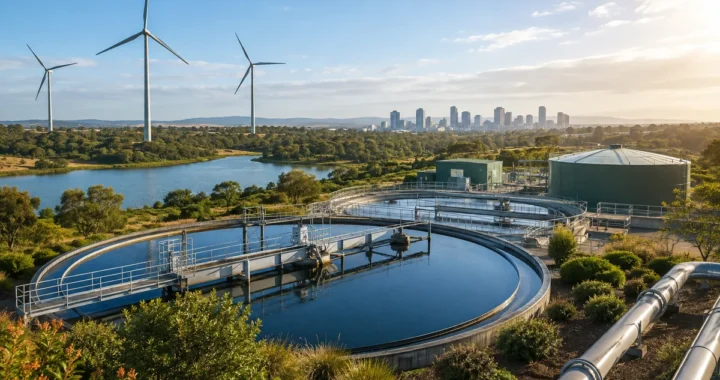
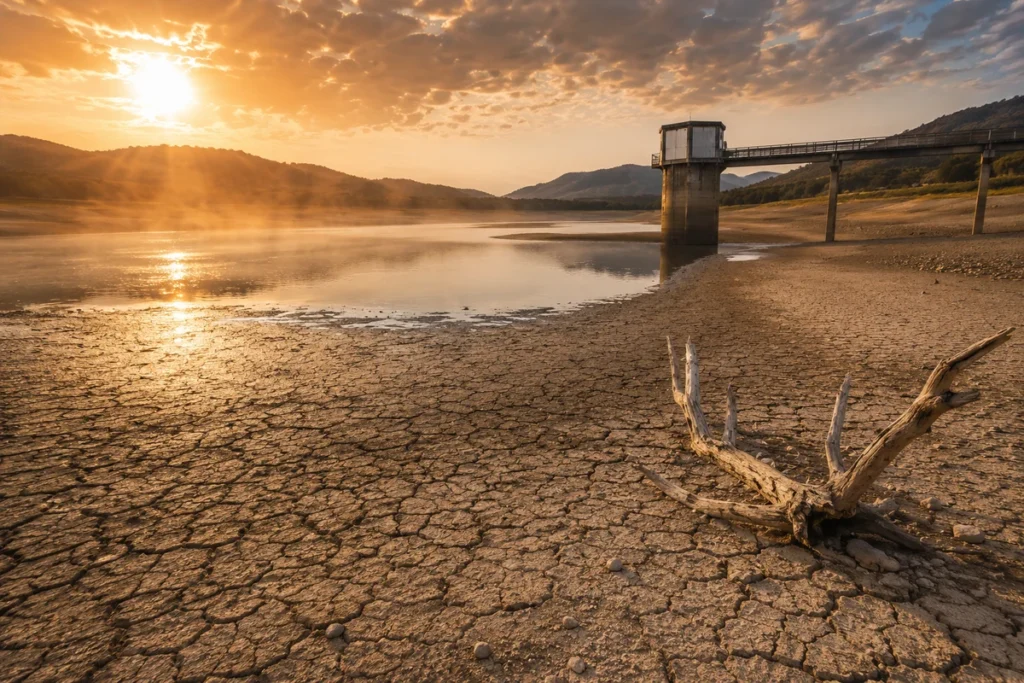
Cracked earth beside reservoir and desalination plant

From Droughts to Floods: What Australia Teaches Us About Water Scarcity

If you’re watching your community struggle with water shortages while others face devastating floods, this story will resonate with you.

In this guide, we’ll break down Australia’s water resilience lessons into simple strategies. You’ll know how communities worldwide can prepare for both drought and flood cycles that are becoming the new normal.

We’ll cover:

  • Building water security during a crisis
  • Budget-friendly ways communities can improve water efficiency
  • How to create systems that handle both water shortages and floods
  • Real strategies that saved towns from going completely dry
  • Practical steps your area can take starting today

We’ve seen dozens of communities across Australia revolutionise their water resilience using these same methods, from small farming towns to major cities.

Read on to learn more about how to build water security the Australian way.

Australia’s Water Scarcity Wake-Up Call

Australia faces some of the world’s harshest water realities, and the numbers tell a sobering story. Picture this: you’re living in a country that gets less rain per square kilometre than anywhere else people call home. This harsh reality means Australia’s water scarcity becomes a constant companion in all types of decision-making.

Farmers standing in drought-stricken Australian farmland

Here’s what drought and limited water supply look like on the ground:

  • Drought cycles that refuse to break: During the Millennium Drought, entire towns survived on water deliveries for over a decade while watching their local supply disappear.

  • Farmers watching fortunes evaporate: Agriculture suffered devastating losses as water availability plummeted, forcing some to abandon generations-old family farms.

  • Cities rationing every precious drop: Permanent water restrictions in major urban centres made water supply management an essential survival skill.

  • Communities forced to relocate entirely: When local water resources vanished completely, some towns had no choice but to close their doors forever.

Our findings show that the Murray-Darling Basin now runs at half capacity during drought years. But understanding the problem only scratches the surface. The real story lies in what caused this shift.

How Climate Change Rewrote Australia’s Water Rules

You know how Australians used to be able to predict their seasons pretty well? Well, those days are gone. Since 1910, temperatures have climbed 1.51 degrees, and that might not sound like much in hindsight, but it’s completely changed where and when rain falls across the continent.

The thing is, what used to be reliable seasonal patterns have become this wild swing between extremes. That swing has thrown the whole water cycle into chaos, leaving the old methods of managing water no longer effective. Take Queensland, for example. Back in May 2019, over 65.2% of the state was declared drought-affected. But then, get this, just three years later, devastating floods hit from February to April 2022.

So, climate change hasn’t just made the weather more unpredictable. It has rewritten the entire playbook for how Australia has to handle water resources. Instead of the familiar seasonal cycles, communities are facing conditions that ignore every historical pattern.

Naturally, this crisis forced Australia to get really creative with its solutions.

Innovative Water Moves Australia Made Under Pressure

There’s a saying that necessity is the mother of invention, and Australia’s water crisis became the perfect example. When communities faced the choice between innovation and going without water, they chose to get creative.

Innovative Water Moves Australia Made Under Pressure

Let me walk you through the step-by-step process Australia used:

  • Step 1: Infrastructure overhauls – Australia went all-in on technology. Cities built enormous desalination plants along the coast and created water recycling systems that could handle anything. In fact, Perth’s desalination plant produces 15% of the city’s water supply, proving the technology actually works.

  • Step 2: Policy changes that made sense – What if water could be bought and sold like any other resource? The government created water trading systems that let farmers sell water rights to cities during droughts. Meanwhile, strategic water management became a national priority with real funding behind it.

  • Step 3: Community-level water resilience – Every household became part of the solution. To begin with, tank rebates made rainwater harvesting affordable for families. Then, greywater reuse systems helped households stretch every drop they used.

  • Step 4: Agricultural Revolution – Farmers didn’t just survive the crisis, they revolutionised their methods. They adopted precision irrigation technology that monitors soil conditions in real-time. At the same time, drought-resistant crops replaced water-hungry varieties, keeping food production stable even during tough seasons.

Now, the main question is whether other countries can pull off similar moves.

What the World Can Steal from Australia’s Playbook

Australia’s hard-won water wisdom offers a blueprint for other nations facing similar challenges. The strategies that saved Australian communities didn’t require magic, just careful planning and the willingness to try new approaches.

Farmers and families using modern water solutions

The adaptability comes down to three factors:

Adaptable Infrastructure Solutions

Desalination technology works anywhere with coastline access. Countries like South Africa and California built similar plants. This proves the method works in many places, even small coastal towns can use this technology.

Community-Level Water Efficiency

Household rainwater harvesting and greywater systems don’t need huge budgets. These methods are effective in various locations around the world. They help both dry areas in Africa and flood areas in Southeast Asia.

Agricultural Water Breakthroughs

Techniques developed in Australian fields to address local needs are now helping farmers worldwide. We’ve seen how these methods help farmers everywhere.

Precision irrigation and better crops have helped farming areas from California to Kenya. They use less water but still grow the same amount of food.

Building Water Resilience for Tomorrow

Water scarcity threatens billions worldwide, creating urgent challenges for communities everywhere. However, Australia’s experience with extreme droughts and floods shows that effective solutions exist. With careful planning and innovation, communities can build lasting water security even in harsh conditions.

This article explored Australia’s water journey from crisis to resilience. We covered infrastructure investments like desalination plants, policy changes including water trading, community programs for households, and agricultural innovations. These proven strategies are now spreading globally.

Our team at Easy510 brings water awareness and filtration solutions to communities worldwide. Join our mission to make clean, safe water accessible for everyone. Visit our website to learn how we can help.

Children carrying water containers along rural dirt path overseas

Walking for Water: A Day in the Shoes of Children Without Access

If you’ve ever complained about a short walk to the corner shop, let’s picture a different reality. A child’s day starts at 4 AM, not for school or play, but to fetch water. Stories like these unfold millions of times each morning around the world.

The article will show you the real impact of water scarcity through children’s daily experiences. We’ll explore:

  • Dangerous paths children face while seeking safe water sources
  • Lost school hours that steal childhood dreams
  • Health risks from contaminated river water
  • Family struggles when water access fails
  • Your role in creating sustainable solutions

Ready to walk alongside these brave young people? You’ll discover what their daily reality teaches us.

Dangerous Paths Children Walk for Water

Every morning, millions of kids face the same question: Will today’s water journey be safe? The answer is usually not encouraging.

Remote communities often have no choice but to send children on dangerous missions to fetch reliable water from distant sources. Come and explore the main threats these brave children face on every journey:

Wild Animals and Isolation Risks

Children face real threats from wildlife and predators during their solitary walks. What makes the situation worse is that many safe water sources are located in isolated areas where cries for help often go unheard.

The risk becomes even greater for young girls who are especially vulnerable to attacks while walking alone through remote terrain.

Physical Strain on Growing Bodies

Twenty-kilogram water containers are too heavy for small bodies meant for play, not hard labour. As the hours pass, the weight damages their spines while the constant walking wears down growing joints. The sad reality is that physical problems like these often become permanent disabilities from an early age.

Environmental Hazards

Flash floods can turn safe paths into death traps within minutes. At the same time, extreme heat causes dehydration during the very journeys meant to bring water home. To make matters worse, rocky terrain and unstable ground lead to injuries that remote communities can’t treat properly.

The physical dangers are serious, but they’re only part of the problem. What happens next affects these children in ways that last far longer than any bruise or cut.

Stolen Hours: How Water Scarcity Robs Childhoods

Water Access Stories

Imagine losing six hours of your day to one task. That’s exactly what happens to children in water-scarce areas who must walk to collect water. The routine swallows their entire morning and often their afternoon, too.

The math is heartbreaking when you break it down. If a child spends four to six hours daily fetching water, that adds up to 28 to 42 hours per week (As a mother, I would feel guilty for putting my child through such horrors). Put that in perspective, it’s longer than a typical adult’s work week.

The situation becomes even more tragic when you consider their education. While other kids their age sit in school learning to read and write, water collectors miss lessons they’ll never get back.

According to the UNESCO Institute for Statistics, 258 million children and youth remain out of school globally, with water collection being one of the barriers preventing access to education.

The loss of education creates a vicious cycle that’s hard to break. Without schooling, these children grow up without the skills needed for better-paying jobs. As a result, their own children will likely face the same water collection burden.

What should be childhood years filled with play, learning, and dreams, turns into a daily struggle just to survive.

The Hidden Health Crisis Behind Every Drop

man drinking scarce water at sunset riverbed

The physical dangers of water collection are serious, but the water itself creates an even bigger problem. After risking their safety to collect water, children face another threat: the water might be making them sick.

  • Immediate Disease Threats: River water carries deadly bacteria that cause severe diarrhea, cholera, and dysentery. And without quick medical treatment, waterborne illnesses can be fatal for young children whose bodies are already weakened.
  • Invisible Long-Term Damage: Poor water and sanitation lead to chronic intestinal infections that prevent proper nutrient absorption. What makes this worse is that, unlike immediate sickness, stunted growth and developmental delays become permanent problems that follow children into adulthood.
  • Sanitation Crisis: Open defecation near water sources pollutes the same rivers that families depend on for drinking. As a result, each collection trip increases disease transmission risk and creates cycles where contaminated water sources spread illness throughout communities.
  • Economic Impact: Medical expenses from water-related illnesses drain family resources that could pay for school fees or nutrition. The problem compounds when healthcare costs consume household income, deepening poverty cycles that trap entire families.

Individual health problems like these don’t stay contained, though. They spread outward to affect entire communities in ways that might surprise you.

How the Water Crisis Affects Entire Communities

Community gathering at water pump in rural African village

When children spend their days walking for access to safe water instead of attending school, entire villages feel the impact. The reason is simple: communities lose their future teachers, doctors, and leaders before they even have a chance to develop.

The ripple effects go far beyond individual families and touch every aspect of their environment. For example, local businesses struggle because educated workers aren’t available to help them grow. At the same time, healthcare becomes harder to access when no one has the training to provide basic medical services.

Agriculture suffers too, as traditional farming knowledge isn’t passed down properly when children miss school. The situation gets worse when women and girls bear the heaviest burden, often abandoning their own dreams to ensure families have access to safe water.

As a result, the community development that could lift everyone out of poverty stalls completely. Villages that should be progressing forward instead find themselves stuck in the same patterns year after year.

Breaking the cycle requires understanding that water access isn’t just about individual survival. Rather, it’s about giving entire communities the chance to build a sustainable future.

Your Role in Changing These Lives

Rather than food, it’s the water demand that keeps these communities awake at night. Basically, the water access stories shared here don’t have to end in struggle. The encouraging news is that real solutions are working in communities across the globe, and you can play an important role by helping expand their reach.

Easy510 partners with local communities in Australia and developing nations to create lasting change through sustainable water projects. When clean water becomes accessible, remarkable changes happen. Children start attending school regularly while families spend less money on medical bills, and whole communities can finally focus on growth rather than just surviving.

There are several ways you can make a real difference. For instance, financial support funds new water systems, sharing these stories helps raise awareness, or you could volunteer your professional skills to help Easy510 reach even more communities.

The future doesn’t have to repeat the same patterns of water scarcity and lost opportunities. By supporting organisations working on sustainable water solutions, you help write new chapters in these children’s stories.