
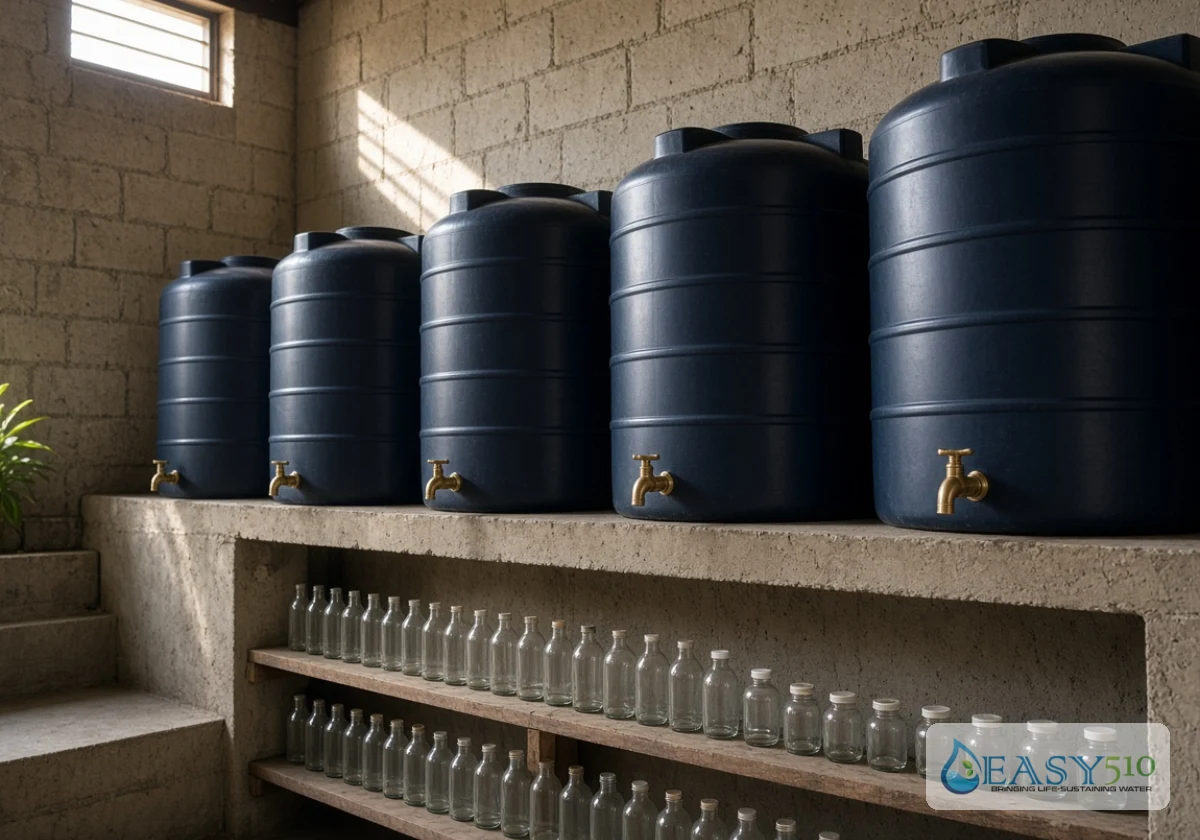
Water can leave the tap or the roof perfectly safe and still make your family sick by the time it reaches a cup. Much of the water contamination during storage happens in that last metre, where hands, open lids and neglected tanks undo good water treatment.
That’s why access to safe water at the source only solves half the problem. Easy510 writes for homes on town supply and homes on rainwater. Both share the same gap because water safety depends on how people handle it.
This article explains how germs enter water, how to choose drinking water containers and tanks, and why steel tanks corrode. It also covers five household water hygiene habits. Read on to find your home’s weak spot.
Water Contamination During Storage: How Safe Water Goes Bad Between the Tap and the Cup
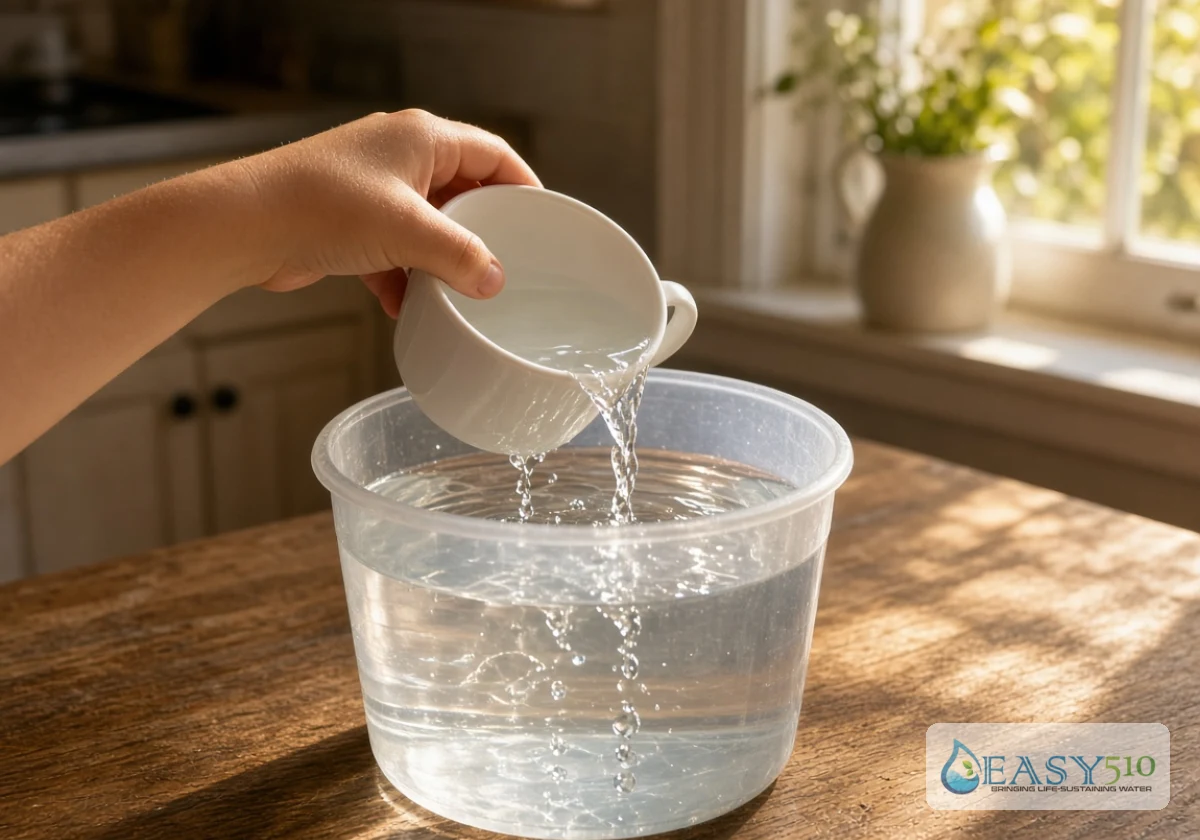
Water goes bad in storage when something dirty touches it, or when the container gives bacteria the warmth and time they need to multiply. Germs from hands, dust, insects and animals all get in this way, and quality drops long before you can see or smell a problem.
Contamination tends to travel one of four routes into household storage. Knowing the route tells you which habit to change first:
Hands, Cups and Dippers: The Fastest Route into a Clean Container
Hands are one of the most common sources of microbial contamination in stored water. Each time someone dips a cup into an open bucket, their fingers touch the water and leave bacteria behind.
Those germs keep multiplying while the container sits, and the bucket slowly becomes contaminated water. One dirty dip can affect every glass poured after it (kids with sticky fingers are usually the fastest culprits).
Pour water out through a tap or spout instead of dipping into it, especially when storing water for several days. If you must use a dipper, choose one with a long handle and hang it away from the bench.
Lids You Leave Off and Containers You Leave Open Overnight
An open container collects dust, insects, leaves and droppings fast. Overnight is the worst stretch because cockroaches, geckos and mosquitoes move around while everyone sleeps.
On top of that, a loose lid lets in nearly as much as no lid at all. You’ve probably got a bucket at home that lost its original cover years ago.
So every container you use for drinking needs a tightly sealed lid, since preventing contamination is far easier than fixing it later. Check the seal each week and replace any cracked or warped lid. Even filtered water won’t stay clean if gaps let contaminants enter.
Sunlight, Warmth and Slime: How Heat Feeds Bacteria in Tanks
Warmth gives bacteria the conditions they need to grow, and sunlight is a common cause. It heats the water inside shallow or see-through tanks, and algae growth soon follows.
After that, a slimy layer called biofilm forms on the walls and shelters bacteria. This biofilm sheds germs back into the water each time the level drops or the tank refills.
Place tanks in the shade and choose opaque materials that block light. If you’ve set up rainwater harvesting for homes, plan regular cleaning and scrub the walls whenever you’re cleaning tank sediment out (a soft brush lifts the slime without scratching the walls).
Dirty Collection and Transport Before the Water Reaches the House
Water carried from a standpipe, bore or neighbour’s tank picks up dirt on the way. Jerry cans with narrow necks are hard to clean, so sludge from earlier trips stays inside.
Plus, a container that once held fuel or pesticides keeps traces of those chemicals in the plastic. Chemical pollution like this won’t come out with a simple rinse, and boiling won’t remove it either.
Good water collection safety starts with separate containers kept only for drinking. Never reuse old chemical storage drums, and scrub each can with a long brush before every trip.
Which Drinking Water Containers and Water Tanks Keep Stored Water Safest?
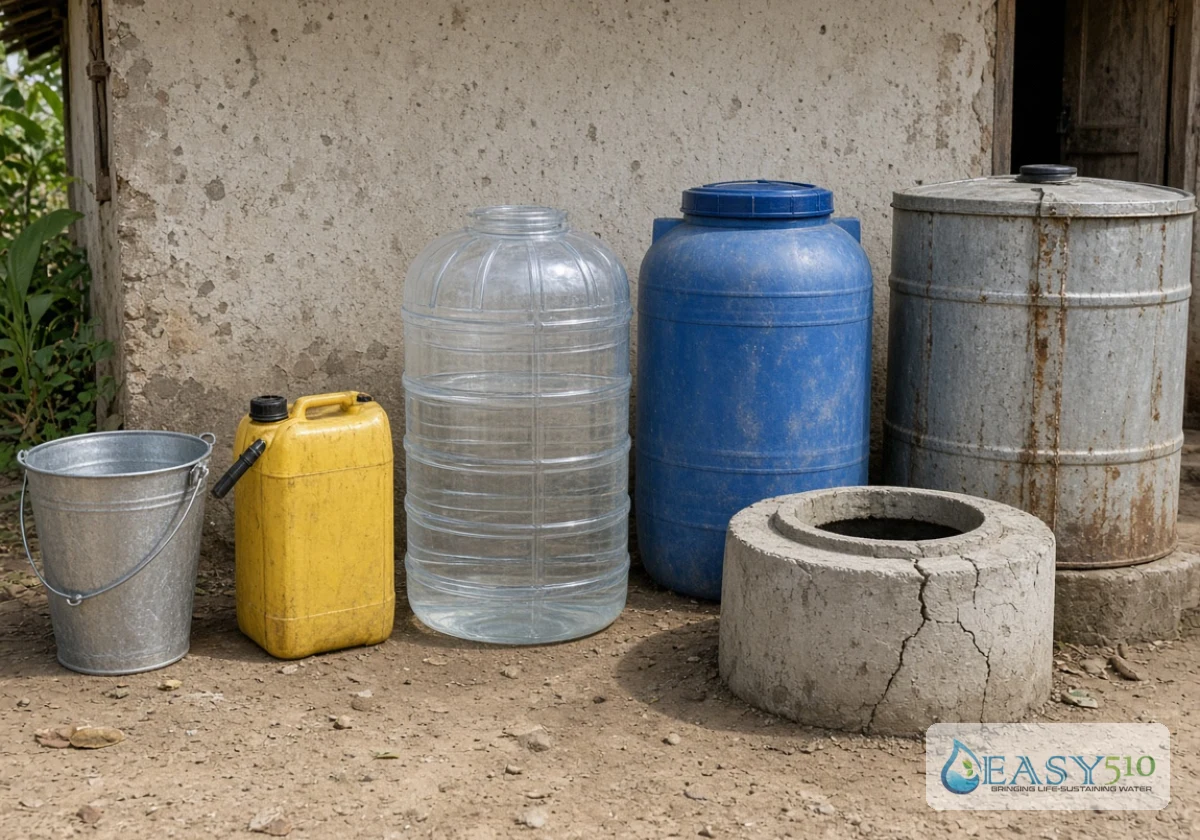
With those four routes in mind, the container itself decides how many of them you can block. Opaque, food-grade containers and Water Tanks with sealed lids and a tap work best, because they shut out hands, light and dust.
Size also plays a role because water that sits for weeks gives bacteria more time to multiply. Choose a container your household empties and refills within a few days. A tap set slightly above the base also helps, since sediment settles below it and stays out of your glass.
Let’s compare the most common options side by side to see how each one performs.
| Container | Main risk | What to do |
|---|---|---|
| Open bucket | Hands, dust, insects | Swap it for a lidded container with a tap |
| Jerry can with tap | Sludge in the neck | Brush it out before each refill |
| Food-grade poly tank | Algae if see-through | Choose opaque and keep it shaded |
| Concrete tank | Cracks let in runoff | Seal cracks and check the lid fit |
| Galvanised steel tank | Rust once coating wears | Inspect yearly and fit a liner |
| Stainless steel tank | Corroded fittings | Check joints and the outlet tap |
For most homes, opaque poly water storage tanks offer affordable clean water storage. They block light without the rust risk of steel. Keep fire water tanks and garden supplies on separate lines, so nobody fills a drinking jug from the wrong tap.
Corrosion Inside Steel Tanks Adds Rust and Metals to Otherwise Clean Water
Steel tanks carry a storage risk that has nothing to do with germs, because corrosion slowly releases rust and metals into the water. Once the galvanised coating wears through, the bare steel underneath starts rusting where water and air meet.
Rust flakes then stain the water brown and give it a metallic taste. Old fittings, solder and some roof paints can also add heavy metals like lead, which you can’t taste at low levels.
Anyone who has drained an old steel water tank knows the outlet end usually rusts first. That’s why a tank that looks fine from outside can still fail a water quality test (the inside of the tank always tells the real story).
Pinhole leaks, bubbling paint and orange streaks near the outlet are the warning signs to check during tank inspections. Once you spot them, you can fit a food-grade liner, repair small patches or replace the tank.
Before deciding, book a lab test for metals and compare the result against drinking water guidelines. It will tell you if the tank still holds potable water or only suits non-potable uses like gardening. Ongoing water quality monitoring also shows if a repair worked.
Building Household Water Hygiene Habits That Keep Stored Water Safe

With the right container and a sound tank in place, daily habits decide whether they stay clean. Household water hygiene is water quality management on a small scale. A routine helps prevent contamination from building up over time.
For instance, a family might scrub the tank every summer and still dip unwashed cups into the kitchen jug each morning. You’ll probably recognise that jug from your own bench, and it carries the most risk because it sits closest to the cup.
Children often handle the containers most and forget handwashing easily. So teach them water handling alongside handwashing, since both habits help prevent waterborne diseases. Sanitation systems and hygiene education also protect whole communities.
If you’re interested in a routine that sticks, have a look at these five habits:
- Wash your hands with soap before touching any water container or cup.
- Pour from a tap or spout and keep cups out of the storage container.
- Keep lids on at all times and replace cracked ones as soon as possible.
- Scrub small containers weekly with soap and a long brush, then rinse them. Clean and maintain large tanks on a set schedule.
- Clear gutters and check tank screens after storms and before a Darwin-style wet season.
Start with whichever habit your home skips most, then add the next one once it feels automatic. Trying all five at once often means none of them will stick, so give each habit a week or two to settle in.
Over time, these small steps, repeated daily, become part of how your household handles water without anyone stopping to think. That consistency keeps quality water coming out of every container.
Keep the Last Metre Clean and Your Drinking Water Stays Safe
Safe water rarely turns bad at the source, since much of the contamination happens in the last metre between storage and the cup. Clean hands, sealed lids, the right containers and sound tanks keep that stretch protected.
So, pick one weak spot in your home this week and fix it. A new lid, a tap on the jug or a quick tank check costs little and protects every glass after it.
Easy510 shares practical guidance on water storage, rainwater and sanitation for Australian households. Ready to keep safe drinking water in every cup? Contact us for advice on protecting your stored water.