
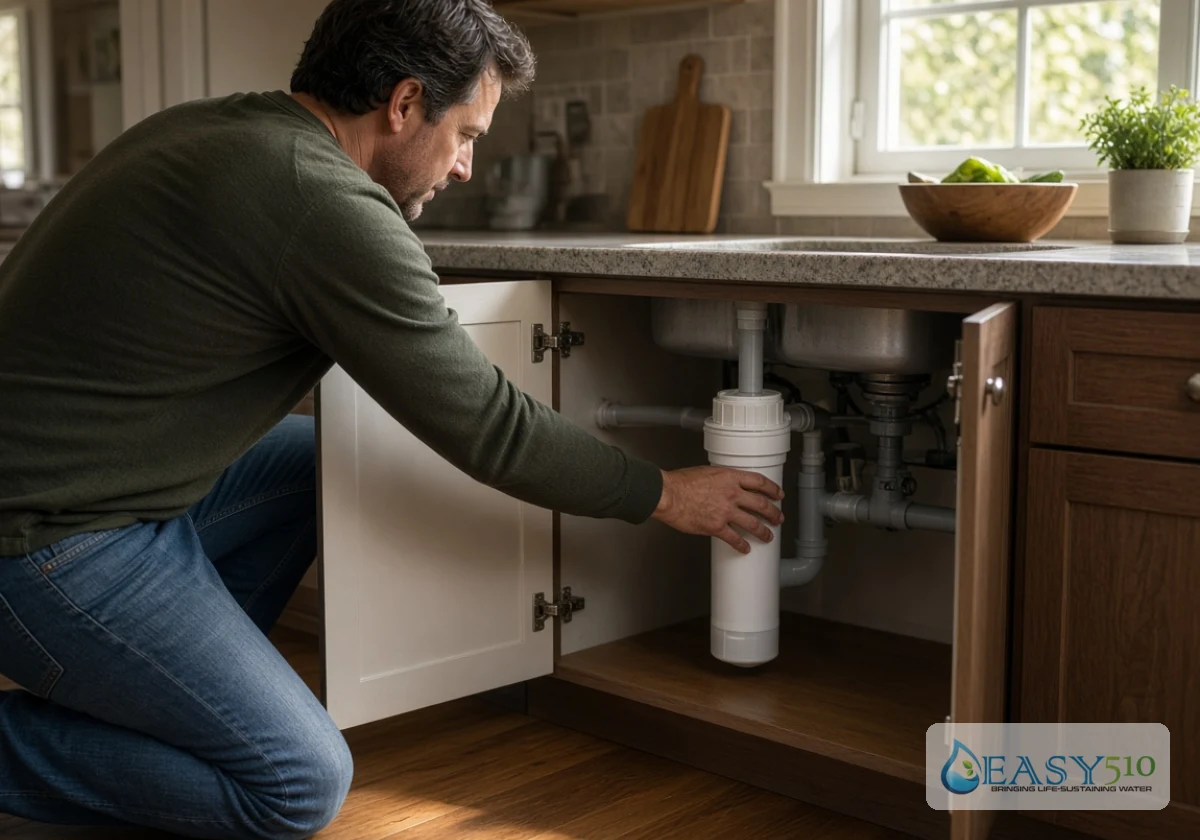
The water filter mistake that undoes months of clean water effort is running a cartridge past its replacement date. When that happens, an overdue filter stops blocking contaminants and starts releasing them.
For that reason, Easy510 recommends tracking replacement dates rather than judging a cartridge by its appearance. A used cartridge may still look intact, which makes visual checks alone unreliable.
To help you plan those replacements, this guide covers:
- The signs that a cartridge is overdue
- Typical schedules for whole house and reverse osmosis units
- Storage habits for filtered water
Read on to see how an old cartridge works against you from the inside.
Check How Overdue Cartridges Affect Water Filter Performance

Most households treat a water filter as a set-and-forget appliance, and that’s where the trouble starts. After installation, the unit sits under the sink or on a wall and gives no alarm when its media fills up.
Inside the system, sediment filters catch particles like dirt, while activated carbon reduces chlorine and certain organic compounds. As cartridges approach their capacity, their performance can decline, though the effects depend on the filter and water conditions.
On top of that, the trapped organic material feeds bacteria, which grow in the damp cartridge between uses. Therefore, water that sits on that growth over a long weekend away picks it up, so the first glass afterwards can taste stale.
We’ve found that households often overlook maintenance after installing an under-sink water filtration unit. Record the installation date and manufacturer’s replacement interval somewhere you’ll see them during routine checks.
How Do You Know When Home Water Filters Need Replacing?
Home water filters need replacing when they reach the manufacturer’s time or capacity limit. Changes in pressure, taste or smell also deserve attention, although they don’t always mean the cartridge has failed.
Run through the checks below this week to see where your filter stands.
A Drop in Water Pressure at the Tap
A slow trickle from a tap that used to run strong usually points to a clogged filter. This happens when sediment packs into the media and narrows the path the water can take.
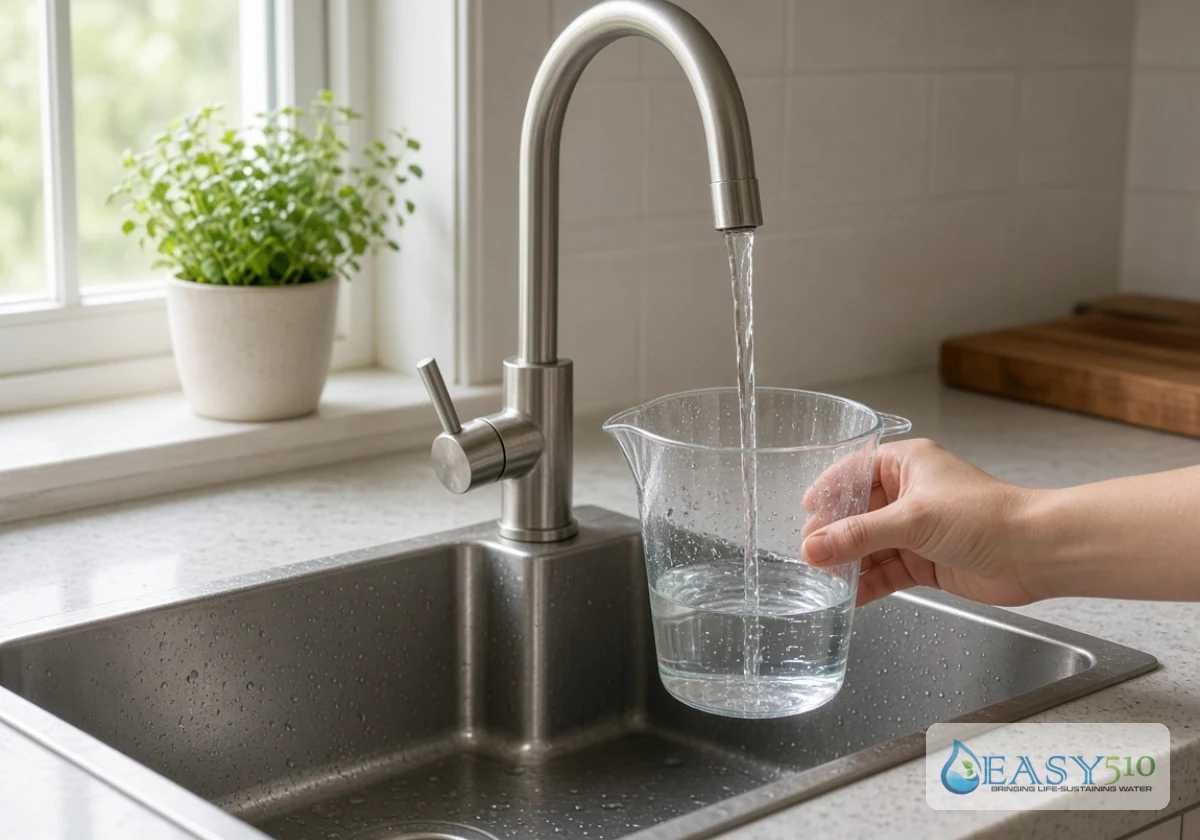
To check the flow, track how long your filter takes to fill a one-litre jug and record the result on your fridge. Use that timing as your baseline when you repeat the test each month. If the jug takes progressively longer to fill, check the cartridge for clogging.
Tap Water That Tastes or Smells Different
A returning chlorine taste can indicate that the carbon cartridge is losing effectiveness. So your filtered water may start tasting like unfiltered tap water again, though changes in the supply also deserve checking (the morning cuppa is usually the first to give it away).
Musty or earthy smells carry more risk, but they don’t necessarily originate inside the filter. Naturally occurring compounds in the water supply can produce these odours. If the odour persists, check your water supplier’s advice and inspect the filter according to the manufacturer’s instructions.
Cloudy Water or Visible Sediment in the Glass
Cloudy water doesn’t always mean particles are getting past the filter material. Leave a glass standing and watch for clearing from the bottom upwards, which suggests tiny air bubbles. Beyond that, specks that settle at the bottom need a separate check.
If sediment persists, inspect the cartridge and its seals for damage. Worn O-rings or an incorrectly seated cartridge can let water bypass the filter material, depending on the unit’s design.
Before opening the housing, shut off the supply and release pressure according to the manufacturer’s instructions. Check the seals and housing for cracks during the inspection. If particles remain after replacement and the recommended flushing, contact the manufacturer or a plumber to investigate.
A Discoloured Sediment Pre-Filter Housing
In multi-stage units with clear housings, the sediment pre-filter may gradually turn brown or orange as it collects sand, rust and silt. Visible buildup gives you a reason to inspect it, even if the tap still runs normally.
Homes using bore water or older pipes may need more frequent checks because sediment levels can be higher. Inspect the pre-filter monthly and follow the manufacturer’s replacement guidance to protect the later filtration stages.
The Manufacturer’s Replacement Date Has Come and Gone
Sometimes nothing looks wrong when a cartridge reaches its replacement date. Plus, taste, colour and flow alone don’t confirm that your filter still performs as intended. The manufacturer’s limits provide a replacement guide even when you notice no change.
That’s why you should check the manual for both a time limit and a litre rating. The litre rating tells you how much water the cartridge can treat. Your drinking water filter replacement is due when you reach either limit first, even if the other still allows further use.
Whole House and Reverse Osmosis Filter Maintenance Explained
The warning signs of the previous section tell you a cartridge has already failed, while a maintenance schedule lets you act before they appear. Each stage in a whole home water filtration system wears at its own pace, so one date rarely covers the whole unit.
The table below sets out typical upkeep for the most common household water filtration systems.
| System or Part | How Quickly It Wears | What You Should Do |
|---|---|---|
| Sediment pre-filter (whole house) | Fastest, especially on bore or tank water | Shut off the water, release pressure, then swap the cartridge |
| Carbon filter (whole house or under-sink) | Slower, so follow the manual’s time and litre rating | Replace it, then run the tap to flush out loose carbon dust |
| Reverse osmosis membrane | Slowest stage in the unit | Replace it when water tests show dissolved solids rising |
| UV lamp | Set by the lamp’s rated life | Fit a new lamp and wipe the quartz sleeve clean |
| Housings and O-rings | Check at every filter change | Look for cracks and grease O-rings with food-grade silicone |
In our experience, the sediment row deserves the closest watch in homes on bore or rain tank supply. That’s because heavy silt shortens its life well below the manual’s estimate.
Quick Tip: Set a maintenance reminder for the sediment filter based on your water conditions. Then add the other filters’ replacement dates to the same calendar.
Safe Water Storage: Keeping Drinking Water Clean After the Filter
A new cartridge won’t prevent contamination if you collect filtered water in a dirty jug or leave the container uncovered. Clean storage becomes especially important after carbon filtration reduces chlorine, the disinfectant that helps control bacterial growth in treated town water.
Filtered water therefore has less protection once it leaves the tap, so it spoils quickly in a warm kitchen. Once we left a jug on the bench through a Queensland summer arvo and noticed the flat, tired taste by dinner time.
Rainwater systems need protection before filtration too, although those checks belong in a separate tank-maintenance section. In practice, first-flush diverters reduce debris entering the tank, while secure lids and screened openings help exclude contaminants.
Pick from these storage habits to keep that clean water safe until you drink it:
- Sealed Bottles: Keep filtered water in a sealed glass or BPA-free bottle in the fridge and refill it daily.
- Weekly Washing: Scrub jugs and bottles in hot, soapy water each week, including the lid and spout.
- Shady Spots: Store containers out of direct sunlight, which warms the water and speeds algae growth.
- Tank Screens: Fit tight lids and mesh screens on rain tanks so insects and animals stay out.
- Boiling Old Water: Boil stored water that has sat for days or tastes off before you drink it.
Finally, begin with the two habits your household skips most, then add the others once those feel automatic. That steady build counts, because safe water storage only works when it’s as routine as maintaining your water filter.

Make Filter Replacement the Habit That Protects Everything Else
Keeping your filtration system in good condition takes regular cartridge changes, performance checks and proper water storage. Together, these habits help maintain water quality as household usage and supply conditions change.
A reliable routine begins with the manufacturer’s replacement limits. Regular checks of water flow, taste and appearance also help you spot problems early, while clean containers protect filtered water after collection.
If you need more detailed knowledge, Easy510 shares practical guides on water filter maintenance and home water filtration for households. Contact us with questions about your setup and get clear advice.