
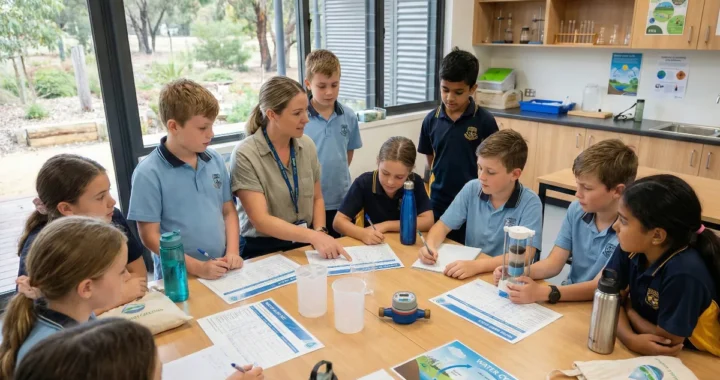
You can build water awareness in schools by conducting a water audit, forming a task force, and choosing an age-appropriate curriculum. You can also embed it into permanent school operations to raise awareness about water.
According to WorldAtlas, Australia is the driest inhabited continent despite being surrounded by beaches and backyard pools. So students must understand both water scarcity and water safety issues. And we, Easy510, have spent 25 years supporting water education and initiatives.
In this guide, we’ll cover:
- The meaning of water awareness in schools
- Why Australian schools desperately need these programmes
- How to build a programme from scratch
- Tips on keeping a programme running year after year
Ready? Let’s get started.
What Is Water Awareness in Schools?

Water awareness in schools is an educational approach that teaches students about conservation, safety, and the value of water through sessions on water conservation and the water cycle. Kids take these lessons home with them, where they influence their entire family’s water habits.
A complete water awareness programme includes the following parts:
- Water Conservation: Students learn about water scarcity, drought impacts, and why sustainable practices are important in this stage. Specifically, schools teach practical techniques kids can use at home, like shorter showers and fixing dripping taps.
- Water Safety and Drowning Prevention: This supervision-focused part teaches children how to stay safe around water. They also get to know about the ways to recognise water hazards at beaches and pools, and why they should never swim alone.
- Clean Drinking Water Access: Schools make sure students have access to clean drinking water all day so they can stay healthy. They set up water stations that help children choose water instead of sugary drinks.
- The Water Cycle: In this part of the programme, students learn how rain becomes drinking water, which also builds awareness of how watersheds link together. Plus, it helps them see the ways pollution spreads and understand the importance of rainfall, groundwater, and local supply working as one system.
- Cross-Curriculum Integration: Water fits naturally into many subjects, so teachers can teach measurement, data, and research while students apply these skills. For example, Year 5 classes could run an anti-water waste campaign by making posters, writing short persuasive pieces, and creating simple social posts.
- Building Lifelong Habits: As we mentioned previously, children bring water awareness home and influence their parents’ daily habits. So when you teach a 7-year-old about water waste, you’re teaching their whole family.
These lessons help whole communities grow more responsible in how they use and protect water.
Why Do Schools Need Water Awareness Programmes?
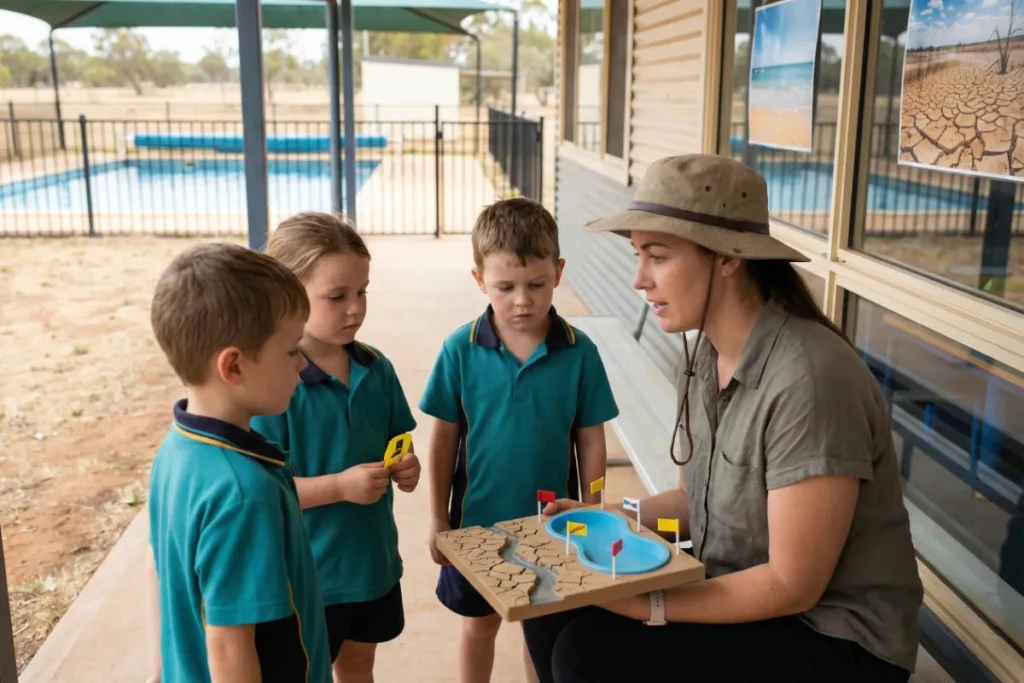
Schools need water awareness programmes because Australia’s water scarcity keeps getting worse. They’re also important because young children still face serious drowning risks. A good programme helps kids notice water hazards early and understand how to stay safe.
We’ll now dig deeper into these needs.
Australia Faces Increasing Water Scarcity
We discussed earlier that Australia is the driest inhabited continent with frequent droughts and shortages. In particular, the Brisbane and Queensland regions face water restrictions during extended dry periods (which unsettles even well-prepared households).
But wait, there’s more. Climate change also worsens the water scarcity situation in Australia. That’s why it’s important to teach students about water conservation. When these students become adults, they use water responsibly because they truly understand its value.
And the earlier you teach the students about it, the better. A study published on ScienceDirect, “Long-term impact evaluation of early childhood conditions When only short-term outcomes are available,” found that early behaviours often become long-term habits because repeating the same actions over time “trains” the brain to do them automatically.
Drowning Remains a Leading Child Death Cause
Did you know that drowning is the leading cause of accidental death for children aged one to four? Yes, it’s true.
According to the Queensland Family and Child Commission in their QFCC Report on Child Deaths 2022-23, Chapter 4, drowning was the leading cause of death for Australian children aged 1-4 years over the most recent five-year reporting period.
Unfortunately, we’ve all seen how backyard pools, beaches, and bath time can be serious dangers for naturally curious toddlers. And it can happen so quickly because a two-year-old can drown in less than 60 seconds, often without making a sound.
Water safety skills and awareness can prevent these tragic deaths in Australian communities.
How Do You Build a Water Awareness Programme?
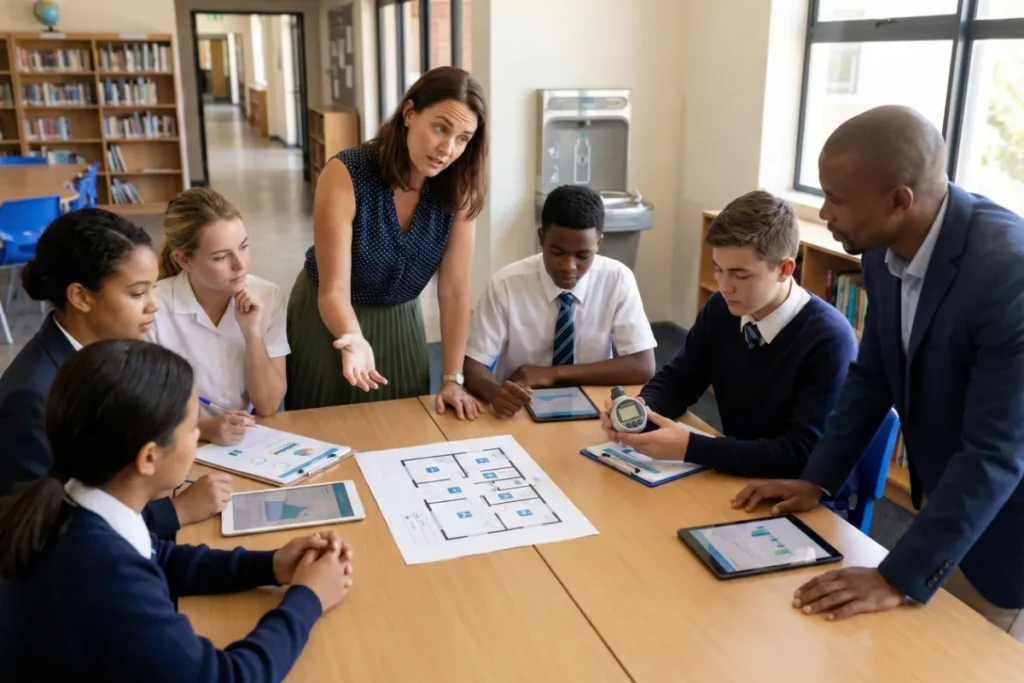
You build a water awareness programme by starting with a school water audit and forming a task force. After that, you choose a curriculum suited to each age group so the plan feels practical and easy to build on.
Here’s how to build a long-lasting programme:
- School Water Audit: You need to walk through the school to identify where water is used and potentially wasted. Check taps, toilets, and fountains for leaks that waste litres daily. You should also survey students about their current water knowledge and practices.
- Task Force Formation: It’s important to recruit teachers, parents, students, and community members for your planning committee. Include diverse perspectives to design programmes that work for every age group. Plus, you must assign clear roles like curriculum lead and activities coordinator.
- Age-Appropriate Curriculum: Different age groups engage with water in different ways. More precisely, younger students need clear rules, while middle years enjoy hands-on cycle concepts. However, older students respond well to analysing data and leading campaigns.
- Funding and Partnerships: Don’t forget to contact local water utilities, which often provide free educational resources and speakers. For example, Brisbane councils offer grants for school water conservation initiatives. And as a first step, you can partner with organisations like Royal Life Saving for drowning prevention support.
- Teacher Training: Professional development is important for teachers to feel capable of delivering water safety lessons. Like, you can share ready-made lesson plans and connect teachers with trained instructors who can co-teach initial sessions.
- Pilot Activities: Start with simple water experiments that make complicated ideas easy to see. Try activities like taste tests or small leak checks. These tasks connect well because they help students measure school water use and calculate potential savings.
- School-Wide Initiatives: The best thing about simple tools like tap timers and toilet labels is the way these tools engage students in detecting leaks and water waste. An approach like this builds clear daily routines and helps the whole school clearly see and understand its water-use progress.
- Parent Engagement: Family-based challenges extend water education outside the classroom. And it’s helpful because through this shared effort, water-saving habits spread more easily from school into the wider community.
- Managing Time Constraints: Integrate water topics into the existing curriculum rather than adding separate lessons. For instance, you may encourage using 10-minute water activities as warm-ups for science or maths.
- Measuring Behaviour Change: Remember to track clear actions like students bringing reusable bottles, and check if family habits change through short surveys. You can also compare school water bills before and after the programme to see real progress.
In the end, the programme will guide children to think about water in daily life.
How Do You Keep Water Programmes Running Long-Term?
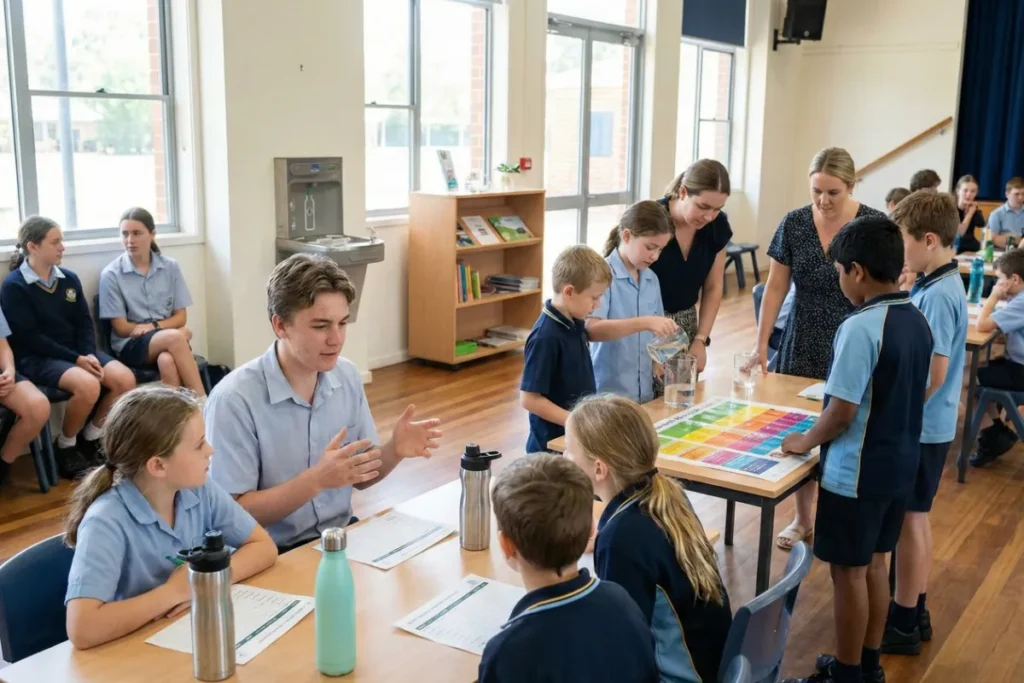
You keep water programmes running through the permanent integration of fundamental lessons into your curriculum. You also refresh activities each year to keep students engaged.
Too many schools launch water programmes with enthusiasm, only to watch them fade after a year. But the ways we suggested here to maintain a steady focus will make the programme feel like a normal part of a student’s school life.
Let’s get into more details about these approaches.
Permanent Curriculum Integration
What makes water safety education so easy to use is that it blends into normal classwork without much effort. New teachers usually get the hang of it within their first few weeks (honestly, it makes the start feel less heavy, too).
But if you want to make things easier, we recommend building a small resource library. This way, everyone will know where to find what they need. Better yet, many schools observe a yearly water awareness week, which often becomes a fun tradition that students look forward to.
And when the lessons are updated each year with fresh Australian water data, the programme stays relevant and keeps going strong even as staff or priorities change.
Annual Activity Refresh and Celebration
How do you keep students interested year after year? One easy way is to switch up the hands-on activities so they’re always trying something new. You can also make World Water Day in March feel special with assemblies or community events.
To keep that momentum going, you can arrange small rewards for classes that meet their water-saving goals. Besides, if you have newsletters or social media, share information about these positive achievements. It’ll allow families to see the progress and celebrate it, too.
Last but not least, invite older students for a talk on how these lessons shaped their habits at home. Listening to their story will make younger kids feel inspired to do the same.
Pro tip: Encourage teachers to use local water issues as real examples during class discussions.
Create Lasting Water Habits in Your Students
We’ve reached the end of our guide to building water awareness in Australian schools. You now see how these programmes support conservation, prevent drowning, and help students build habits that keep them safe.
At Easy510, we’ve supported water education and conservation efforts for more than 25 years. Contact us today to learn how we can help your school make water awareness a lasting priority.