
Safe sanitation changes communities by making them healthier, safer, and more economically stable. It does that by safely separating human waste from the water, food, and environment people rely on every day.
But the benefits don’t stop there. Children miss fewer days of school, women have greater privacy and security, and families spend less money on preventable illness.
This article walks through how each of those changes happens. You’ll also find out what it takes to build a system that works.
Let’s get into it.
Public Health Improves
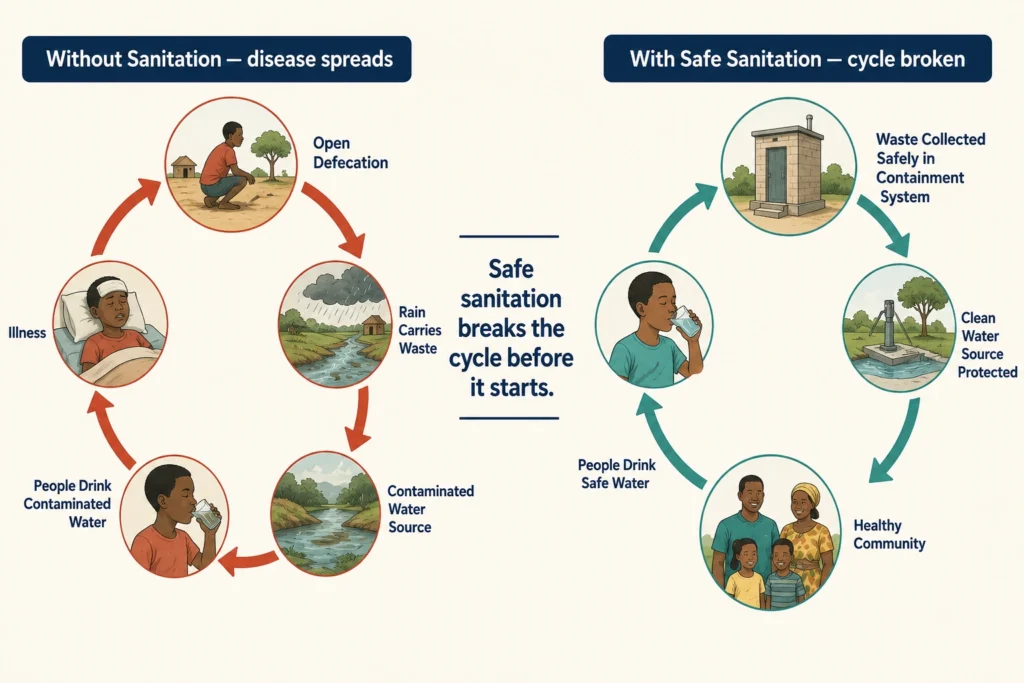
When a community has no sanitation facilities, human waste ends up in the surrounding environment. It seeps into rivers, wells, and other local water sources. As a result, the same water people drink, cook with, and wash in becomes contaminated. Once people use that water, diseases such as diarrhoea can spread quickly.
The problem gets worse when people have no choice but to defecate in the open, such as in fields or other outdoor areas. With waste left exposed, rain can carry harmful bacteria and viruses into nearby water sources. People keep using that water because it’s often their only option, and the cycle of disease continues.
Safe sanitation breaks that cycle before it starts. Instead of letting waste reach nearby water sources, these systems collect, contain, and treat it safely. According to a WHO study, every US$1 invested in sanitation returns US$5.50 in lower health costs, more productivity, and fewer preventable deaths.
Children Spend More Time in School
Access to safe toilets helps children stay in school by removing two of the main reasons they miss class: illness and a lack of suitable toilet facilities. When schools have safe, private toilets, fewer children miss class through avoidable illness. Girls are also more likely to stay enrolled because they can use the facilities throughout the school day.
Without those facilities, attendance often drops. We’ve seen this in communities across Kenya and Ghana, where girls left school simply because their schools had no private toilets.
Women and Girls Gain Privacy and Safety
In communities without toilets, many women and girls delay using the toilet until they have enough privacy. They wait, sometimes all day, until it’s dark enough to go outside without being seen.
That often means walking alone at night to isolated areas, where the risk of harassment and assault is much higher. Even when nothing happens, many plan their day around avoiding that journey altogether.
Private sanitation facilities remove the need for those risky journeys. Women no longer have to choose between their safety and a basic bodily need. It also gives them more freedom to work, study, and take part in everyday life.
Families Save Money and Earn More
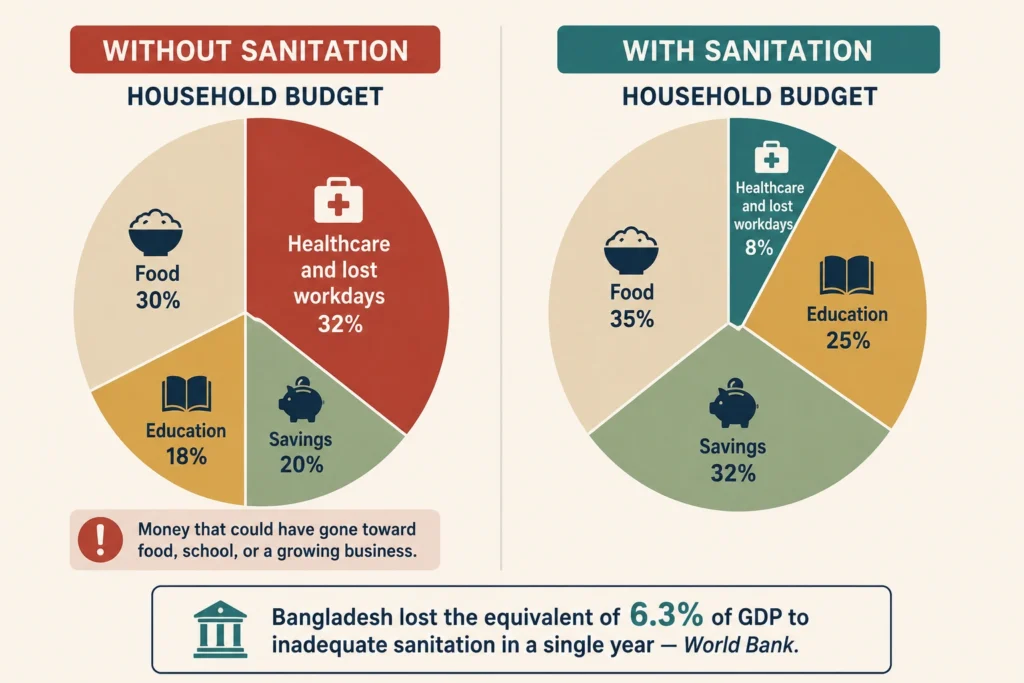
When someone in the family gets sick from contaminated water, the medical bill comes first. Lost workdays follow, and children often have to stay home to help.
For many low-income families, this means putting other priorities on hold. Money that could have gone towards food, school, or growing a business instead pays for treatment and lost income.
That pattern repeats across entire communities. A World Bank study found that inadequate sanitation cost Bangladesh the equivalent of 6.3% of its GDP in 2007. In practical terms, that’s billions of dollars lost to healthcare costs, missed workdays, and disrupted education in a single year.
Improved sanitation helps keep those funds where they belong: in household budgets, local businesses, and community economies instead of preventable healthcare costs.
Communities Protect Their Environment
Safe sanitation protects local environments by stopping waste from reaching the soil and water sources communities depend on for food and livelihoods. When communities contain and treat waste properly, crops grow in healthier soil and local waterways stay clean.
As a result, farmers have more reliable water for irrigation and better conditions for growing food. Rivers and streams also stay cleaner, which supports fishing and other livelihoods that depend on clean water.
This becomes even more important in areas affected by flooding. Heavy rain can spread untreated waste across large areas quickly. Strong sanitation systems help contain that risk and protect local water sources when communities need them most.
Why Climate Change Makes Sanitation More Urgent
Climate change makes safe sanitation more urgent because it makes it easier for waste to spread and harder to keep drinking water safe.
Floods can carry untreated waste into rivers, wells, and other drinking water sources. Dry conditions create different challenges. Droughts reduce the water available to move and treat sewage safely. In both cases, wastewater becomes harder to manage, which increases the risk of waterborne disease.
Communities that already lack sanitation systems feel those effects first. A single flood or prolonged drought can undo years of progress by contaminating water supplies and overwhelming systems.
Strong sanitation systems and effective wastewater treatment help prevent contamination during extreme weather. They work best when communities understand how sanitation and clean water are connected. That’s why water awareness is an important part of long-term resilience.
What It Takes to Build a Sanitation System
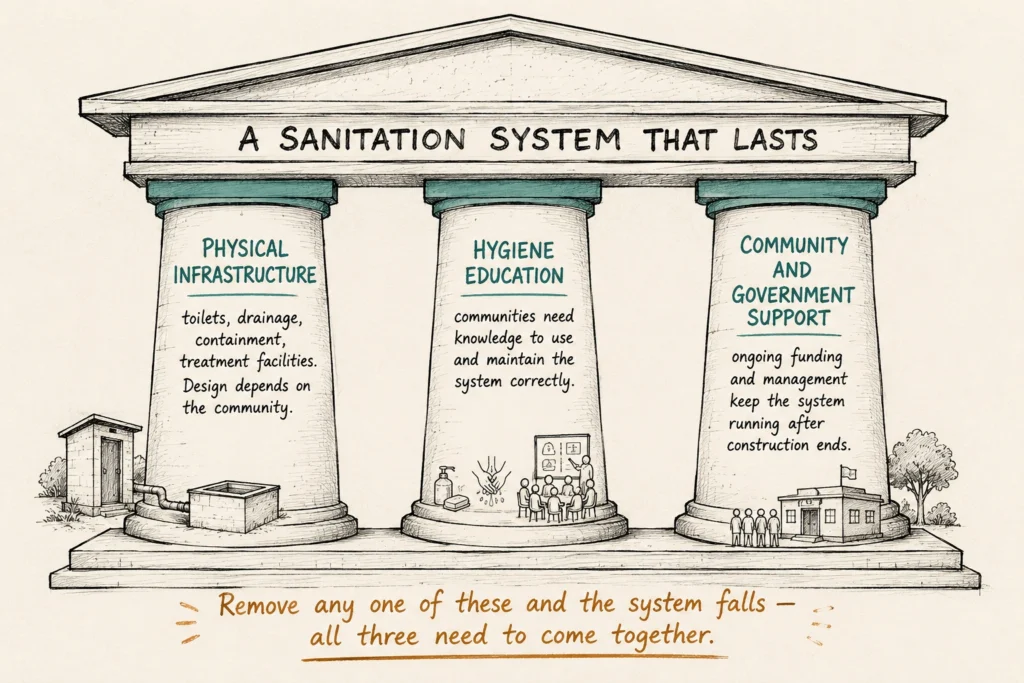
A sanitation system is more than a toilet. It combines physical infrastructure, community education, and ongoing support to make sure waste is managed safely and the system actually lasts. Three things need to come together to make that work:
- Physical Infrastructure: A functioning system includes toilets or latrines, drainage, waste containment, and treatment facilities. The exact design depends on the community, with urban areas typically using flush toilets and rural communities relying on simpler latrines.
- Hygiene Education: Even the best sanitation system needs people who know how to use and maintain it. Hygiene education gives communities the knowledge to keep facilities clean, use them correctly, and make the benefits last.
- Community and Government Support: Local partners and governments play a direct role in keeping sanitation services running long after construction ends. Without ongoing funding and management, even well-built systems fall into disrepair.
When all three come together, the facilities keep working, and the system lasts far beyond the construction project.
Building Healthier Communities Starts With Sanitation
Safe sanitation touches almost every part of community life. It protects health, keeps children in school, strengthens local economies, and helps communities care for their environment.
That’s why Easy510 supports sanitation projects alongside clean water initiatives. Together, they create lasting improvements in health, education, and livelihoods. Visit our website to learn more about our sanitation projects or how you can support our work.