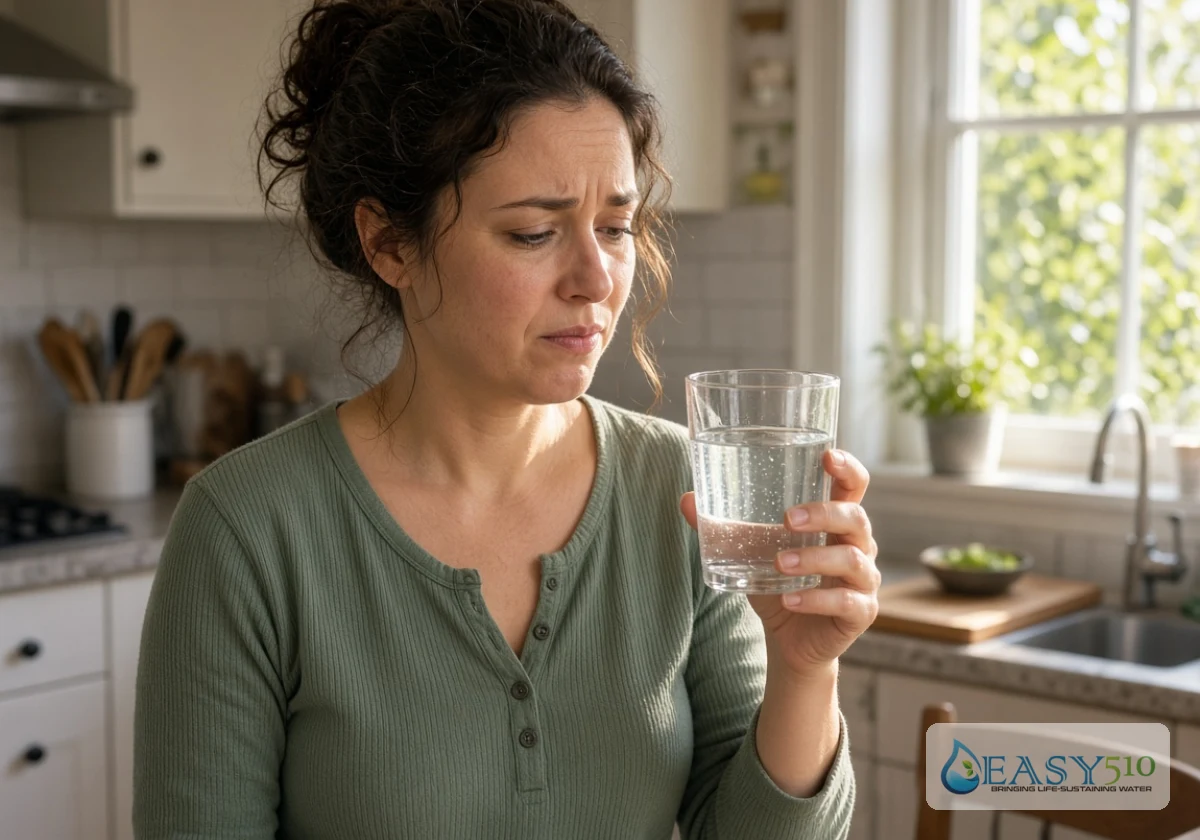
Why a Clear Glass of Water Can Still Be Unsafe to Drink

Changes in water taste or colour can signal contamination, but clear water isn’t always safe to drink. Some harmful substances have no colour, smell, or taste, so you can’t always detect them yourself.

This makes it difficult for Australian households to know when their tap water is unsafe. At Easy510, we focus on home water quality because problems often start where you can’t see them, inside the pipes or at the source.

This guide covers the taste, smell, and colour changes worth checking, the symptoms that can trace back to your tap, and how home kits compare with a certified lab. Read on before you pour the next glass.

Clear Tap Water Can Still Carry Invisible Water Contaminants

Close-up photograph of a glass of clear tap water and a bottle

Clear water may look clean, but its appearance only tells you that it has few visible particles. Many harmful substances, including arsenic, nitrates, lead, and certain chemicals, dissolve completely in water. This means they can remain present even when your tap water looks as clear as bottled water.

Invisible contaminants cause concern because they can remain in drinking water without changing its taste, smell, or appearance. Lead in drinking water often leaches from old pipes and brass fittings after water sits overnight, and it adds no taste or smell at low levels. Australian and US water authorities both set strict limits on lead because of the health risks it carries.

Even when your local utility treats water to meet safety guidelines, contamination can still occur inside your home. Older houses with original plumbing may have a higher risk of lead entering the water after treatment. Flooding can also affect private wells and rainwater tanks by introducing fertiliser nitrates and bacteria such as E. coli. These contaminants may be present even when the water looks perfectly clear.

Because these problems are difficult to spot, arrange a water test after flooding, plumbing repairs or a change in water source. Each event can introduce contaminants that affect water quality without changing its appearance.

Water Contamination Signs: What Taste, Smell, Colour and Flow Reveal

Your senses still catch plenty of problems, and signs of contamination usually show up as a change from what’s normal in your home. Normal water looks clear, tastes neutral, and flows steadily, so any change in taste and smell deserves a closer look. Each change below comes with its likely cause and the next step to take.

A Metallic Taste Points to Iron, Copper or Lead in the Pipes

A metallic taste in your tap water can mean iron, copper, or lead is leaching from corroded pipes and fittings. Acidic water can speed up this corrosion and allow more metal to enter the water supply.

You may notice the taste more strongly in the morning because water has been sitting in the pipes overnight. During this time, it can absorb metals from the plumbing.

Run the cold tap until the water feels noticeably colder before drinking. If the metallic taste remains, arrange a lead test to check for contamination.

Why Does Water Smell Like Rotten Eggs or Sewage?

A rotten egg smell in your water often comes from hydrogen sulphide gas, which can develop due to sulphur bacteria in bores or hot water heaters. A sewage-like smell may indicate bacterial growth in drains or a problem with the water supply.

Smelling the hot and cold taps separately can help you narrow down the source. If only the hot water smells, the issue may be linked to the heater’s anode rod. But if both taps have the same unpleasant smell, the problem may affect the water supply itself. Stop drinking the water and arrange a test before using it for cooking.

Cloudy, Milky or Yellow Water From the Cold Tap

Cloudy water that clears from the bottom up usually contains harmless air bubbles. However, if the cloudiness remains, it may indicate sediment, high mineral levels, or a problem with the water mains.

Yellow or brown water often points to a different issue. Rust from iron pipes or tannins from decaying plants in groundwater can cause these colour changes.

You can check what may be causing the cloudiness by leaving a glass of water to stand for a few minutes. If the colour remains after flushing the tap, contact your water supplier and ask them to check the supply.

Blue, Green or Brown Stains on Sinks and Appliances

Copper corrosion often leaves blue or green stains on bathroom sinks, while iron or manganese in the water may cause orange or brown marks. If green stains keep returning after cleaning, corroded pipes or fittings may be the cause.

White, crusty deposits on taps and kettles usually point to a different issue. These marks come from hard water, which leaves calcium deposits as it dries. Although they can build up over time, they rarely pose a health risk.

Before cleaning any stains, take a few photos to show a plumber. The colour and location of the deposits can help them identify the likely cause and recommend suitable treatment.

A Sudden Drop in Water Pressure or Grit in the Glass

A sudden drop in water pressure alongside grit in your glass may indicate a burst water main or damaged pipes. When a pipe breaks, soil and bacteria can enter the water supply, which affects water quality as well as pressure.

Check with your neighbours to see if they have noticed the same problem. If several homes have low pressure, the issue may be with the street’s water mains. However, if the problem only affects your home, your internal plumbing may be responsible.

Contact your local water provider about suspected main breaks or boil-water notices. For ongoing grit in your tap water, our guide to under-sink filtration for fresher-tasting tap water explains how a filter can help remove sediment.

A woman at a kitchen sink in morning light leaning forward toward

Which Health Symptoms Point to a Problem With Your Drinking Water?

Health symptoms can also point to problems with drinking water. If several family members develop stomach problems around the same time, contaminated water may be the cause. Bacteria, viruses, and parasites can trigger nausea, vomiting, diarrhoea, and cramps soon after exposure.

Heavy metals and chemicals act more slowly. Lead and arsenic build up in the body over months or years, which is how unsafe water affects health long before anyone links those health problems to the tap. Pregnant women, babies, and older adults feel the health effects first (their bodies clear toxins more slowly than healthy adults).

When we write about home water problems, one pattern keeps coming up: households suspect takeaway food before considering their tap water. Yet stomach upsets and other symptoms have many possible causes, so you can’t identify contaminated water by symptoms alone.

If you suspect contamination, use a safe alternative drinking-water source and arrange appropriate water testing. Watch for these signs and seek medical advice when needed:

  • Stomach Problems: When several household members experience nausea, vomiting, diarrhoea or cramps around the same time, record when the symptoms began.

  • Skin Rashes: Photos of irritation that appears after showering or washing can help your GP assess the affected areas.

  • Headaches and Tiredness: Persistent symptoms with no obvious cause may be worth investigating, especially after plumbing repairs.

  • Dehydration in Children: Young children can lose fluids quickly during repeated stomach upsets, so seek medical advice if they show signs of dehydration.

  • Bluish Skin in Babies: Blue or grey colouring around a baby’s lips is a medical emergency and needs immediate attention.

Keep a record of when symptoms started and which family members were affected. Then share these details with your GP and contact your local water authority or an accredited water testing laboratory about possible contamination. They can advise you on suitable tests and whether you should use another water source while the problem is investigated.

Drinking Water Testing: Home Kits Versus a Certified Lab

Once you have that symptom timeline, a test tells you what’s causing a warning sign and how serious it is. You’ve got two main paths, plus the free Water Quality Reports your provider publishes. Compare what each option checks before you choose a route.

OptionWhat It ChecksBest Use
DIY test kitspH, chlorine, hardness, some bacteria, and leadQuick screening and tracking changes over time
Certified labLead, arsenic, pesticides, nitrates, bacteria, and morePrivate wells, health symptoms, or buying a home
Provider water quality reportTreated water before it reaches your propertySeeing what your utility already monitors

Start with a certified lab if anyone feels unwell or you rely on a private well, because home kits can miss low levels of lead and arsenic (look for NATA accreditation on the lab’s test report).

In our experience covering home water filtration, the most common mistake is buying a filter before knowing what the water contains. Once results arrive, reverse osmosis or a carbon filter can target the specific problem and protect your drinking water quality.

A hand holding a clear glass of tap water up to bright morning window

Trust the Test, Not the Glass

Water contamination signs give you useful clues, yet the most harmful contaminants never change how your water looks. Only testing confirms that your water is safe to drink.

Act quickly on any change in how your water tastes or smells, or how it looks. Book a lab test after floods, plumbing work, or unexplained illness in the household.

Easy510 shares practical advice on home water systems and filtration for Australian households. Contact the Easy510 team to talk through your results and choose the right path to safe drinking water.

Water Pollution: Understanding the Causes and Seeking Solutions

Water contamination is an ongoing and concerning issue that affects our environment, health, and society as a whole. From oceans to streams to lakes, water pollutants create an unsafe landscape for wildlife and humans alike. Unfortunately, these contaminants are all around us: from the industrial runoff in rivers to oil residue in oceans due to tanker ships – pollution has become embedded into our daily lives. The effects of water pollution can be seen even beyond what we see with the naked eye such as coral reef discoloration or changes in pH levels. Understanding how this happens is key to seeking solutions; this blog post looks at the main causes of water contamination – ranging from agricultural waste run-off through urban expansion – so that we may start mitigating its impacts on our planet’s most precious resource sooner rather than later.

What is Water Pollution and How Does it Affect Our Environment

Water pollution is a serious problem that affects not only our environment but also our health and economy. It refers to the contamination of water bodies, such as lakes, rivers, oceans, and groundwater, by harmful substances like chemicals, plastic waste, and oil spills. This can result in the death of aquatic life, loss of biodiversity, and infertility of the soil. Moreover, drinking polluted water can cause various health problems like cancer, birth defects, and skin disorders. The consequences of water pollution are dire, and we need to take action to prevent it. Governments and individuals must come together and take steps to reduce their carbon footprint, recycle waste products, and avoid harmful practices that lead to water pollution. By taking such measures, we can restore our water bodies’ health and prevent further damage to our environment.

Common Sources of Water Pollution

Water pollution is a major issue confronting our planet today. The sad reality is that water pollution has become a recurring problem in our everyday lives. The sources of water pollution are numerous, but some of the most common ones include agricultural activities, domestic waste, industrial activities, and sewage. Agricultural activities such as the use of pesticides, fertilisers, and herbicides often lead to water pollution when they are carried by rain or irrigation water into streams and rivers. Domestic waste, which includes sewage, garbage, and other household wastes, is another significant source of water pollution. Moreover, industrial activities such as manufacturing and mining also contribute to water pollution. Together, these factors underscore the importance of collective action to protect our water bodies now more than ever.

a. Agriculture

Agriculture is a crucial industry that impacts our lives in numerous ways. The cultivation of crops and the rearing of livestock are the primary activities in this sector and they provide us with the food that we consume daily. It is because of agriculture that we have access to a range of healthy and fresh produce that we need to maintain our well-being. However, agriculture extends beyond just growing plants and raising animals for food. It also involves the use of natural resources in a sustainable way, particularly to meet the increasing need for renewable energy sources. Overall, agriculture is an essential component of our economy and society, and we must continue to support and strengthen this sector to ensure a better future for ourselves and our planet.

b. Industry

The industry is a constantly evolving sector that drives economic growth and development. From manufacturing to technology, it comprises a wide range of businesses that have one common goal: to produce goods and services that meet the needs and wants of consumers. With advances in technology and the rise of globalisation, the industry has become more competitive than ever before. Companies must be innovative and agile to stay ahead, while also balancing the demands of consumers, employees and shareholders. However, despite the challenges, the industry remains a vital part of society, providing employment opportunities and contributing to the overall prosperity of the economy. As the world continues to evolve, the industry will undoubtedly continue to play a crucial role in shaping our future.

c. Human Activity

The impact of human activity on our planet cannot be overstated. From the construction of towering skyscrapers to the daily use of fossil fuels, our actions have far-reaching consequences on the environment. One of the most pressing concerns is the increase in greenhouse gas emissions, leading to unpredictable weather patterns and rising sea levels. Deforestation, pollution, and the depletion of natural resources are also pressing issues that require immediate attention. On the brighter side, some humans are making strides toward using technology and innovation to reduce our negative impact on the planet. However, it is up to all of us to make conscious choices in our daily lives and work towards a more sustainable future for generations to come.

The Effects of Water Pollution on Human Health

Water pollution is a serious problem that not only harms the environment but also poses a threat to human health. Consuming contaminated water can lead to a variety of health issues, ranging from skin irritation to gastrointestinal diseases. The chemicals and pollutants that end up in our water sources can also affect our immune systems and increase the risk of cancer, birth defects and neurological disorders. In addition to these health effects, water pollution also impacts our economy and quality of life. We must take action to reduce water pollution and protect the health of our communities.

Steps to Reduce and Prevent Water Pollution

Water pollution is a major problem worldwide, and it affects not only humans but also marine life. However, the good news is that there are steps we can take to reduce and prevent it. First and foremost, we need to properly dispose of chemicals, oil, and household products. We should also limit our use of fertilisers and pesticides, as they can seep into the groundwater and cause contamination. Additionally, we can conserve water by fixing leaks and reducing our usage. It’s important to raise awareness and educate others about the impact of water pollution, so we can all take action to protect our environment and preserve this precious resource for generations to come.

a. Reduce the Use of Fertilisers in Agriculture

Agriculture is the backbone of many economies, supplying food for both people and animals. However, the excessive use of fertilisers in farming has led to numerous environmental problems. From soil degradation to water pollution, the negative impact is vast. That’s why we need to focus on reducing the use of fertilisers in agriculture. Not only will this protect the environment, but it will also boost human health by eliminating harmful chemicals from our food. It’s time for us to implement more sustainable farming practices that will ensure healthier crops and soil while also safeguarding our planet. Let’s work together towards a healthier and greener future for all.

b. Upgrade Sewage Treatment Facilities and Wastewater Management Systems

When it comes to improving the overall health and cleanliness of our communities, one crucial element that often gets overlooked is properly managing wastewater. That’s why upgrading sewage treatment facilities and wastewater management systems is such an important investment for any locality. By improving these systems, we can ensure that harmful pollutants are removed from our water supply and properly disposed of in an environmentally friendly manner. Whether you’re a concerned citizen, business owner, or local government official, upgrading these facilities is an essential step for creating a safer, healthier future for us all.

c. Improve Industrial Waste Management Practices

As industries continue to grow, so does the volume of waste they produce. To lessen their impact on the environment, industrial waste management practices must be improved. By implementing more efficient procedures and investing in new technologies, industries can significantly reduce the amount of waste they generate and make better use of their resources. Not only will this benefit the environment, but it can also lead to cost savings and better public relations for businesses. It is important for all stakeholders, including government agencies, businesses, and communities, to work together in finding solutions to effectively manage industrial waste and promote sustainable practices.

Government Policies That Help Address Water Pollution Issues

Water pollution is a serious issue that affects not only aquatic life but also humans who rely on clean water for drinking and other daily activities. Fortunately, there are several government policies in place to help address this environmental problem. For example, some countries have strict regulations on industries that discharge wastewater into waterways, ensuring that their effluent is properly treated to prevent harmful chemicals and waste from contaminating the water. Additionally, governments may provide funding for research and development of new technologies that can help mitigate water pollution or offer incentives for industries to adopt more sustainable practices. Through these policies and more, the government can play a vital role in tackling the issue of water pollution and ensuring the health and safety of both people and the planet.

Creative Solutions to Water Pollution Problems – Citizen Science Projects, Eco-Friendly Initiatives, and More!

Water pollution is a growing concern across the world, and it’s up to all of us to make a difference. Fortunately, there are plenty of creative solutions out there to help combat this problem. Citizen science projects, for example, are a fantastic way for people to get involved in tackling water pollution. These projects allow individuals to collect water samples, monitor and report any issues, and even help with restoration efforts. Additionally, there are many eco-friendly initiatives underway that aim to reduce the amount of pollution going into our waterways in the first place. From sustainable agriculture practices to green infrastructure projects, these initiatives are proving to be effective in cleaning up our lakes and rivers. Ultimately, by working together on these solutions, we can protect our precious water resources for generations to come.

In conclusion, we have seen a plethora of information about water pollution. It has detrimental effects on the environment and can have serious implications for human health. The good news is that there are many different ways for us to reduce and prevent water pollution. From reducing fertilisers in agriculture to upgrading sewage treatment facilities to encouraging eco-friendly initiatives, and more – there is hope yet that our actions will make a difference in protecting our precious resources! Volunteers and citizen scientists everywhere can join in local movements to create cleaner rivers and lakes by reducing their personal water use or by joining in research events or educational campaigns. We must all take collective responsibility if we are to make real progress in combating this global issue. So don’t wait – act now and do your part to protect the planet!