
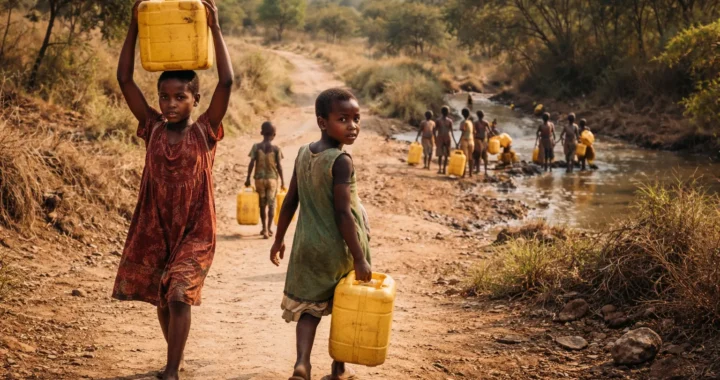
Lack of clean water access results in kids missing school to haul water for their families. They also fall behind when waterborne illnesses keep them home for weeks. These barriers ultimately steal entire futures.
Billions of people face this reality right now, but the pace of change remains frustratingly slow. We’ve spent nearly 25 years working alongside communities caught in this cycle. And to increase awareness, this article will explain:
- How collecting water disrupts children’s school
- Girls get hit with extra barriers that lock them out of classrooms
- Students battle daily health risks most people never think about
- What changes when communities gain access to safe water and sanitation
Let’s explore how water decides the fate of entire generations, and how you can help.
What Is the Real Cost of Poor Water Access?
Poor water access costs students millions of school hours every year, along with their health and future opportunities.
You might be wondering how something as simple as water could derail a child’s education. The answer comes down to three things: time spent collecting it, illnesses from drinking it, and safety barriers that keep girls home.
Lost School Hours Add Up Fast
Girls around the world spend roughly 200 million hours each day collecting water instead of attending school (and yes, that’s every single day). In most communities, water collection falls on women and girls, while boys attend classes without worry.
These girls walk approximately 2 hours daily to fetch water for their families. All those hours hauling water mean missed lessons and incomplete assignments while classmates move ahead.
Illness Keeps Classrooms Empty
Waterborne diseases like cholera and typhoid cause serious disruptions. Just one severe bout of diarrhea keeps students out of class for 5 to 10 days. Multiply that across entire regions, and you get millions of lost school days every year.
The worst part? Once kids fall behind, closing those learning gaps becomes nearly impossible.
Girls Face Extra Barriers
Did you know that in Sub-Saharan Africa, only 37% of girls complete lower secondary education? This low number stems from improper menstruation facilities, which force adolescent girls to stay home every month (a reality millions face globally).
Girls also risk harassment and assault when forced into open defecation. So, girls tend to avoid schools when basic safety isn’t guaranteed.
Fortunately, positive changes take place when schools and homes finally get access to clean water.
Clean Water Access: The Link to Better Attendance
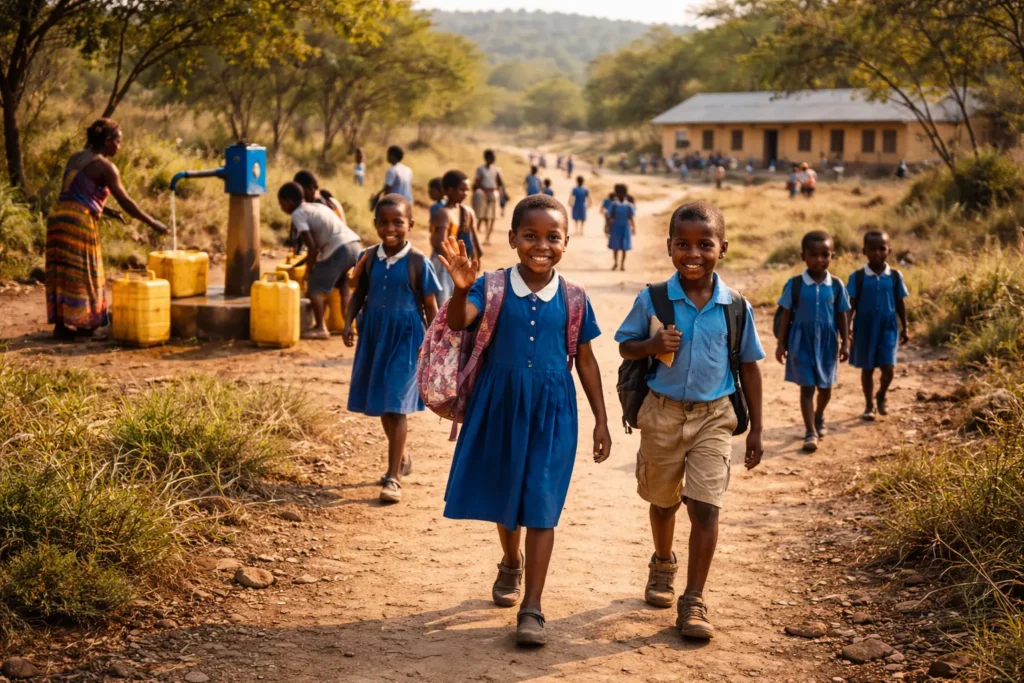
Clean water near schools gives children both the time and the energy they need to show up for class. When families get clean water at home, children gain back hours every day for schoolwork and rest instead of hauling water.
And here’s where it gets interesting. Parents no longer have to choose which children stay home to collect water. The time saved means kids can hit the ground running each morning. They’re not exhausted from walking 6 hours before class starts.
Access to safely managed drinking water completely changes how a child’s day unfolds. Instead of arriving drained from dawn treks, they show up ready to learn. When daily routines shift like this, entire education paths open up.
But showing up only works when students stay healthy enough to learn.
Water-Related Illnesses and Student Health
Ever wonder why some classrooms stay half-empty during certain seasons? Contaminated drinking water is usually the culprit. When students drink unsafe water, they often get sick, which leads them to miss out on lessons.
Here’s how that cycle plays out.
Waterborne Diseases Cause Frequent Absences
Through our work in northern Luzon, we’ve seen firsthand how contaminated water fuels constant illness cycles in schools. Students recover from one infection only to catch another within weeks. This happens most often in schools without access to safe drinking water, especially during rainy seasons when water sources get even more contaminated.
The pattern breaks once communities get reliable, clean water sources.
Malnutrition Weakens Learning Ability
Chronic diarrhea stops children’s bodies from absorbing nutrients needed for brain development and focus. Malnourished students can’t concentrate like their healthy peers because they struggle to retain information. Ultimately, poor nutrition from unsafe water creates a cycle where sick children simply can’t learn well, even when they show up to school.
Health issues affect all students, but girls face an entirely different set of barriers.
Why Improved Sanitation Keeps Girls in School
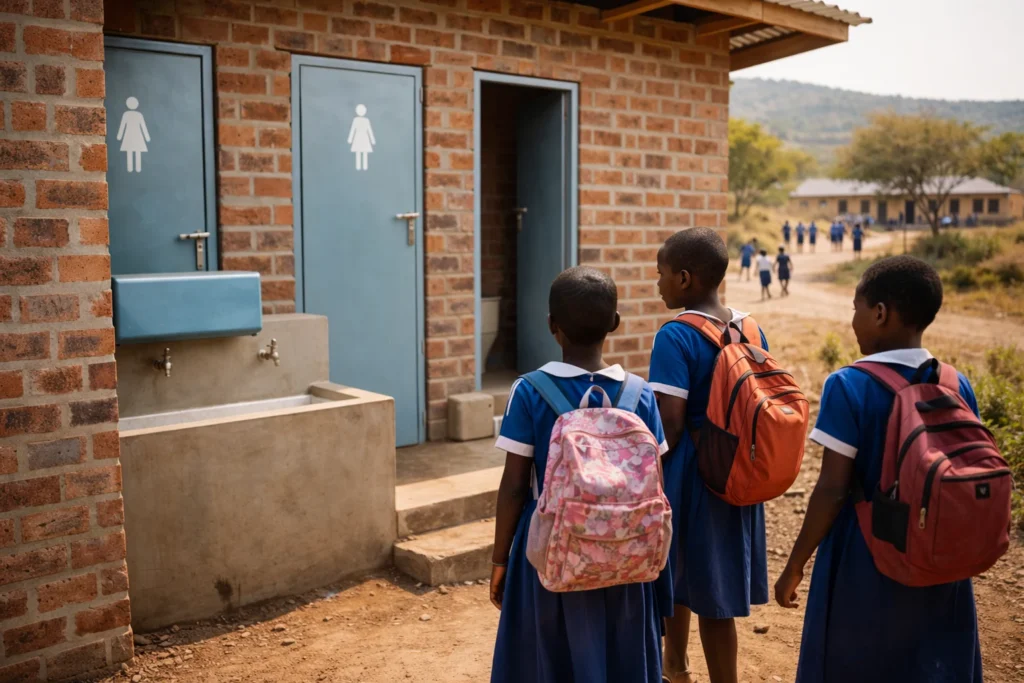
Improved sanitation directly affects girls’ school attendance by providing the privacy and safety they need during menstruation and daily bathroom needs. Without proper facilities, millions of girls simply stop going to school. And the reasons often extend past just hygiene.
Privacy During Menstruation Can’t Be Ignored
In Côte d’Ivoire, 20% adolescent girls miss school regularly because of menstruation challenges (a reality millions of girls face monthly).
Without private toilets and clean water, girls stay home during their periods. But proper sanitation facilities give them the dignity to attend classes year-round. When schools add these facilities, attendance rates jump within the first term.
Safety Concerns With Open Defecation
Girls who defecate in open areas face harassment and assault every day. Without proper toilets at school, students wait until they get home. This causes physical discomfort and mental distraction all day long. Safe, private sanitation facilities, however, allow girls to focus on learning instead of personal safety.
The link between sanitation and education is clear, but access to safe drinking water creates even broader health benefits.
How Safe Drinking Water Protects Community Health
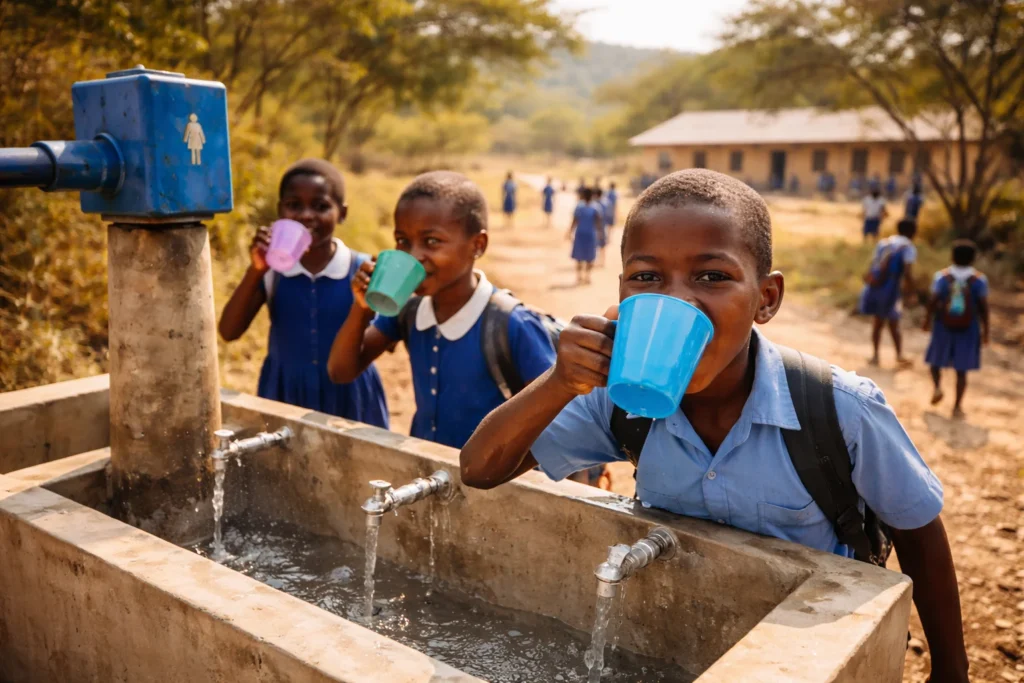
Safe drinking water not only quenches thirst but also stops disease outbreaks. After working alongside communities for nearly 25 years, we’ve seen how clean water stops illness before it spreads through classrooms and households.
Clean water access reduces child mortality rates significantly. Because communities with access to safely managed drinking water see fewer clinic visits and lower healthcare costs for families.
The benefits ripple outward from there. Healthier children mean healthier families. And healthier families mean stronger communities that can focus on development instead of just surviving. When safe water and sanitation become standard, entire regions see improvements in life expectancy within just a few years.
So what’s the actual payoff when students stay healthy and attend school regularly?
Education Benefits: What Happens When Communities Get Clean Water
When communities get clean water, children gain more than just better health. They gain education, which then creates economic opportunity and long-term development. The results show up in three major ways, including:
Higher Income Potential for Educated Communities
Girls who stay in school one extra year can earn 20% more as adults. Bear in mind, educated children become adults who can pursue jobs beyond subsistence farming.
Also, communities with higher education rates see improved economic stability across generations. These income gains lift entire villages out of poverty cycles.
Better Career Opportunities Break Poverty Cycles
Students who complete school can become teachers, nurses, engineers, and community leaders. Education opens doors to formal employment with steady income and benefits for entire families.
Plus, breaking the water collection cycle gives children time to dream about careers beyond their villages. Once those dreams become reality, many return home to improve their communities.
Climate Resilience Through Knowledge
Educated communities know how to conserve water and farm sustainably. Students also learn about hygiene, sanitation, and how to stop waterborne illnesses from spreading. This knowledge helps communities respond to droughts, floods, and environmental changes that threaten their water resources.
These long-term gains show why universal access to safe water isn’t solely about health.
Small Changes Create Lasting Futures
Safe water and sanitation are human rights, yet millions still lack them. Children miss out on education, health, and future opportunities simply because they can’t access clean drinking water. Solutions like improved sanitation facilities and better water management already exist. They work when communities get the right support.
We’ve walked through how water collection steals school time, how illness empties classrooms, and why girls face unique barriers. We’ve also seen how clean water access creates healthier students, better attendance, and economic progress that lasts for generations.
Our team at Easy510 will take you through every step you need to bring safe water solutions to communities that need them most. Let’s build those futures together, piece by piece.