
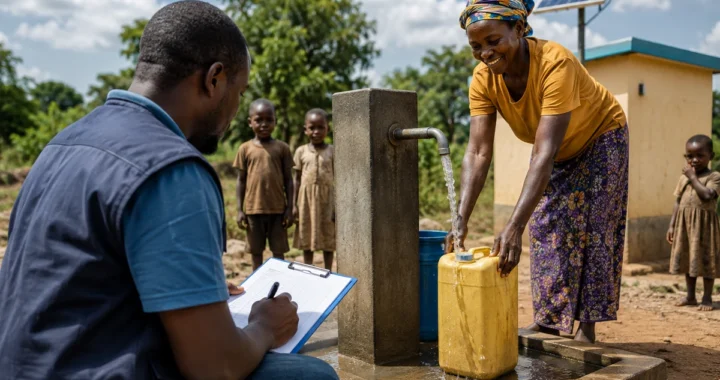
Most organisations measure a water project by how much infrastructure goes into the ground. But a community can receive a new pump and still collect contaminated drinking water within three months. Water project evaluation exists to catch exactly that gap.
At Easy510, we ask one question on every visit: does the supply still serve people a year later? Nearly 25 years running programs across Africa, Asia, and Latin America have taught us how to answer it through water testing, repair tracking, and technician training.
In our experience, three measures consistently reveal whether that access will last: drinking water quality, maintenance records, and community capacity building. This article covers each one so you leave with a clear picture of what lasting water access looks like in practice.
Water Project Evaluation Goes Beyond Installation Numbers
A completed water project needs a follow-up assessment to confirm communities still have safe water months after handover. Frankly, a pump can pass every installation check and still serve contaminated water twelve weeks later.
Three indicators address exactly that gap, and together they capture what installation counts miss.
What Counts as a Successful Outcome
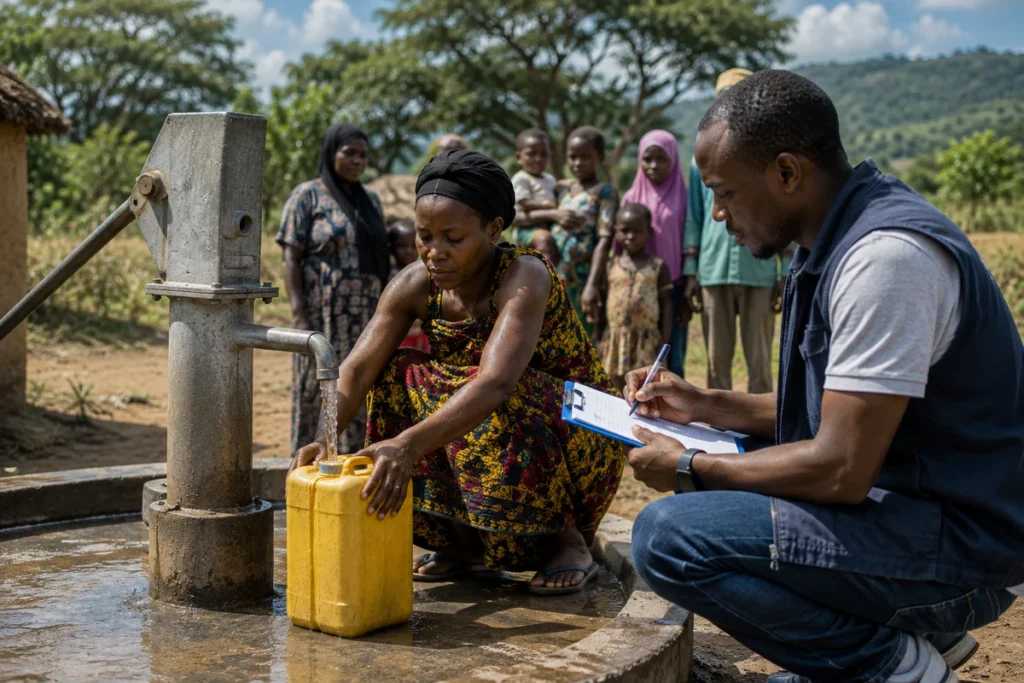
The WHO/UNICEF Joint Monitoring Programme assesses drinking water service levels based on three factors: accessibility, availability, and quality.
In most cases, quality tends to fail first. A water source that tests clean on installation day can still change over time. That’s why ongoing water quality monitoring helps identify changes after a supply begins operating.
How WASH Monitoring Frameworks Guide Field Teams
WASH monitoring decides what field teams record: water quality, health outcomes, and sanitation data. Australia’s monitoring and evaluation framework confirms what happens to that record afterwards. It sets out collection, reporting cycles, and lessons for future water management. (and yes, most donors never ask to see them)
In short, WASH monitoring names the evidence, and Australia’s framework turns it into action. Field teams then pass their findings to funding bodies and development partners for future grant and support decisions. Once field teams hold that evidence, the next question is what it reveals about drinking water quality on the ground.
How Drinking Water Quality Signals Whether a Project Worked
Water quality testing gives evaluators the fastest read on a finished project. The WHO drinking-water quality guidelines anchor safety in health-based targets and independent surveillance.
Those targets only count once they show up on the ground. Our field teams in Ghana and Kenya have seen households abandon open river collection for a tested borehole within one dry season.
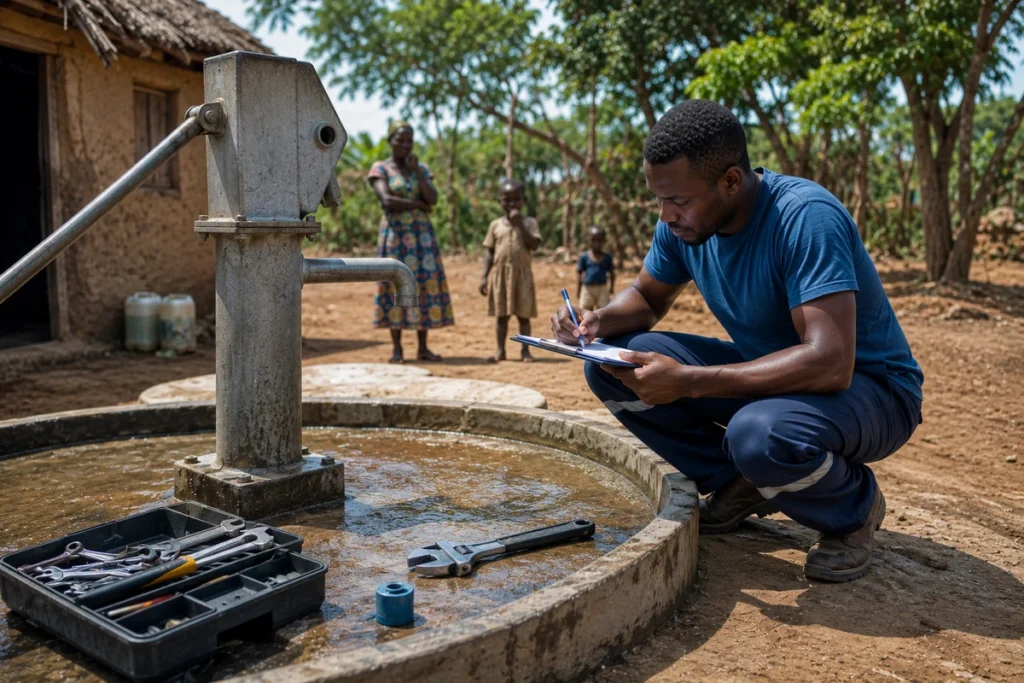
A full drinking water assessment after handover rests on three checks:
- Scheduled Source Testing: Field teams sample each water point according to the project’s monitoring schedule. The Australian Drinking Water Guidelines recommend regular sampling and testing to assess whether water quality meets guideline values and microbial health-based targets.
- Household Illness Records: Health workers log diarrhoeal cases house by house, along with hygiene and sanitation habits. That household data eventually feeds into clinic records, but attendance moves faster. Falling case numbers show up first in school attendance, well before any clinic notices.
- Local Clinic and Department Data: Government department records give evaluators a second source outside the project team. Two independent sets of numbers rule out reporting error and confirm the outcomes hold.
Together, the three checks tell a community whether its supply stayed safe through a full year of use.
Why Maintenance Records Are Central to Any Water Supply Evaluation
A pump that runs on handover day and sits broken by month six sends a community back to the river. Maintenance logs catch that decline early. A well-structured water quality monitoring program records how often a system breaks, how long downtime lasts, and who repaired it.
Those logs only produce usable data when teams follow standardised water sampling procedures, so results stay comparable.
Our teams in Ethiopia, Peru, and the Philippines have watched the same pattern repeat. Communities with trained local repairers restore supply within days, while sites that rely on outside technicians lose access for weeks (That’s a delay few households can absorb).
Regular, low-cost fixes point to a working maintenance plan the community runs itself. Long gaps in the report warn evaluators a project is already failing. The full log tells evaluators whether a community can maintain its water supply or still waits on outside help.
Now, the focus moves to the people behind those repairs.
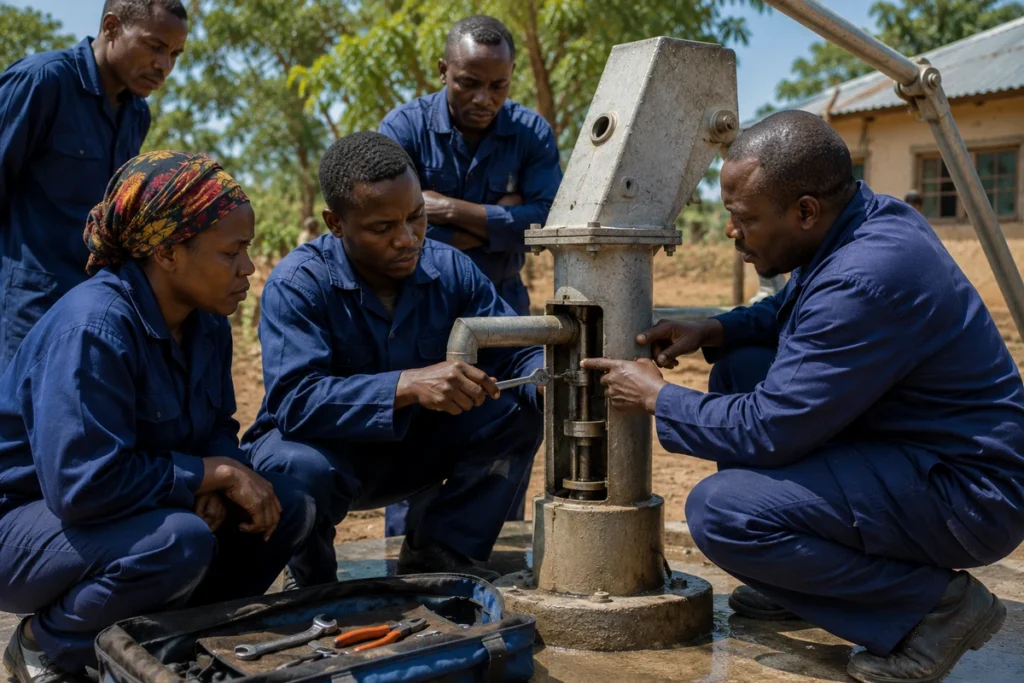
Capacity Building Gives Communities the Skills to Stay Independent
A water project succeeds the day a community stops needing outside help. So why do some systems still run after five years while others stall inside six months? Training decides it, and that training has to happen before the team drives away.
The contrast shows up clearly in the evaluation data:
| Indicator | With Training | Without Training |
| Average repair time | 2 to 5 days | 3 to 8 weeks |
| Who fixes faults | Local technicians | Visiting contractors |
| Maintenance funding | Community-managed | External grants only |
Capacity building covers three practical skills: basic pump repair, water testing, and small fund management. A village water committee meets monthly, collects a levy from each household, and runs a training session twice a year.
Community ownership like that feeds broader community water-saving projects that hold supply steady through drought years. One question sits behind that check: does the community have the skills to keep going alone? A yes there predicts long-term access better than any installation figure.
Clean Water Programs Only Last When Evaluation Drives Every Decision
Installation figures make a tidy report. Health data, maintenance logs, and community training records show which taps still run a year on. That evidence decides where the next investment goes.
At Easy510, we track those three measures across every program, and we encourage development partners to ask for the same. The communities we started with in Peru and Ghana still hold their own systems today. We stay committed to them long after handover.
For further information on future programs and how your support reaches communities, contact our team through the website.